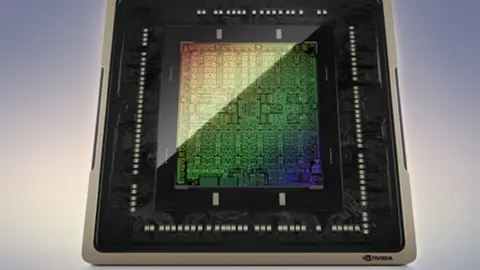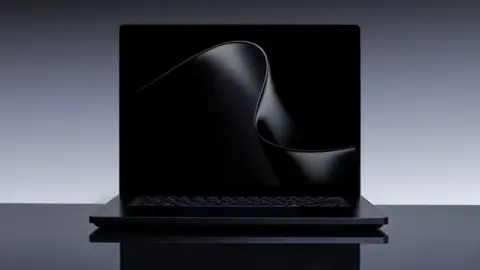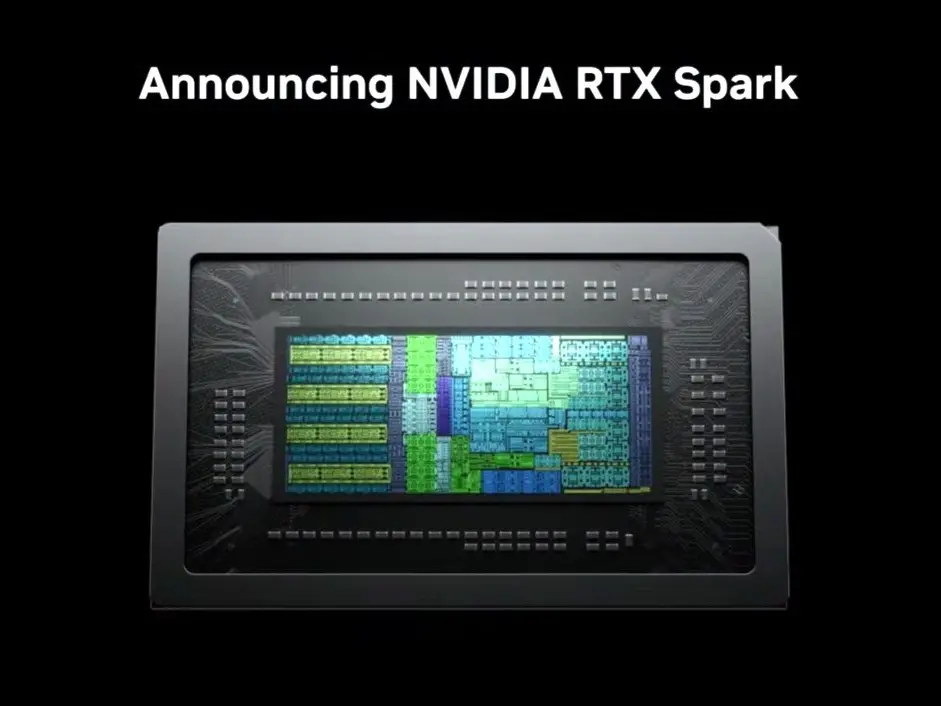
Nvidia's RTX Spark chip has surfaced in early benchmark data, giving buyers a concrete look at the performance of the company's upcoming Arm-based mobile processor. This leak matters because it establishes a baseline for how the chip will compete against existing high-end laptop CPUs in the near future. We can now see where the silicon stands relative to current market leaders, which helps set expectations for the devices that will eventually ship.
Early benchmark data reveals 20-core performance against AMD and Intel rivals
The processor, formerly identified as the N1X, appears as an engineering sample running Maxon's Cinebench 2026 benchmark under Windows 11. Notebookcheck shared the screenshot, which identifies the test system as a Surface Laptop Ultra pre-sample. The benchmark software lists the processor identifier as JMVW0A-Generic-CPU, confirming the hardware is still in a pre-release state.
RTX Spark Engineering Sample Specs
- CPU Cores: 20
- Cinebench 2026 Multi-core Score: 5,771
- Cinebench 2026 Single-core Score: 540
- PL1 Power Limit: 80 W
- PL2 Power Limit: 95 W
The chip features a 20-core CPU configuration with configurable power limits of 80 W for PL1 and 95 W for PL2. In multi-core testing, the sample scored 5,771 points, while the single-core test yielded 540 points. These figures provide a technical snapshot of the chip's computational throughput at its current power envelope.
Performance analysis from Notebookcheck places the RTX Spark in direct competition with AMD's Ryzen AI Max+ 395 and Intel's Core Ultra X9 388H. The chip trades blows with these rivals in multi-core workloads, but it trails behind the Qualcomm Snapdragon X2 Elite and Apple M5 Max in both single and multi-core metrics. The generic identifiers and erroneous frequency readouts suggest these results may not reflect final product performance.
We've been tracking RTX Spark closely — see our earlier coverage on Nvidia RTX Spark laptops. The data confirms the chip's core count and power limits, but the pre-release firmware means final scores could shift. Buyers should view these numbers as indicative of the architecture's potential rather than a guaranteed performance target.
Source: NotebookCheck