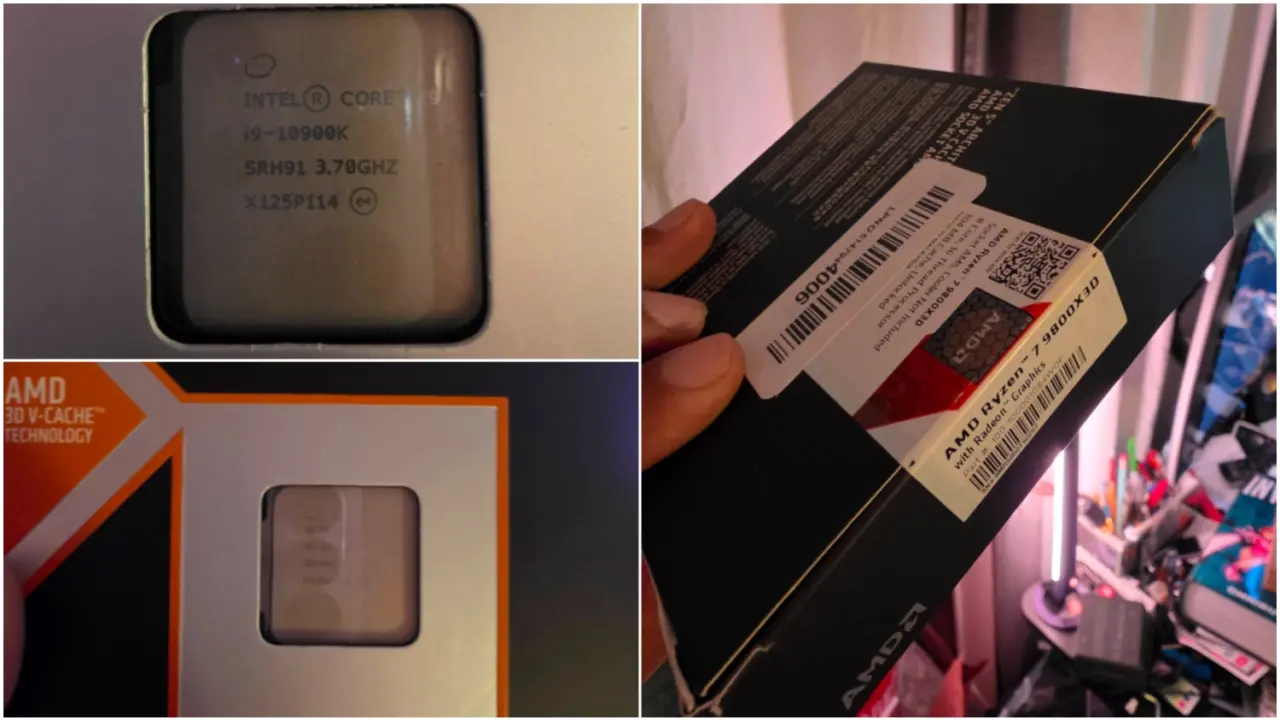
A buyer recently received an Intel Core i9-10900K inside a sealed box labeled for an AMD Ryzen 7 9800X3D after ordering from Amazon. This incident highlights a growing risk for consumers purchasing high-end processors through online marketplaces that use commingled inventory systems. The fraud occurs when sellers pool stock from multiple sources, allowing counterfeit or mismatched items to reach unsuspecting customers. Buyers who order expensive CPUs should verify their orders carefully, as the packaging often shows no signs of tampering upon arrival.
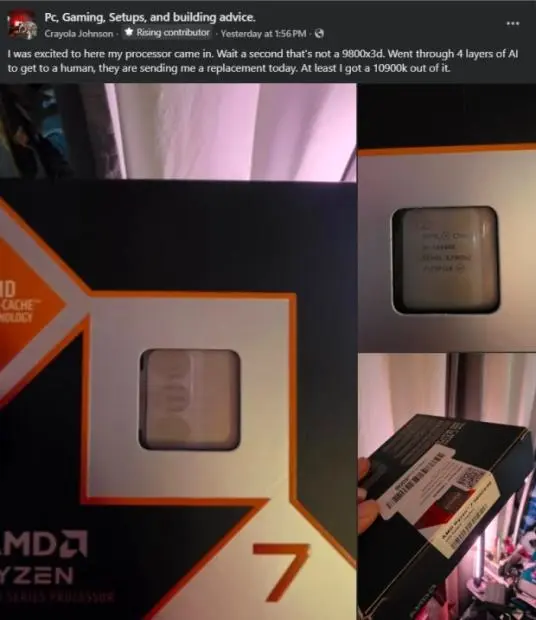
Buyer receives sealed Intel chip instead of AMD processor
The Intel Core i9-10900K is a processor released in 2020 that uses the LGA1200 socket. This chip is physically and electronically incompatible with AM5 motherboards designed for the AMD Ryzen 7 9800X3D. The fraud exploits the high market value of both processors, creating a strong financial incentive for the swap. The buyer received a sealed box, which suggests the swap happened before the package left the seller's facility or during the pooling process.
Amazon operates a commingled inventory system that pools stock from various sellers to streamline fulfillment. This inventory method allows malicious individuals to combine authentic goods with wrong or fake items in shared storage areas. The platform has acknowledged the issue and announced plans to phase out commingling by March 2026. The policy update seeks to minimize fraud by requiring that every sold unit be traceable to its original seller.
CPU swap scams have become a recurring pattern targeting high-end AMD processors on Amazon. The case of the Ryzen 7 9800X3D swapped for a Core i9-10900K illustrates the vulnerability of buyers to such deception. Buyers are advised to exercise caution when purchasing high-cost components, as the threat remains until inventory protocols are updated. This impending policy adjustment marks a major advancement in protecting the supply chain for online hardware transactions.
Source: TweakTown