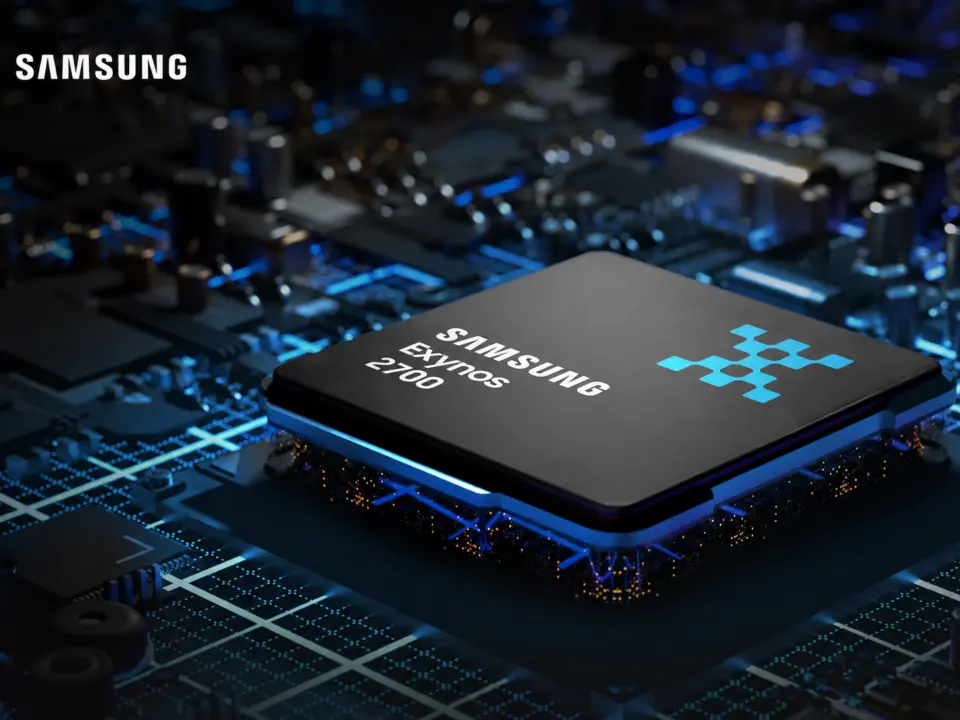
Samsung's upcoming Exynos 2700 is poised to make waves as it aims to take on Qualcomm's leading position in the premium smartphone segment. Why it's important? Because this signals Samsung's push to bring more of its own firepower to the table for flagship devices instead of solely relying on other players. The Exynos 2700 is set to tackle that long-standing performance gap where other chips have often held an edge in benchmark rankings.
Samsung's next-gen chip features dual-prime cores and LPDDR6 support
The new architecture of the Exynos 2700 is shifting the CPU configuration to a 10-core setup, breaking away from the previous single prime core approach of the Exynos 2600, the 2600. With the Exynos 2700, the structure is now 1+4+1+4, with dual prime cores in play. You've got an Arm C2-Ultra prime at up to 4.24GHz and a C1-Ultra prime core at 3.36GHz. To make all this possible, Samsung is producing the chip on their 2nd gen 2nm SF2P process for better efficiency and higher clock speeds.
Exynos 2700 Specifications
- CPU Architecture: 10-core layout (1+4+1+4) with Arm C2-Ultra and C1-Ultra prime cores
- GPU: Xclipse 970 with 8 Work Group Processors, 24 MB system-level cache
- Memory Support: LPDDR6
- Manufacturing Process: 2 nm SF2P
- Geekbench 6.5 Multicore Score: Approximately 13,000 points
The GPU prowess of the Exynos 2700 shines with the Xclipse 970 GPU that brings in 8 Work Group Processors and 24 MB of system level cache. And to minimize bandwidth issues in more intense applications, the chip has support for LPDDR6 memory. All this is geared toward boosting peak performance for graphically intensive tasks compared to earlier versions.
According to internal Samsung tests, the Exynos 2700 has shown it can beat the Snapdragon 8 Elite Extreme Gen 6 by up to 20% in some CPU and GPU benchmarks. Sources from Yonhap News Agency and ChosunBiz reveal that the Exynos 2700 reportedly hit around 13,000 points in Geekbench 6.5 multicore tests, while the Snapdragon 8 Elite Extreme Gen 6 settled at around 11,000. Samsung also claims to be 15% ahead in Geekbench 7 and up to 44% ahead of the normal Snapdragon 8 Elite Gen 6 on Geekbench 6.5.
Important to keep in mind that these benchmark numbers are based on Samsung's internal testing and haven't been confirmed by third-party testing yet. There's no clear picture of how this will affect real-world gaming performance just yet, since there's no detailed breakdown of test conditions or power consumption data provided in the source. It's also unclear if Samsung will actually use the Exynos 2700 in the next Galaxy S27 Ultra since final specs are still up in the air.
With the Exynos 2700, Samsung is clearly throwing down the gauntlet in the high-end chip space, going head-to-head with Qualcomm's top-tier offerings. The move toward the 2nm SF2P process and this dual prime core CPU structure is a big architectural leap forward. For now, these performance gains are just Samsung's internal figures—nothing third-party has confirmed yet.
Source: NotebookCheck



Discussion
0 comments