DDR5 memory prices have surged up to 89 percent in the second quarter of 2026, making older DDR4 platforms significantly more affordable for budget-conscious builders in China. This sharp cost increase is driving Intel to adjust its supply chain strategy, ensuring that older Core desktop processors remain available for the Chinese market well into the next year. Buyers looking to assemble cost-effective PCs can now expect better availability of legacy components rather than facing shortages of newer, pricier alternatives.
DDR4 memory price hikes drive Intel to expand legacy CPU availability
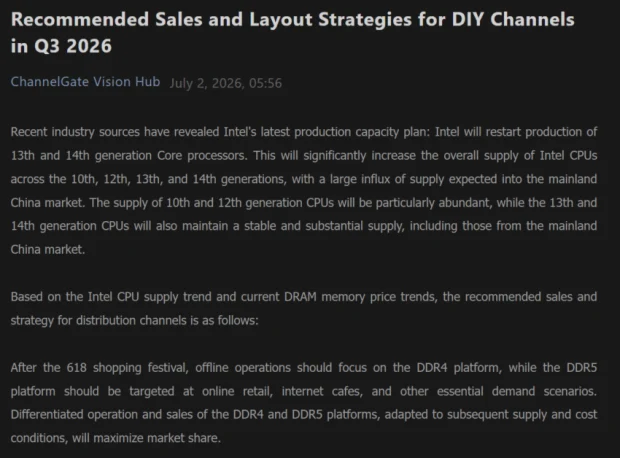
Intel is preparing to boost the supply of 10th, 12th, 13th, and 14th Gen Core desktop processors for mainland China during the third quarter of 2026. This move directly supports the continued use of LGA 1700 motherboards that rely on DDR4 memory. The company is specifically increasing inventory for the 10th and 12th Gen chips, while keeping steady stock levels for the 13th and 14th Gen processors. This strategy allows retailers to offer complete systems using older, proven silicon without forcing customers into expensive DDR5 ecosystems.
The platform will remain locked to the LGA 1700 socket and DDR4 memory support, avoiding a mandatory shift to newer standards. Offline DIY retailers in China are reportedly being instructed to prioritize DDR4 builds as their main focus for this period. Meanwhile, DDR5 systems are being steered toward online channels and internet cafes where higher performance justifies the cost. This split in distribution channels reflects a pragmatic approach to managing inventory amidst volatile memory pricing.
Intel is also planning a third pass at this platform, rumored as Raptor Lake Next, which is expected to launch in early 2027. This future architecture will retain the LGA 1700 socket and DDR4 support, mirroring AMD's strategy of extending the life of older sockets like AM4 due to high memory costs. The persistence of DDR5 pricing normalization until around 2028, according to AMD expectations, suggests that DDR4 will remain a viable and cost-effective option for the foreseeable future. We looked at the last Core Desktop Processors update earlier while tracking these supply chain shifts.
These supply adjustments confirm that Intel is actively managing the lifecycle of its older desktop processors to meet specific regional market demands. The focus on DDR4 compatibility and extended availability for 10th through 14th Gen chips provides a clear path for budget PC builders in China. This strategy ensures that older hardware remains relevant and accessible despite the rapid introduction of newer technologies.
Source: TweakTown