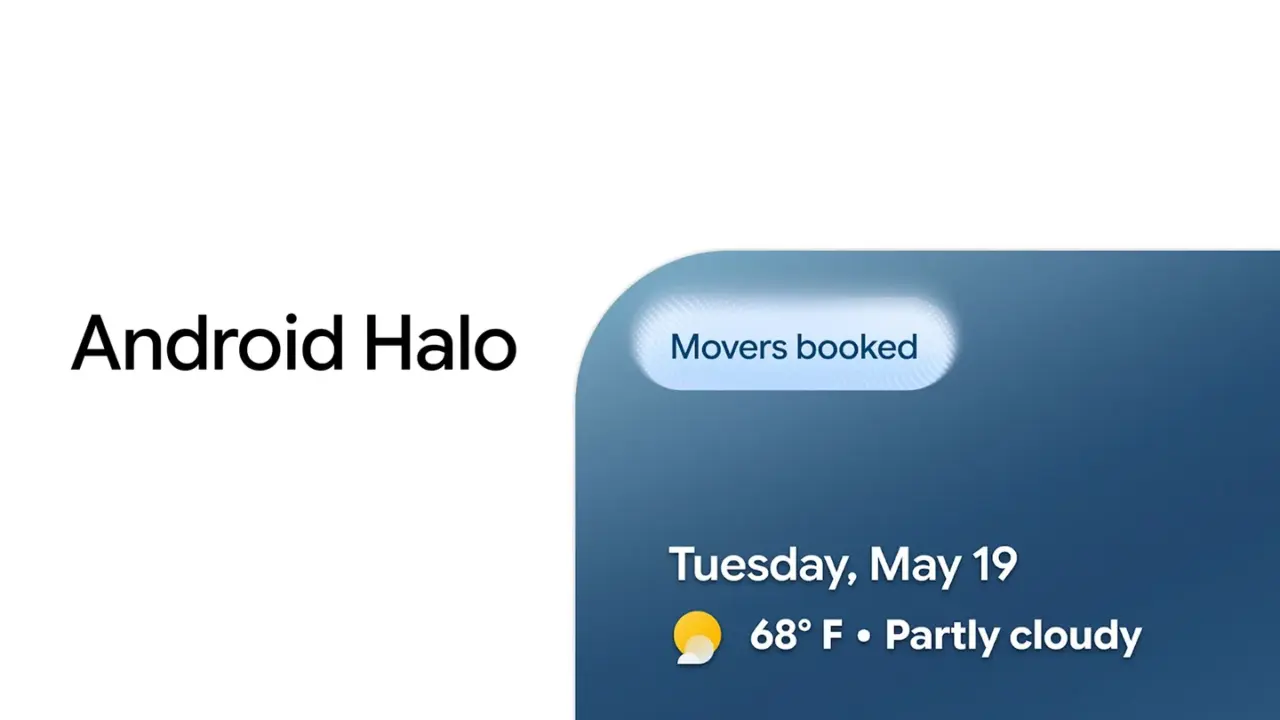
Google is introducing a new system-level interface for Android that changes how artificial intelligence assistants interact with your phone. This shift matters because it moves AI activity from hidden background processes into a visible, controlled status bar element. Users will finally see when an agent is working and can manage those tasks directly from the home screen without opening separate applications.
A dedicated status bar element lets AI agents report updates without opening apps
The feature, called Android Halo, serves as a dedicated communication layer between the operating system and your chosen AI agent. It supports both Google's native Gemini assistant and compatible third-party options. The design ensures that the agent can report updates and receive instructions without forcing the user to switch apps or interrupt their current workflow.
Android President Sameer Samat explained the mechanics of the feature during a presentation on the official developer YouTube channel. He described the status bar element as a specific location where the user-selected agent reports updates and receives the latest instructions for the current task queue. This setup allows the system to handle background tasks transparently while keeping the user informed of progress.
The update is expected to arrive later in 2026 as part of the Android 17 operating system release. Google has not yet released the full list of supported devices for the initial rollout. We looked at Android 16 features earlier while tracking the OS development cycle, but the specific hardware compatibility for Halo remains undefined until the final launch.
Android Halo represents a structural change to how background AI processes are managed on Android devices. The feature aims to increase transparency and trust by giving users a clear view of agent activity. The system will allow agents to report updates and receive instructions through a dedicated status bar location starting with Android 17 in 2026.
Source: GIZMOCHINA