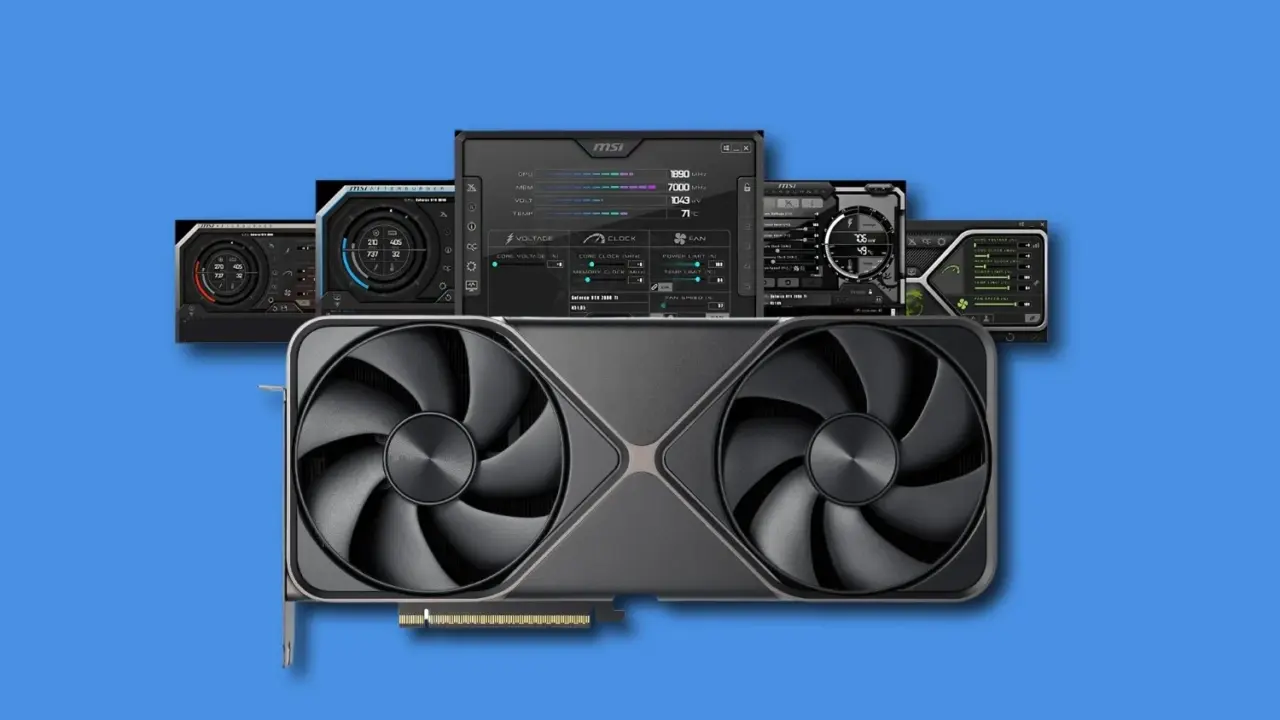
MSI has confirmed that the next update to its popular MSI Afterburner utility will not include support for reading GPU hotspot temperatures on the new GeForce RTX 50 Series. This decision directly impacts enthusiasts who rely on Afterburner for detailed thermal monitoring during overclocking or stress testing. Users seeking granular temperature data for the Blackwell architecture will need to find alternative methods to track these specific sensors.
Developer cites NVIDIA blocking private monitoring interfaces
The core issue stems from how NVIDIA manages hardware monitoring interfaces for its latest GPUs. Developer Unwinder, a key figure in the Afterburner community, explained that NVIDIA keeps the VRAM and hotspot monitoring interfaces private. These interfaces are explicitly blocked from public APIs, preventing third-party tools from accessing the data through standard channels.
MSI maintains a close partnership with NVIDIA, which influences how the company handles feature requests for its software. Adding unsanctioned features that NVIDIA actively blocks would be inappropriate for a key partner. Consequently, MSI Afterburner will stick to officially supported APIs rather than attempting to bypass NVIDIA's restrictions.
Other monitoring tools have found different paths to access this data. Applications like HWMonitor have restored hotspot reporting by using reverse-engineered private NVAPI interfaces. This creates a split in the ecosystem where some tools can show detailed thermal maps while Afterburner cannot.
We've been tracking MSI Afterburner closely — see our earlier coverage on MSI Afterburner Heatmap Visualizes V/F Curve. That previous feature allowed the software to visualize voltage and frequency curve data for the RTX 50 Series, showing that the tool can still add significant functionality within NVIDIA's allowed boundaries.
The confirmed stance is that MSI Afterburner will not support RTX 50 Series hotspot temperature readings. Users requiring this specific metric must rely on other utilities or unofficial methods. The software will continue to support features that align with NVIDIA's public API guidelines.
Source: TweakTown