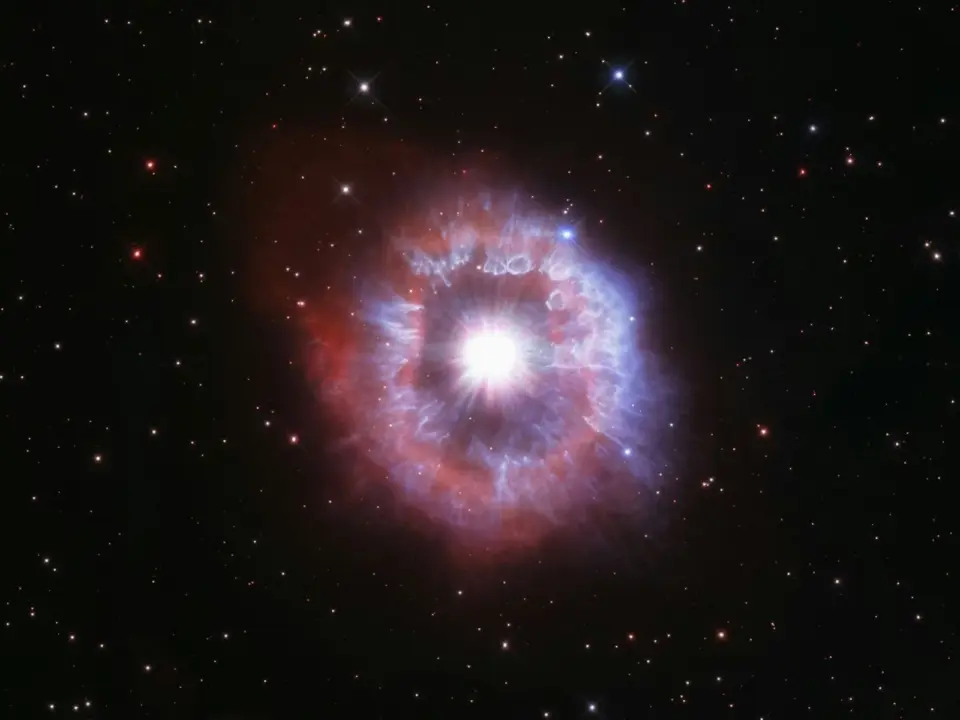
The James Webb Space Telescope has captured light from a star explosion that happened 11.7 billion years ago. This observation gives astronomers a rare look at the early universe during a period when galaxies were still forming. The data helps researchers understand how massive stars lived and died in the infant cosmos.
NASA telescope captures light from star explosion 11.7 billion years ago
NASA operates the telescope to study the history of the universe. The agency published the findings in The Astrophysical Journal. Valeria Aparicio and her team analyzed the images from the Cosmos-Web survey. Researchers identified a bright point of light that did not match known galaxy patterns.
The event occurred at a redshift of 3.195. Modeling suggests the exploding star had a mass of 12 times that of our sun. The progenitor star was likely hot and blue before it collapsed. The host galaxy is young and contains few heavy elements.
Statistical analysis indicates a 97.2 percent probability that the explosion was a Type II supernova. A Type II supernova occurs when a massive star runs out of fuel. The detection confirms that such stars existed in the early universe. The finding adds to our understanding of stellar evolution in metal-poor environments.
Source: NotebookCheck