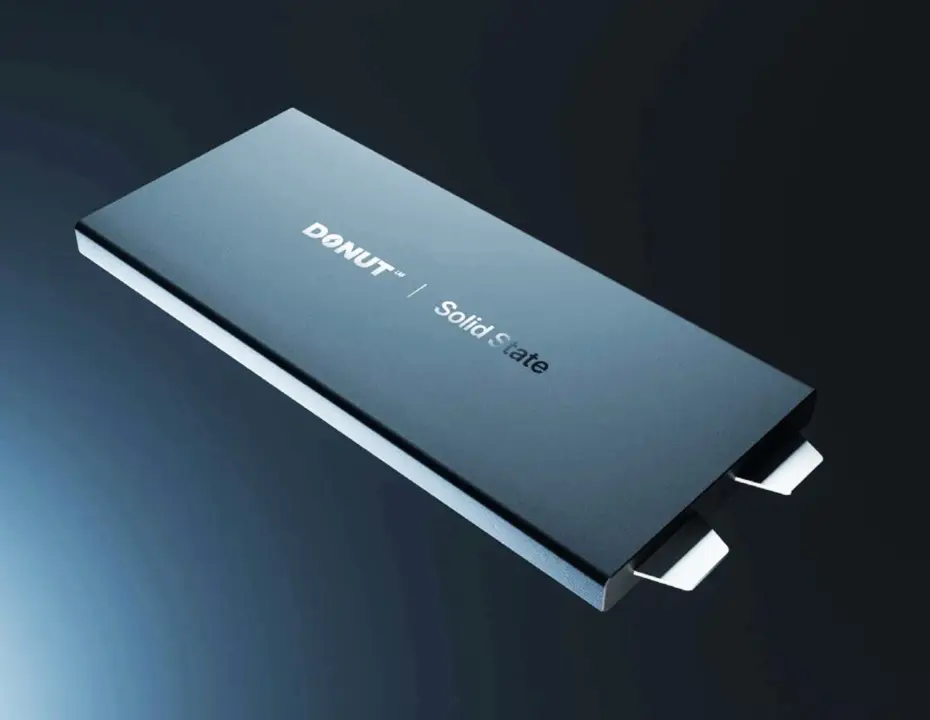
Finnish startup Donut Lab claims to have developed a solid-state battery that charges from zero to eighty percent in five minutes and lasts for over one hundred thousand cycles. Independent experts and YouTube researcher Ziroth now say the product is actually a conventional lithium-ion cell with misleading marketing. Following CES 2026, the Finnish startup achieved a $1.25 billion valuation amid significant doubt regarding its advertised battery capabilities.
Independent experts and researchers allege the Finnish startup's solid-state battery is actually a conventional lithium-ion cell with misleading marketing.
Donut Lab advertises an energy density of four hundred watt-hours per kilogram for its solid-state battery. Independent testing shows the actual energy density reaches only two hundred ninety-eight watt-hours per kilogram. The company has not disclosed full details on how it constructs the internal components, so the exact design will remain unclear until the product ships.
The startup claims the battery supports a service life of over one hundred thousand charging cycles and fills from zero to eighty percent in five minutes. Experts examined the physical cell and concluded that Donut Lab's solid-state battery is in fact just a conventional lithium-ion battery. The tested energy density matches only two hundred ninety-eight watt-hours per kilogram, which contradicts the advertised four hundred watt-hours per kilogram.
Independent analysts and YouTube researcher Ziroth suggest that promotional content inaccurately describes the battery's actual chemical composition. Despite broad skepticism concerning its performance assertions, the firm secured a $1.25 billion valuation after CES 2026. The precise internal construction of the battery will remain unclear until delivery, keeping its actual technological makeup unconfirmed.
The startup aims to enter the solid-state battery sector by promising rapid charging and extended lifespan, claims that independent observers are now challenging. Following CES 2026, the Finnish startup achieved a $1.25 billion valuation amid significant doubt regarding its advertised battery capabilities. Independent analysts and YouTube researcher Ziroth suggest that promotional content inaccurately describes the battery's actual chemical composition.
Donut Lab claims to have developed a solid-state battery that charges from zero to eighty percent in five minutes and lasts for over one hundred thousand cycles. Independent testing shows the actual energy density reaches only two hundred ninety-eight watt-hours per kilogram. The company has not disclosed full details on how it constructs the internal components, so the exact design will remain unclear until the product ships.
Source: NotebookCheck