A modified graphics card in the Chinese market adds 8GB of VRAM to an old Maxwell GPU, which matters because it allows legacy hardware to run modern games that would otherwise crash from memory shortages. This modification bridges the gap between outdated compute power and the memory demands of current titles, giving budget builders a viable path to play recent releases on older chips.
Clamshell memory upgrade enables playable frame rates
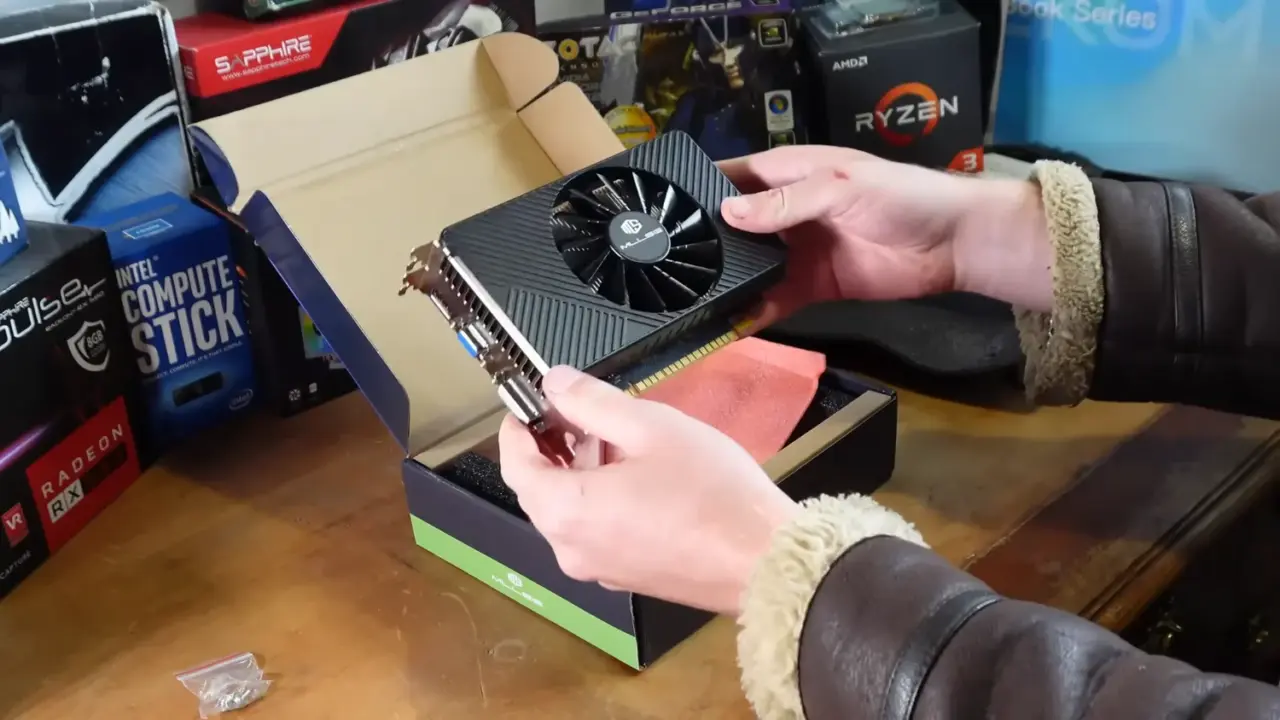
The product is a GTX 750 Ti 8GB card that uses a GM107 Maxwell die transplanted onto a new PCB. It features 512 CUDA cores, which matches the specification of a vanilla GTX 750 rather than the 640 cores found in a standard Ti model. Monitoring software identifies the GPU as a vanilla GTX 750, and the only aspect of the card that matches the GTX 750 Ti is its clock speed.
Specifications
- GPU Die: GM107 Maxwell
- CUDA Cores: 512
- Memory Capacity: 8GB
- Memory Type: GDDR5
- Memory Configuration: Clamshell mode
The card runs eight GDDR5 memory modules in clamshell mode to achieve the 8GB capacity. This configuration allows the GPU to store high-resolution textures without hitting the memory wall that typically limits older cards. The modification addresses the primary bottleneck for modern gaming on legacy hardware, even though the underlying compute units remain unchanged.
Budget-Builds Official tested the makeshift 750 Ti 8GB and found it can technically play modern titles at above 30 FPS thanks to the extra memory capacity. The card achieved 34 FPS average with 1% lows of 26 FPS running Cyberpunk 2077 at 720p with FSR upscaling set to balanced. It ran Baldur's Gate 3 at 32 FPS average with 1% lows set at 26 FPS using low quality settings, ultra textures, and a 720p resolution. Red Dead Redemption 2 ran at 37 FPS average and 33 FPS 1% lows using low settings with ultra textures at 720p. GTA V: Enhanced ran at 52 FPS average using normal settings with high textures at 1080p. Counter-Strike 2 ran at 98 FPS average using competitive settings and high textures at 1080p.

This hardware modification demonstrates that increasing VRAM can salvage older GPUs for modern gaming, provided users accept lower resolution and settings. The card remains compute-limited, so performance relies heavily on upscaling technologies like FSR to maintain playable frame rates. Buyers looking to extend the life of a GTX 750 series card can now access titles that were previously unplayable due to memory constraints.
Source: TweakTown