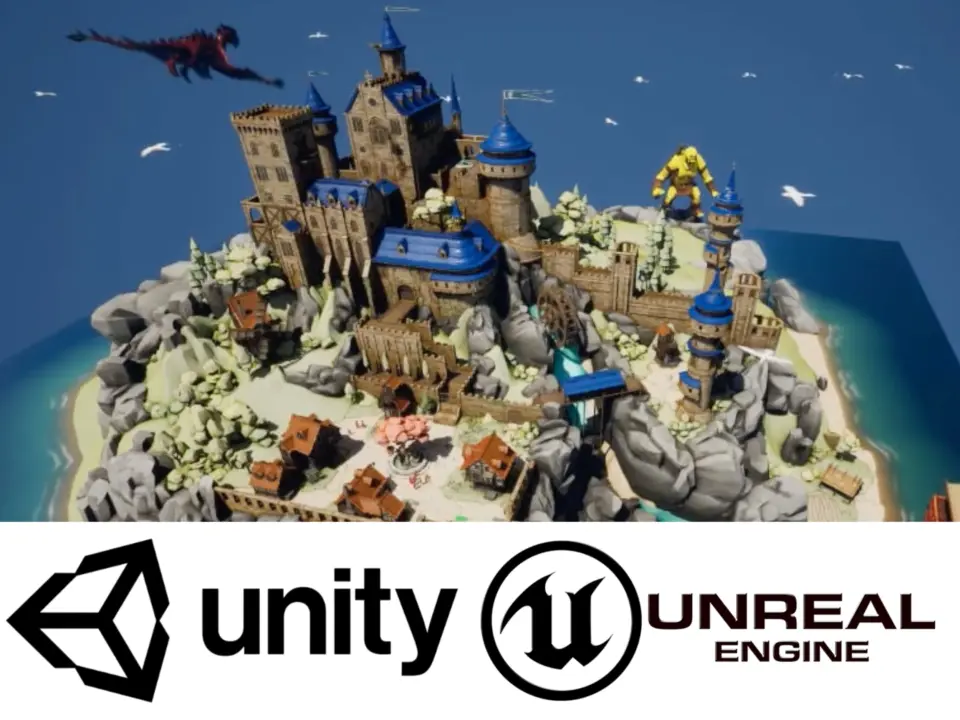
Unity Technologies and Epic Games have demonstrated a new interoperability protocol called PolySpatial, allowing games built in Unity to run inside Unreal Engine environments. This development matters because it could let Unity developers publish their projects directly to the Fortnite ecosystem without porting their code to Unreal Engine. The demo showcased a title called Fantasy Kingdom running across both engines simultaneously, with Unity managing gameplay logic and Unreal handling rendering and lighting. We see this as a potential shift for developers who want to reach Fortnite players while keeping their existing C# workflows intact.
Unity handles gameplay logic while Unreal manages rendering
The PolySpatial protocol functions by transferring positions, animations, and other scene data between the two engines. In the Unite Seoul 2026 demo, Unity handled gameplay, physics, and NPCs, while Unreal Engine was responsible for rendering and lighting. Epic Games CEO Tim Sweeney highlighted the advantage for developers, noting they could continue building games in Unity and publish them directly in Fortnite. This approach eliminates the need to port projects to Unreal Engine, which simplifies the pipeline for teams already invested in Unity.
Unity states that the current implementation introduces latency through additional server communication. This latency may hinder fast-paced genres such as fighting games or rhythm games, making them difficult to implement effectively. The technology is not yet ready for immediate use, as Early Access is not expected to begin before 2027. We note that the current demo shows interoperability between engines rather than native execution inside Fortnite itself.
The demonstration confirms that Unity and Epic Games are actively working on engine interoperability. The protocol allows Unity games to run inside Unreal Engine environments, bridging a significant technical gap. Unity manages gameplay logic while Unreal handles rendering and lighting, as shown in the Fantasy Kingdom demo. The goal remains to allow Unity developers to publish directly to Fortnite without porting, though the technology faces latency challenges.
Source: NotebookCheck