
Valve’s Steam Deck has seen its weekly sales plummet by an estimated 75 percent following a recent price increase, a shift that directly impacts buyers weighing the device’s current value. This steep decline signals a potential cooling in demand for the handheld as the company adjusts its pricing strategy. Readers looking to purchase a Steam Deck now face a market where unit availability and pricing stability are key considerations.
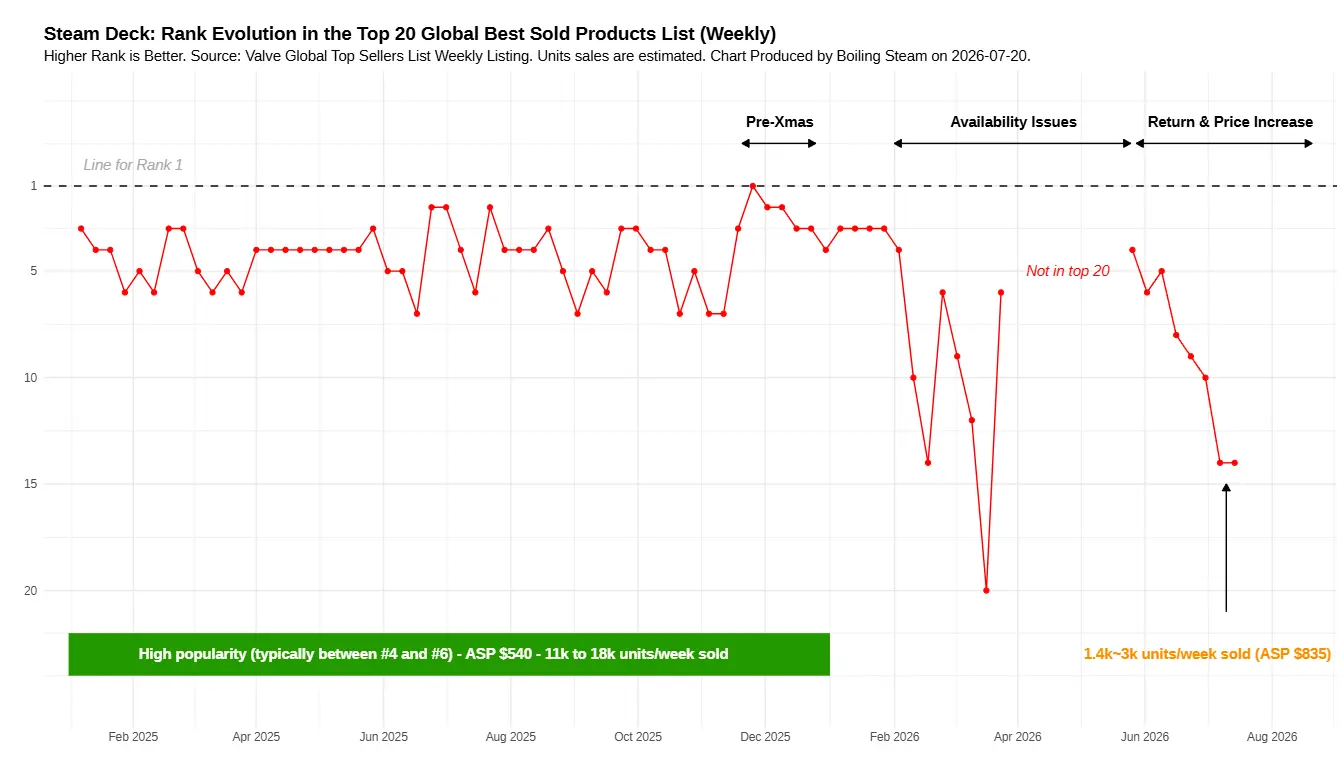
Analysts estimate weekly sales volume fell from 18,000 to 3,000 units
The analysis focuses on the Steam Deck OLED models, specifically the 512GB and 1TB variants, which have been central to recent sales discussions. Industry watchers Boiling Steam and SteamDeckHQ have tracked these trends by monitoring the device's position on global top seller lists. Their data suggests that the hardware has slipped from the 4th to 6th place spots to the 8th through 14th place range.
Estimates indicate that weekly sales volume dropped from a range of 11,000 to 18,000 units down to just 1,400 to 3,000 units. This calculation relies on revenue-to-unit conversion methods, as Valve does not publicly disclose exact sales figures. The sharp drop in volume correlates directly with the device's lower ranking in global sales charts.
Stock availability issues in the UK may be contributing to these lower numbers, with reports indicating that only the 512GB OLED model remains in stock. The 1TB model has not been restocked since the price increase, limiting options for consumers seeking higher storage capacity. These supply constraints complicate the picture of pure demand decline versus availability shortages.
We've been tracking Steam Deck closely — see our earlier coverage on Darksiders Warmastered Edition Gets Surprise Patch. This context highlights the ongoing ecosystem activity surrounding the device despite the sales fluctuations. The hardware continues to receive software updates even as market dynamics shift.
Confirmed data points to a significant drop in estimated weekly sales volume for the Steam Deck following the price hike. The correlation between lower rankings and reduced unit estimates suggests a strong sensitivity to pricing changes. Buyers should monitor stock levels and pricing stability before making a purchase decision.
Source: SteamDeckHQ