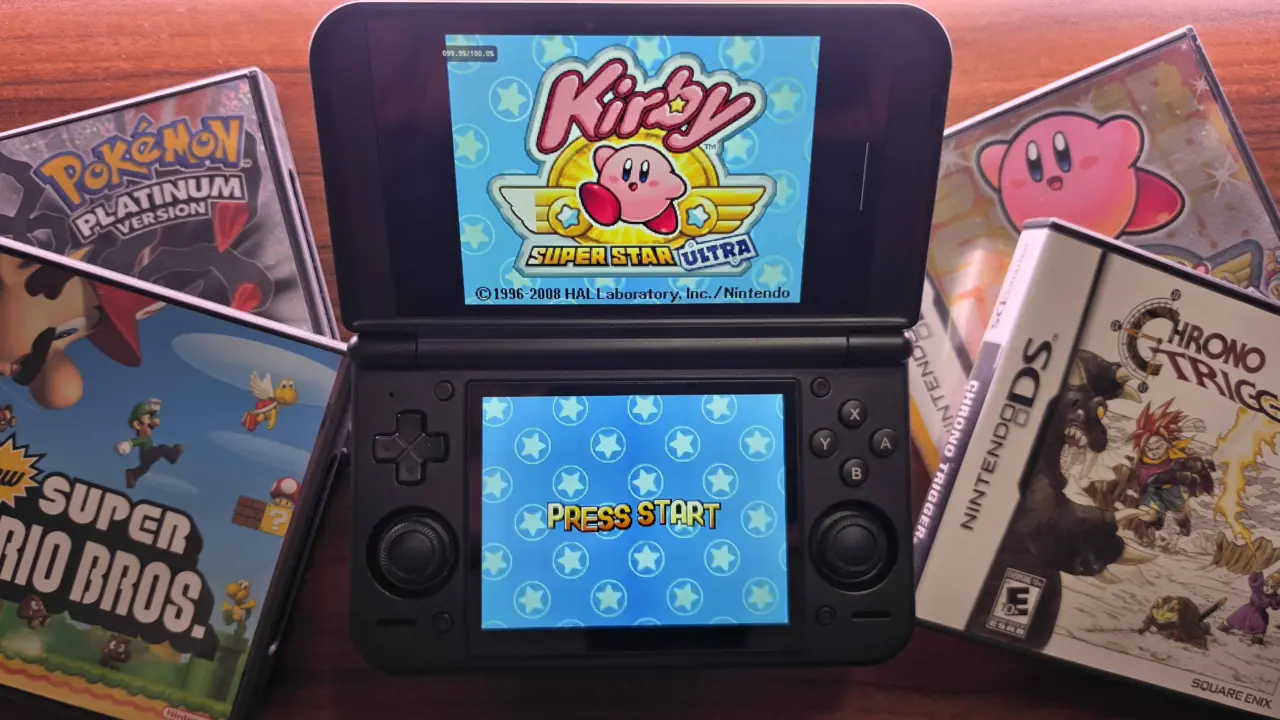
The Retroid Pocket Duo Lite arrives with a dual-screen design that fails to deliver a smooth experience. Buyers seeking a reliable handheld for retro gaming will likely find the device frustrating to use. The hardware limitations create a significant barrier to enjoying the intended form factor.
Qualcomm QCS6125 chipset restricts native display support to a single screen
Retroid built this handheld around the Qualcomm Dragonwing QCS6125 chipset. The company implemented a software translation layer to force both screens to function simultaneously. This approach bypasses the hardware's native display capabilities.
- Chipset: Qualcomm Dragonwing QCS6125
- Display Configuration: Dual-screen (software-based)
- Native Display Support: Single display (1×1 MIMO Configuration)
The QCS6125 chipset officially supports only one active display at a time. It utilizes a 1×1 MIMO configuration that restricts simultaneous screen output. The dual-screen feature relies entirely on the software layer to split the visual output.
Early impressions indicate the interface feels laggy during basic interactions. The lag becomes worse when users attempt to multitask between the two screens. Performance also falls short for even basic DS emulation. We tracked the original Retroid Pocket Duo Clamshell Handheld Announced to see how this model compares.
The device faces an uncertain future due to these technical constraints. We will see if the community can improve the experience or if the product fades away. The current hardware configuration limits practical use for most gamers.
Source: RetroHandhelds

Discussion
0 comments