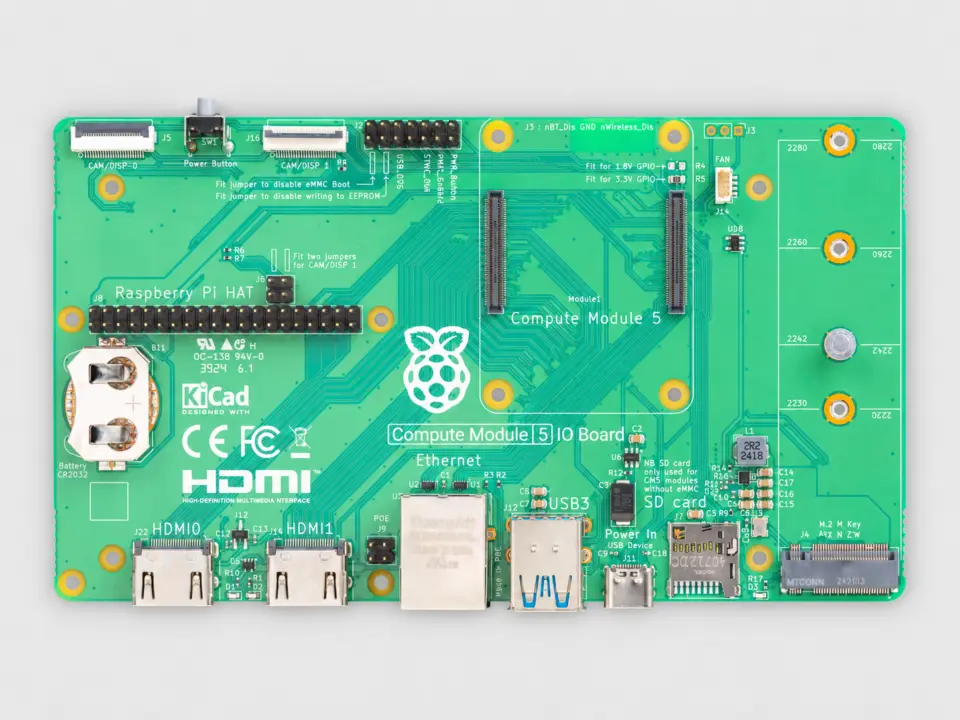
Raspberry Pi has introduced a policy change for its Compute Module 5 that blocks users from upgrading the device's memory capacity. This update matters because it ends the possibility of converting lower-spec models into higher-capacity units through simple hardware swaps. The company now prevents third parties from reselling modified hardware with uncertified memory components.
New policy prevents users from replacing soldered memory chips
The policy targets the specific hardware architecture of the Compute Module 5, where LPDDR packages are soldered directly to the board. This design choice means that memory upgrades previously required specialized BGA rework equipment and were already outside the scope of ordinary user modifications. The technical implementation now embeds memory density, organization, and tuning parameters directly into the system configuration.
- RAM Locking Policy: Newer devices can be deliberately locked to the original RAM capacity, preventing upgrades via soldered memory replacement.
- Technical Implementation: Memory density, organisation, and tuning/timing parameters are programmed into the system configuration.
- Hardware Type: LPDDR package soldered directly to the board (BGA).
Newer devices can be deliberately locked to the exact RAM capacity they originally shipped with. This locking mechanism ensures that even if a user installs an identical replacement chip, the system will not recognize it if the chip lacks the specific programmed tuning parameters. The configuration data acts as a verification step that prevents unauthorized memory configurations from functioning.
This approach effectively stops sufficiently skilled users from turning a 2 GB Compute Module 5 into an 8 GB model by replacing its soldered memory. The policy confirms that the hardware is now designed to reject any memory configuration that does not match the factory-set specifications. This change solidifies the hardware's integrity and prevents the resale of modified units.
Source: NotebookCheck



Discussion
0 comments