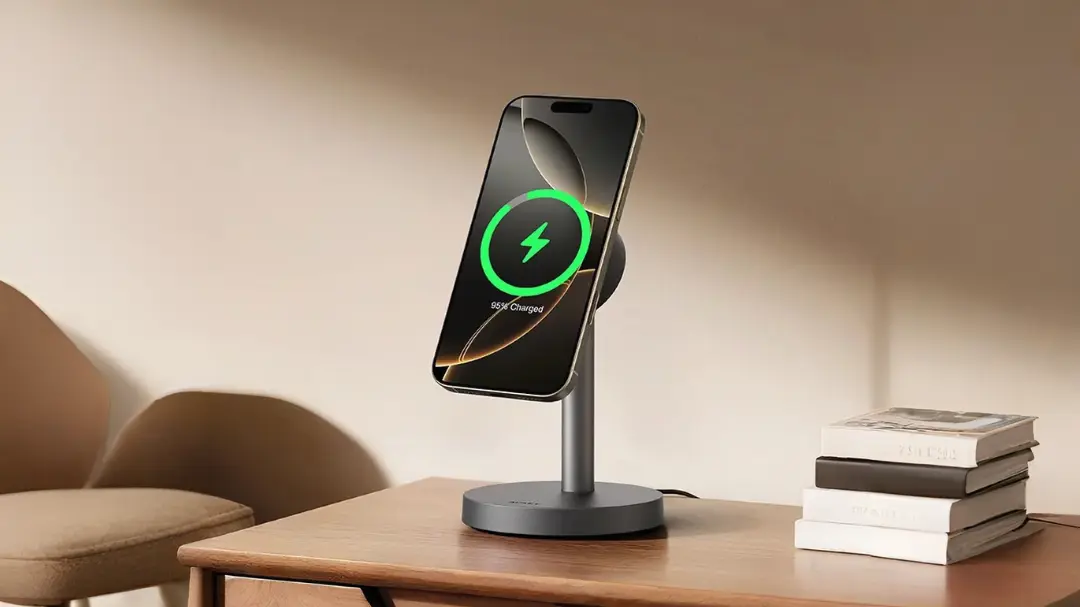
The Wireless Power Consortium is developing a new Qi 50W wireless charging standard that doubles the maximum power output of current wireless charging solutions. This significant increase in charging speed matters to smartphone users who want to reduce the time their devices spend plugged in or on a charging pad. The new standard aims to address the thermal and efficiency limitations that have constrained wireless charging speeds in recent years.
Major tech firms collaborate on low-inductance architecture to double current wireless charging speeds
The development of this standard involves major technology companies including Apple, Google, Huawei, Honor, Oppo, and Vivo. These manufacturers participated in a technical conference held in Beijing from June 22 to 25, 2025, to discuss the technical requirements for the next generation of wireless power transfer. Their collaboration ensures that the new standard will be compatible with a wide range of existing and future mobile devices.
Qi 50W Key Specifications
- Charging Power: 50W
- Architecture: Low-inductance, low-voltage
- Expected Release: 2028
- Previous Standard: Qi2 25W
Xiaomi proposed a low-inductance, low-voltage charging architecture to solve the heat buildup and coil loss issues found in existing Qi2 designs. The Wireless Power Consortium officially incorporated Xiaomi's architecture into the Qi 50W drafting process in the first quarter of 2026. This technical shift is designed to improve energy efficiency and reduce the temperature of both the charger and the receiving device during high-power charging sessions.
Over 20 companies participated in a Plugfest event to test the compatibility of prototype hardware against the emerging standard. These testing sessions allow manufacturers to verify that their devices can communicate effectively and charge safely using the new low-inductance approach. The consortium plans to release the final Qi 50W specification in 2028, giving manufacturers several years to integrate the technology into their product lines.
Source: GIZMOCHINA