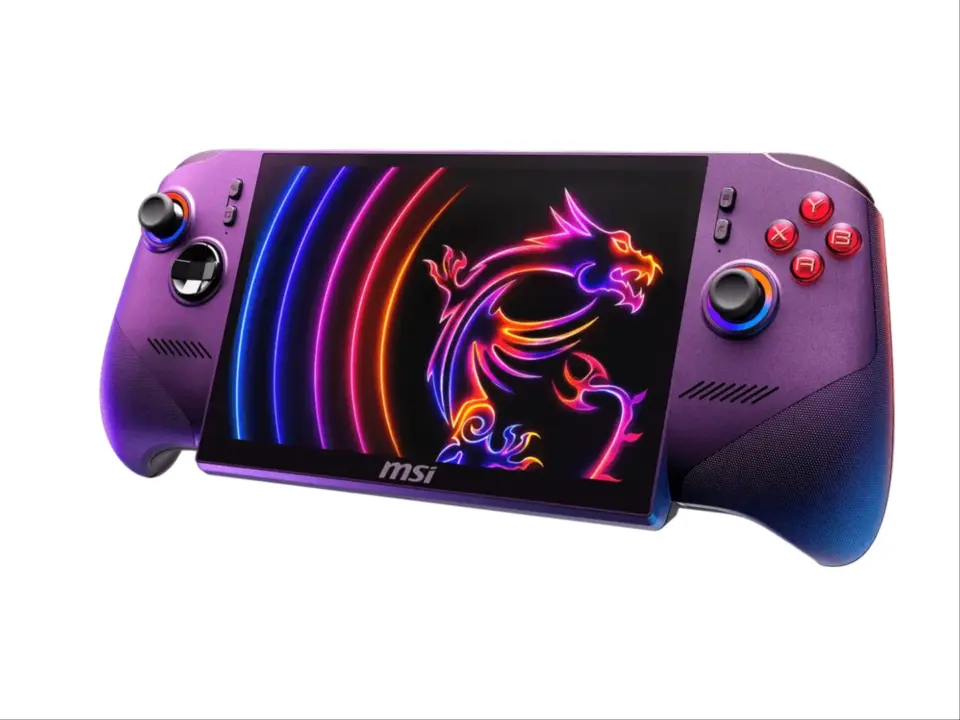
MSI is cutting the price of its Claw 8 EX AI+ handheld by $300 to make the device more accessible to budget-conscious gamers. This new variant swaps the flagship GPU for a slightly slower chip and reduces storage, but it keeps the core performance intact for portable play. We see this as a smart move to capture buyers who want the Claw 8 experience without the premium price tag.
MSI releases a more affordable handheld variant with reduced storage and a different GPU
The updated model, identified as the Claw 8 EX AI+ CG3M-072USY, runs on an Intel Core Ultra processor paired with an Intel Arc B370 iGPU. This is a step down from the Arc B390 found in the original launch unit, but it still provides solid graphics power for a handheld form factor. The device retains 32 GB of LPDDR5x RAM to ensure smooth multitasking and gaming performance.
Specifications
- GPU: Intel Arc B370
- RAM: 32 GB LPDDR5x
- Storage: 512 GB SSD
- Display: 8-inch 120 Hz Full HD+ (1920×1200) IPS-Level
- Battery: 80Wh
MSI has adjusted the internal storage from 1 TB down to a 512 GB SSD to hit the lower price point. The 8-inch IPS-Level display remains unchanged, offering a 120 Hz refresh rate and Full HD+ resolution with 100% sRGB coverage. An 80Wh battery supports the system, and the chassis now comes in a new Luminous Blue color option.
Connectivity includes two Thunderbolt 4 ports that support DisplayPort and Power Delivery 3.0 for peripheral expansion and charging. The handheld supports 65W fast charging, which helps minimize downtime between gaming sessions. This configuration targets users who prioritize portability and value over maximum storage capacity.
The MSI Claw 8 EX AI+ CG3M-072USY is priced at 1499 USD (around $1,499) and goes on sale starting October 30. Pre-orders are currently open for this specific US model. We have been tracking MSI Claw 8 EX AI+ closely — see our earlier coverage on SteamOS 3.8.25 Beta Adds Support for.
This release gives buyers a concrete entry point into the Claw 8 ecosystem at a more competitive price. The hardware changes are internal, so the user experience remains largely consistent with the original launch model.
Source: NotebookCheck