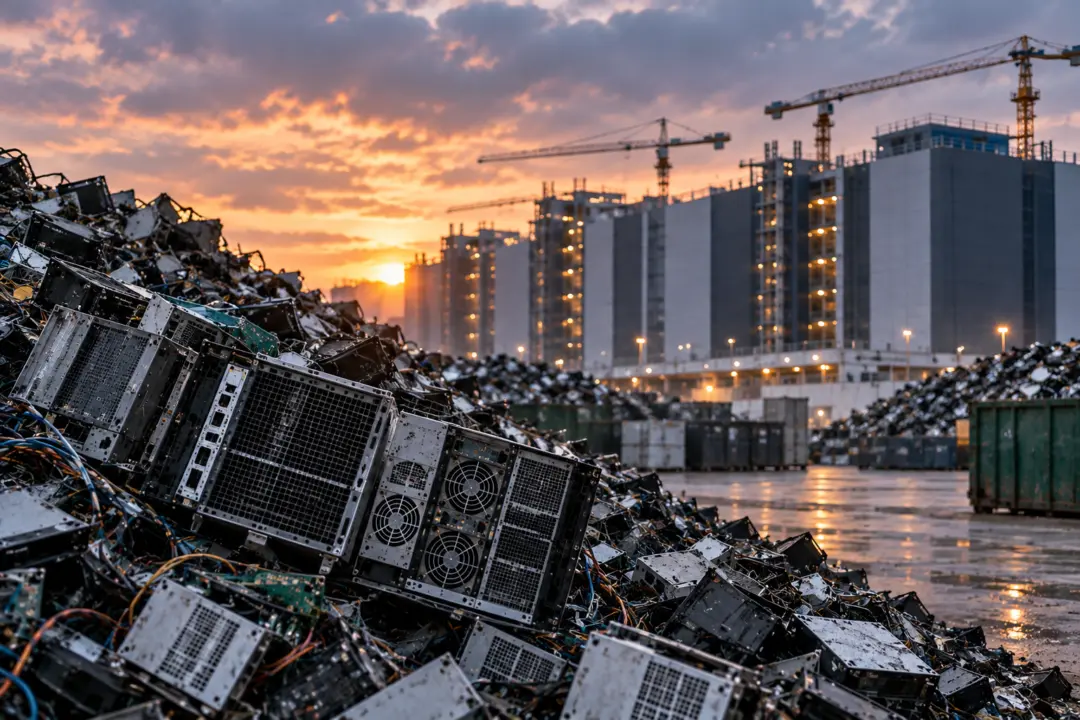
The rapid expansion of artificial intelligence infrastructure is triggering a projected surge in electronic waste that could overwhelm current disposal systems. A new report from the Basel Action Network warns that this growth will create up to 13 million metric tonnes of e-waste annually by 2030. This volume represents a significant shift in environmental impact, as the waste stream includes hazardous materials from servers, networking gear, and cooling systems. The scale of this problem matters because global electronic waste management is currently inadequate, leaving most of this toxic byproduct unmanaged.
Report warns AI hardware replacement cycles will overwhelm disposal systems
The core driver of this waste is the aggressive hardware replacement cycle required for AI data centers. Operators must replace equipment every two to five years to maintain performance and efficiency. This frequent turnover accelerates the accumulation of discarded hardware, including power systems and specialized computing components. The Basel Action Network highlights that these components often contain hazardous substances that require careful handling during disposal.
- Projected E-Waste Volume: 13 million metric tonnes per year by 2030
- Projected E-Waste Volume (Long-term): Triple the world’s annual output of e-waste over the next 25 years
- Hardware Replacement Cycle: Every two to five years
- New Computing Capacity: Roughly 100 GW by 2030
- Current E-Waste Management: Around one-fifth
Projections indicate that AI-driven infrastructure could triple the world’s annual output of e-waste over the next 25 years. This long-term trend is linked to an estimated 100 GW of new computing capacity being added globally by 2030. The report emphasizes that these figures are projections based on assumptions about construction pace and replacement rates, not measured outcomes. Despite the uncertainty, the potential volume of waste is substantial enough to strain existing waste management infrastructure.
Current electronic waste management practices are insufficient to handle even today’s waste levels, let alone the projected increase. Only around one-fifth of electronic waste is currently properly managed, leaving the majority to be processed informally or landfilled. This gap in management highlights the urgency of addressing the environmental impact of AI hardware. The report serves as a warning that without improved recycling and disposal methods, the e-waste crisis will worsen significantly.
Source: NotebookCheck



Discussion
0 comments