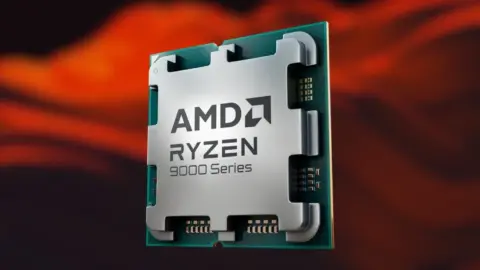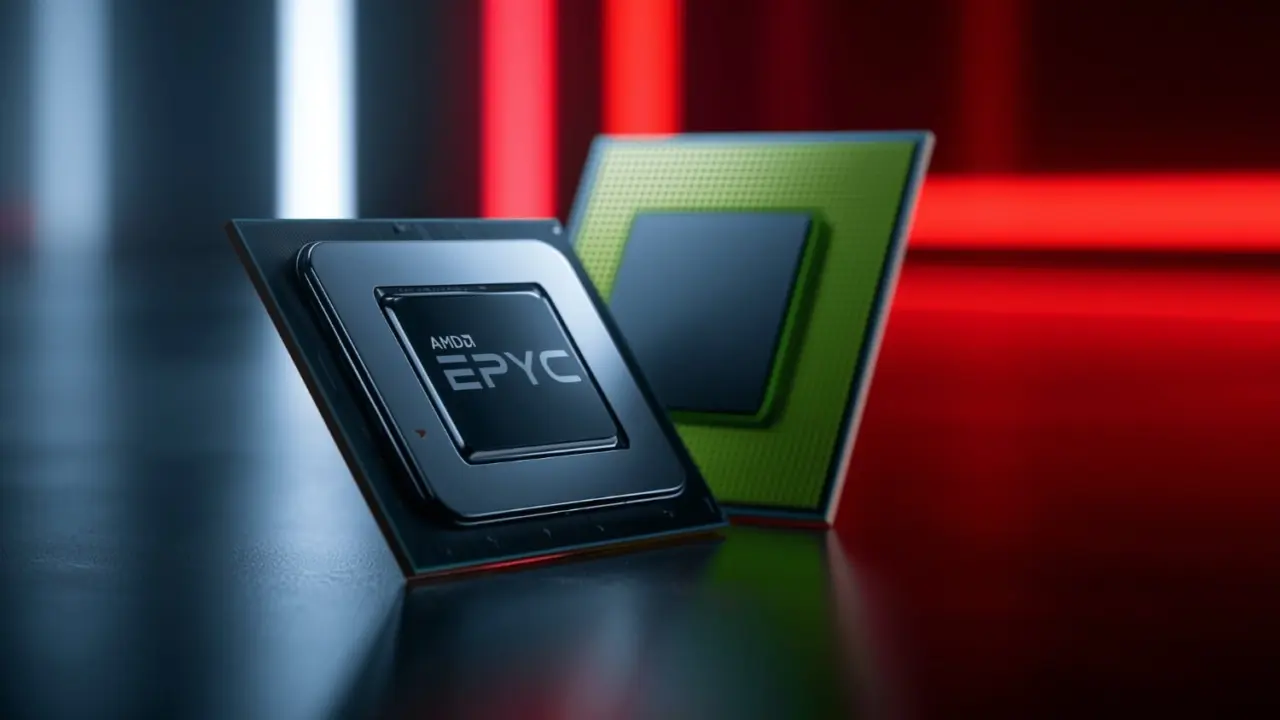
Data centers are facing tighter power and thermal limits as artificial intelligence workloads grow. AMD is pushing back with a new server chip that aims to pack more processing power into standard racks. The company calls this next-generation processor EPYC Venice.
AMD claims its next-generation server chip outpaces rival AI processors in rack-scale benchmarks.
The EPYC Venice chip targets the high-density AI market. It competes directly with NVIDIA Vera and Intel Xeon processors in data center deployments. AMD positions the chip as a rack-scale solution rather than just an isolated component upgrade.
Spec comparison
| Spec | EPYC Venice | NVIDIA Vera |
|---|---|---|
| Cores per Processor | 256-core | Information insufficient |
| Performance Increase vs NVIDIA Vera | 3.3X performance increase | Baseline |
| Cores per Rack | over 36,000 cores | 22,500 cores |
AMD states that EPYC Venice features 256 cores per processor. The company claims this design delivers over 36,000 cores when deployed across a single standard data center rack. This core count exceeds the 22,500 cores NVIDIA Vera offers in the same footprint.
Performance benchmarks from AMD show EPYC Venice delivering a 3.3X performance increase compared to NVIDIA Vera within a 100 kW power budget. The chip also provides a 27% advantage in performance per core over Vera. These figures apply specifically to AI workloads running at rack scale.
AMD frames the comparison around physical constraints like floor space and software compatibility. The company argues that infrastructure should be planned at the rack level instead of focusing on individual component specs. This approach aims to maintain x86 software continuity while supporting dense AI tasks.
NVIDIA Vera performance figures remain estimates based on currently available data. AMD benchmarks rely on a single rack configuration with a 100 kW power limit, which may not reflect all real-world deployment scenarios.
Source: TweakTown