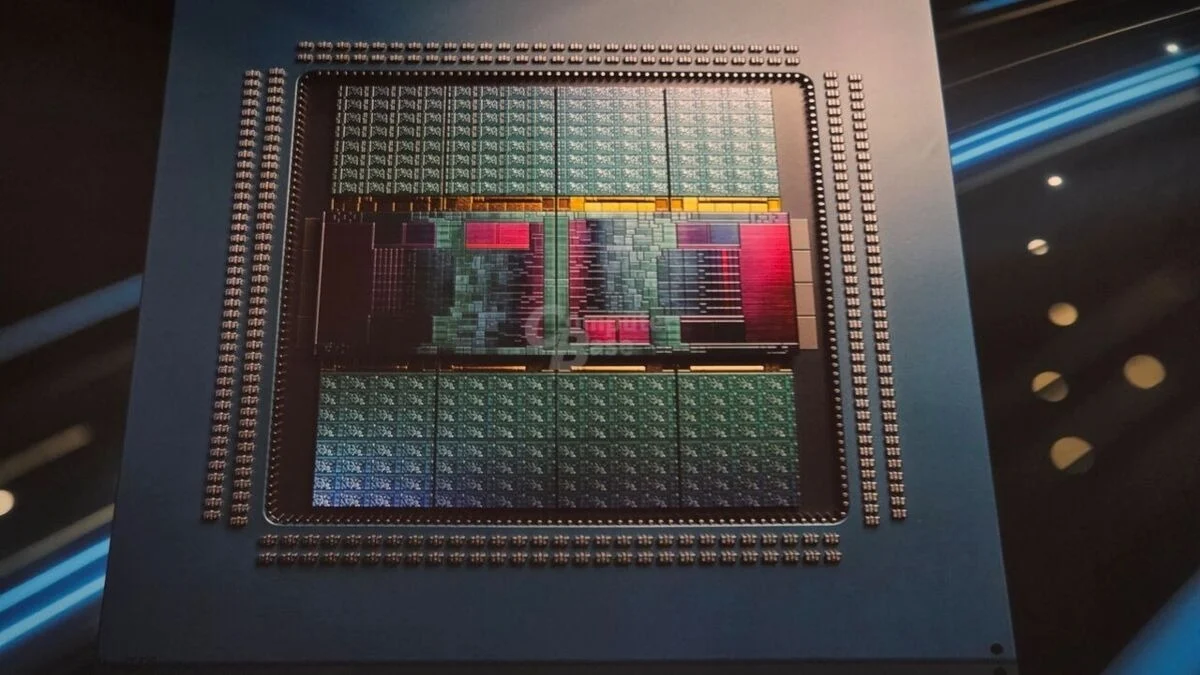
Banners at the Moscone Center have revealed a die shot of AMD's upcoming EPYC Venice processor, signaling that the company is preparing to launch its next-generation server chips. This visual confirmation matters because it establishes the architectural direction for data centers looking to replace aging infrastructure with more efficient hardware. Buyers monitoring server upgrades will find this relevant as Venice promises significant gains over current offerings.

Die shot confirms 256-core Zen 6c architecture and 2nm manufacturing
The Venice chip utilizes a dense Zen 6c configuration built on TSMC's 2nm process node. This manufacturing transition replaces older FinFET transistors with Nanosheet technology to improve density and efficiency. The flagship configuration arranges eight compute dies around two large input/output dies at the center of the package. This layout supports a total of 256 cores and 512 threads for high-throughput workloads.
Specifications
- Core Count: 256 cores
- Thread Count: 512 threads
- Architecture: 8 Compute Dies (CCD) surrounding 2 I/O dies; Zen 6c
- Process Node: TSMC 2nm
- Transistor Tech: Nanosheet
AMD claims that Venice delivers more than 70 percent performance and efficiency improvement compared to the current EPYC Turin generation. Early benchmarks presented by the vendor show the new chip is over three times faster than NVIDIA's Vera CPU. The company also states that the 2nm process provides 10 to 15 percent higher performance at the same power level. This efficiency gain allows for 25 to 30 percent lower power consumption when matching the performance of previous nodes.
We've been tracking EPYC Venice closely — see our earlier coverage on AMD EPYC Venice Processor Delivers 3.3X. The processor is positioned to compete directly in the high-performance computing market against rival server solutions. Data centers can expect these chips to offer a substantial step up in raw compute power while reducing energy costs. The visual teaser confirms that AMD is advancing its roadmap toward widespread 2nm adoption in the server segment.
Source: TweakTown