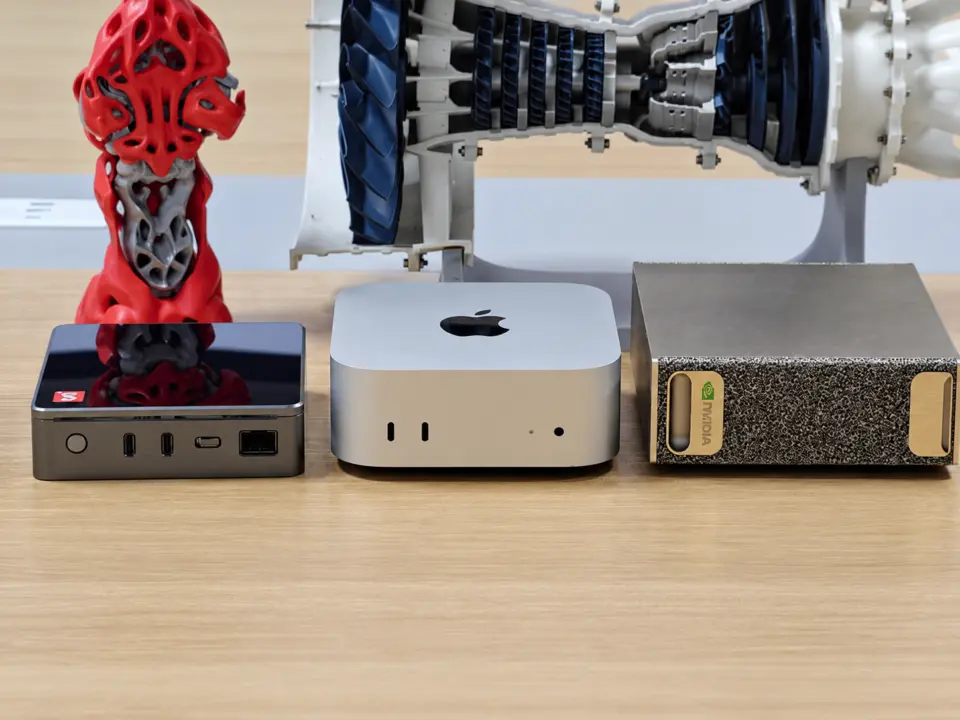
Axera's AX8860P SoC aims to compete with high-end AI inference accelerators. The announcement is significant as it potentially gives an alternative for developers and small-scale users to proprietary expensive hardware. The SoC is positioned to cater to the increasing need for affordable large language model (LLM) inference.
Sipeed MaixStation promises LLM benchmark gains
AX8860P forms the backbone for Sipeed's forthcoming MaixStation. The hardware manufacturer is developing the surrounding system based on Axera's SoC. The goal is to build a complete AI inference system with Axera's silicon. This collaboration aims to showcase the SoC's potential in a user-friendly package.
Specifications
- CPU: 16 Arm Cortex-A55 cores
- NPU Performance: 256 TOPS FP4
- Process Node: 6 nm
- Memory Support: Up to 128 GB LPDDR5X
- Memory Bandwidth: 273 GB/s
The SoC consists of 16 Arm Cortex-A55 CPU cores along with a specialized neural processing unit (NPU). The NPU provides up to 256 TOPS of FP4 computation, leveraging Axera's proprietary AXNeutron architecture. The silicon is built on a 6nm process to address power efficiency.
The SoC can support up to 128GB of LPDDR5X memory with a 256-bit interface. This configuration can support a peak bandwidth of 273GB/s to feed the NPU. Additionally, it features PCIe 5.0 for high-speed connectivity to other devices.
Sipeed asserts that the MaixStation can exceed Nvidia's DGX Spark on certain LLM inference benchmarks. They credit the performance gains to the native dense FP4 acceleration and optimal memory bandwidth utilization. Entry-level models are expected to cost less than $2,000 while higher-end models could be under $4,000.
MaixStation will launch through Kickstarter campaign likely at the end of 2026. The performance claims haven't yet been independently verified. The advertised 256 TOPS performance isn't confirmed for sustained real-world usage without 3rd party verification.
Axera's AX8860P claims to offer a cost-effective alternative to existing AI acceleration hardware. Sipeed's model should attract users looking for budget-friendly options for LLM inference. It remains to be seen how well they perform and become available based on the forthcoming Kickstarter success.
Source: NotebookCheck
Discussion
0 comments