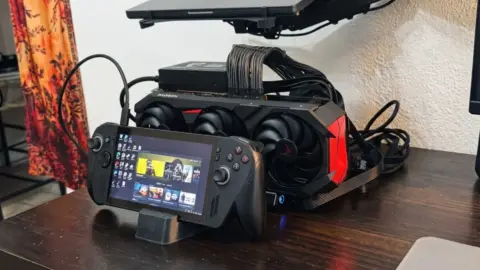
Small form factor builders now have a viable option for the RX 9060 XT, but the compact design comes with a measurable performance penalty. The low-profile variant targets users who need a shorter card for mini-ITX cases, yet it delivers roughly 7% less speed than the standard model. This tradeoff matters because it defines the real-world cost of saving space in a tight chassis.
Compact design saves space but reduces frame rates in 1440p gaming
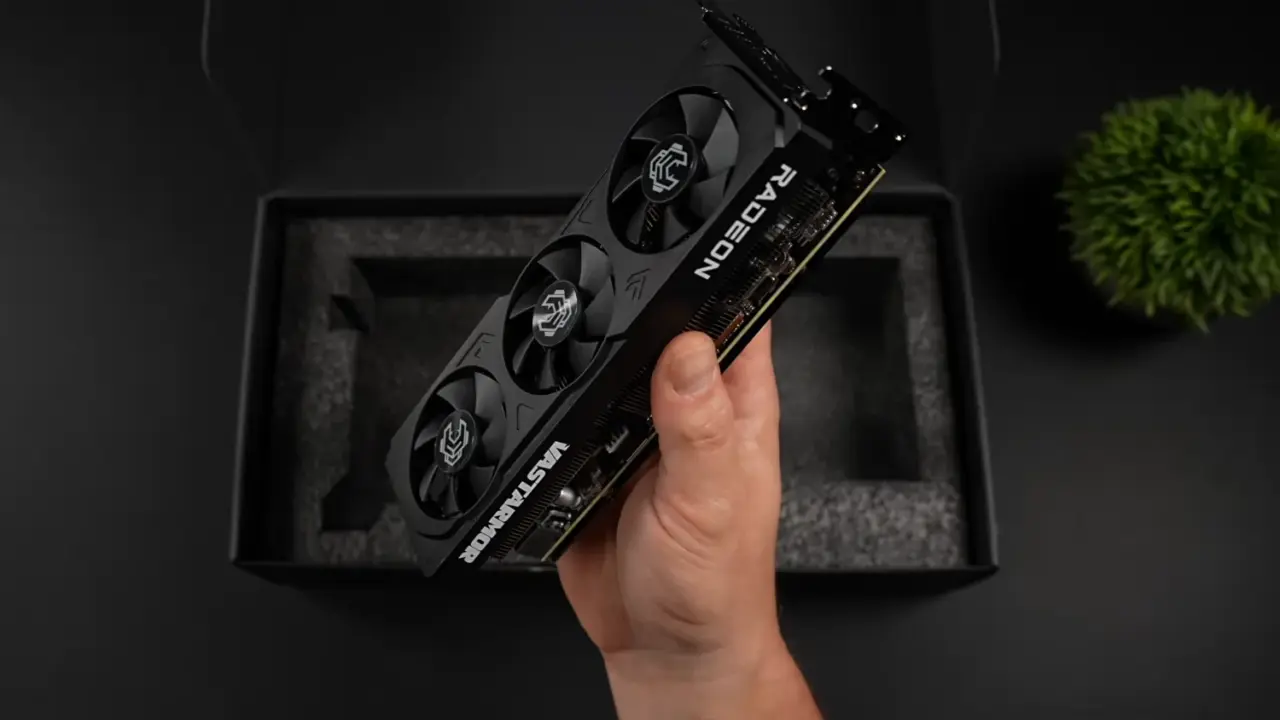
The test unit was the Vastarmor RX 9060 XT LP, a low-profile version of AMD's mid-range graphics card. It features a 16GB memory configuration and runs on a reduced thermal design power of 140W. This is a significant drop from the 160W power draw of the standard full-height RX 9060 XT 16GB.
Specifications
- 3DMark Time Spy Score (LP): 15,057
- 3DMark Time Spy Score (Vanilla): 16,333
- 3DMark Steel Nomad Score (LP): 3,583
- 3DMark Steel Nomad Score (Vanilla): 3,820
- TGP (LP): 140W
Benchmarks from ETA Prime highlight the performance gap between the two models. The low-profile card scored 15,057 in 3DMark Time Spy, compared to 16,333 for the standard version. It also achieved 3,583 points in Steel Nomad, while the standard model reached 3,820 points.
Users can recover some lost performance by pushing the card's power limit higher. Overclocking tools allow the TGP to reach approximately 155W, providing extra headroom for gaming. In-game tests at 1440p Ultra settings showed 88 FPS in Forza Horizon 6 and 76 FPS in Cyberpunk 2077.
The Vastarmor model confirms that low-profile GPUs can still handle modern titles at high settings. Buyers prioritizing case size over maximum frame rates should expect a slight reduction in performance. The card remains a functional choice for compact builds that need 16GB of VRAM.
Source: TweakTown