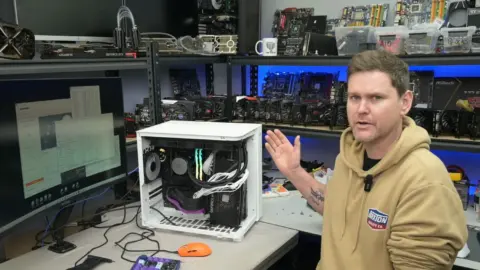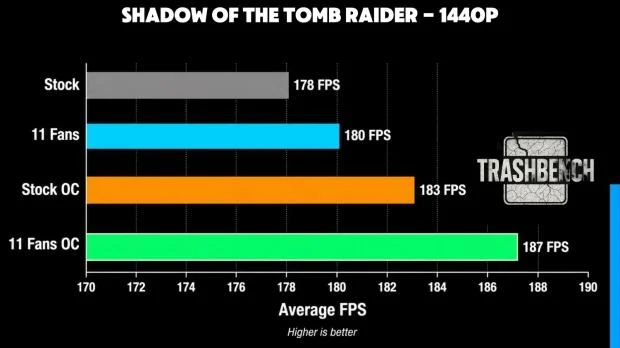
We often hear that cooler GPUs run faster, but this experiment shows how much that actually matters for a modern graphics card. An Australian YouTuber named TrashBench built an extreme cooling setup for the NVIDIA GeForce RTX 3080 to test the real-world value of aggressive thermal management. The results prove that for this specific card, chasing lower temperatures yields very little extra gaming speed. This matters because it challenges the common assumption that better cooling automatically equals a significantly better gaming experience.
Extreme cooling setup reveals power limits override thermal gains
TrashBench took a standard NVIDIA GeForce RTX 3080 and surrounded it with eleven separate fans plus an AIO liquid cooler. This massive cooling array was designed to push the card well beyond its normal operating limits. The goal was to see if removing thermal constraints would allow the GPU to sustain higher clock speeds for longer periods. The setup represents a complex engineering effort rather than a practical solution for typical PC builders.
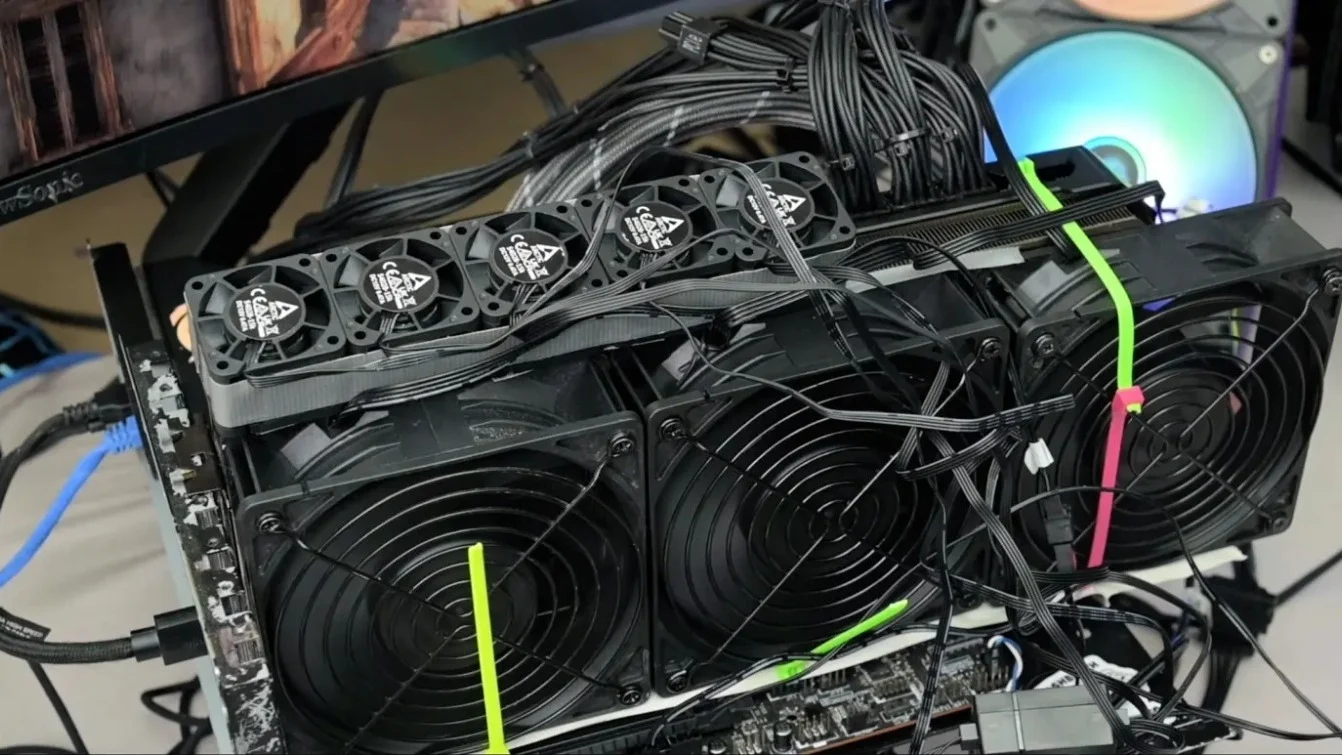
The cooling modification achieved a temperature drop of 33 degrees Celsius compared to the stock cooler. Despite this massive improvement in thermal performance, gaming performance only rose by around 4 FPS on average. This small gain highlights a key limitation of the RTX 3080 architecture. The card is power-limited rather than thermal-limited, meaning it hits its power cap before it hits a thermal wall.
NVIDIA already tuned the Ampere boost algorithm to chase clocks within a fairly tight power envelope. This means the GPU naturally stops increasing its speed once it reaches its power limit, regardless of how cool it gets. The extreme cooling mod essentially hit a ceiling where additional thermal headroom provided no further performance benefit. The setup is described as a science experiment with no practical recommendation for daily use due to complexity and lack of durability guarantees.
This experiment confirms that power limits are the primary constraint for the RTX 3080 during gaming workloads. Users seeking substantial performance improvements are advised to prioritize power limit adjustments or newer hardware rather than pursuing extreme cooling modifications. The RTX 3080 remains a capable card, but its performance is tightly bound by its power design rather than its ability to dissipate heat.
Source: TweakTown