Building a PC with a vertical GPU mount just got a lot riskier for owners of the NVIDIA RTX 5090. The 575W graphics card generates enough heat to melt the plastic insulation on nearby PCIe riser cables. This thermal issue forces builders to rethink how they route cables in tight cases.
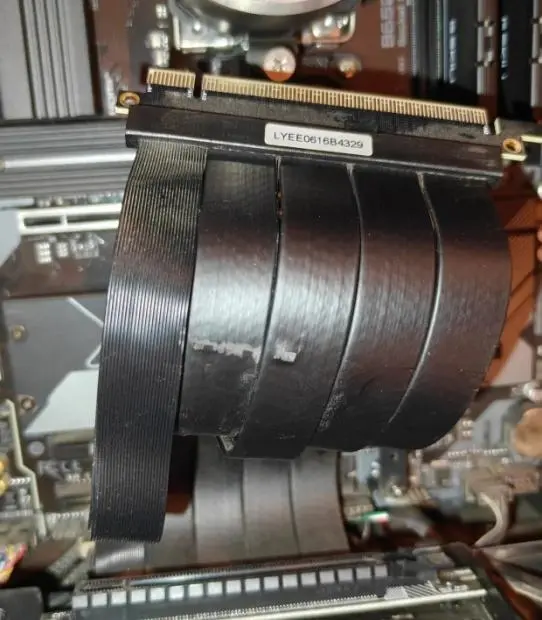
575W GPU heat deforms riser insulation in tight vertical mounts
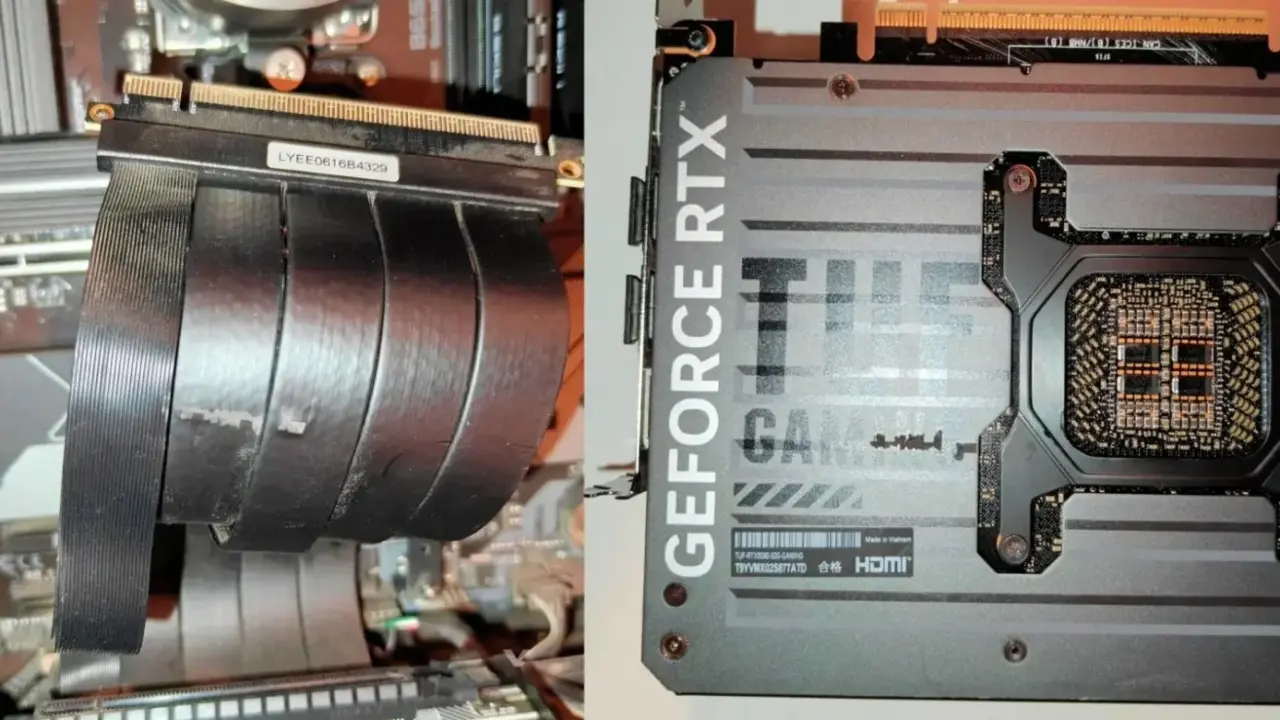
The damage occurred specifically with an ASUS TUF Gaming RTX 5090 installed in a vertical mounting configuration. A Reddit user reported that the card's backplate sat directly against the riser cable. The quad-slot cooler design traps heat against the backplate, creating a localized hot zone.
NVIDIA rates the RTX 5090 at a maximum power consumption of 575W. This high wattage translates to significant exhaust heat from the card's rear. When the riser cable touches the backplate, the plastic insulation absorbs that trapped heat until it deforms.
The report confirms that the damage was limited to the cable insulation. No electrical damage occurred to the GPU or the connector itself. Users can prevent this by using zip ties or cable combs to create a physical air gap. This simple fix keeps the hot backplate from touching the sensitive plastic components.
We have been tracking RTX 5090 closely and saw similar thermal concerns in earlier reports on connector issues. This new finding highlights the physical challenges of mounting such a large and hot component. Builders should prioritize airflow and clearance when designing their chassis layout.
Source: TweakTown