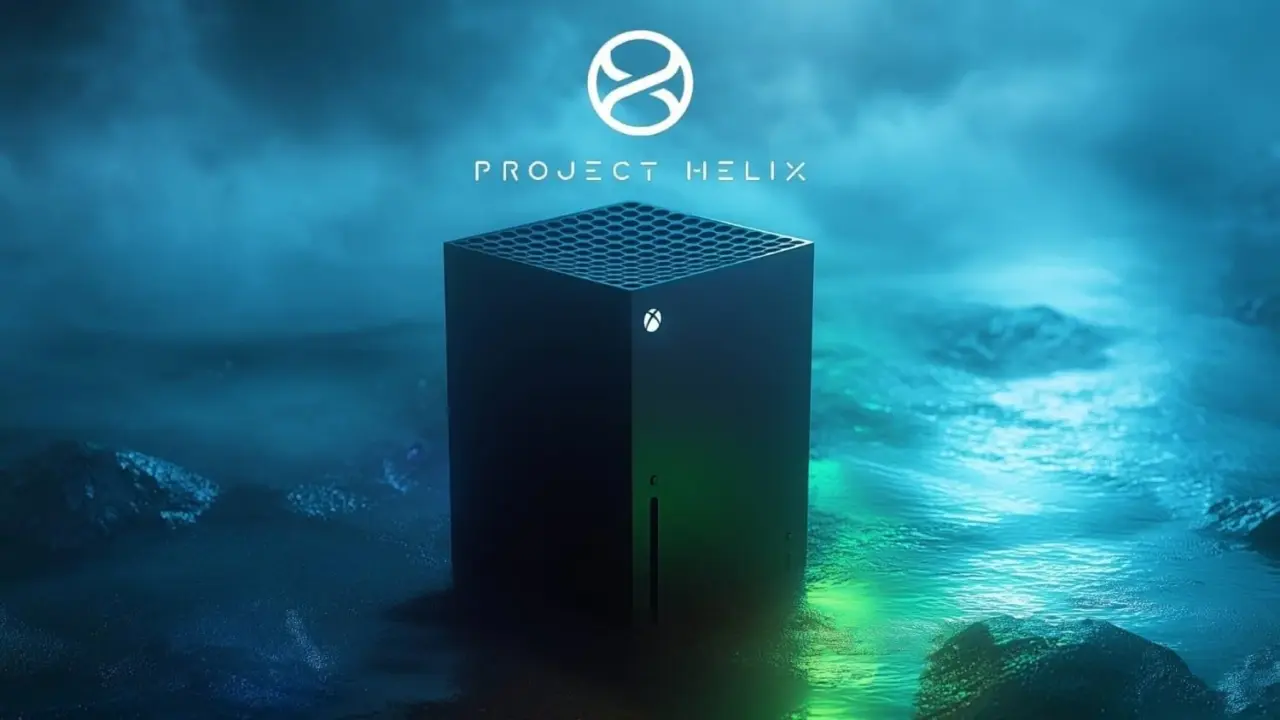
Microsoft is quietly preparing the next generation of its gaming console, Project Helix, and the shift in graphics technology could redefine what players expect from home entertainment systems. Industry analysis suggests the device will move away from current-generation standards to a custom AMD system-on-chip built on the unconfirmed RDNA 5 architecture. This transition matters because it promises to bridge the gap between console and high-end PC gaming through significantly improved ray tracing and AI-driven upscaling. Buyers looking for the most immersive visual fidelity in the coming years should watch this development closely as it sets the new baseline for console performance.

Leaked RDNA 5 specs suggest Project Helix could match RTX 5080 ray tracing
The core of this new hardware relies on a custom AMD SoC that Microsoft has already confirmed contains integrated AI intelligence. While the specific chip name remains internal, industry leakers refer to the GPU component as the AT2. This silicon is designed to handle the heavy lifting of modern rendering tasks, specifically targeting the low-precision matrix operations that power AI upscaling and ray tracing. The move to a custom silicon solution allows Microsoft to tailor the hardware specifically for the demands of the next Xbox generation.
- GPU Architecture: AMD RDNA 5 (custom SoC)
- AI Matrix Throughput: Roughly twice the low-precision matrix throughput of RDNA 4/Blackwell per SIMD
- Ray Tracing Performance: Order of magnitude leap
- Upscaling Technology: FSR Diamond
Technical estimates indicate that the RDNA 5 architecture could deliver roughly twice the low-precision matrix throughput of RDNA 4 or NVIDIA Blackwell per SIMD unit. According to analysis by Kepler_L2, this efficiency gain is critical for running AMD's next-generation FSR Diamond technology, which relies on neural upscaling to boost frame rates. Microsoft has also promised an order of magnitude leap in ray-tracing performance and capability, aiming to make real-time global illumination a standard feature rather than a niche option. These specifications point to a generational jump in how the console handles complex lighting and scene rendering.
Speculative analysis from leaker eXtas1s suggests that RDNA 5 could deliver two to three times the path-tracing performance per compute unit compared to RDNA 4. Based on these estimates, the AMD AT2 GPU could approach the performance levels of the NVIDIA RTX 5080 in path-traced workloads. It is important to note that Microsoft and AMD have not officially confirmed RDNA 5 as the final GPU architecture for Project Helix. Furthermore, the performance figures cited are speculative analysis based on matrix throughput metrics rather than leaked benchmark results from actual hardware testing.
The project remains in the rumor and analysis phase with no official pricing or availability dates announced by Microsoft. The technology stack, including FSR Diamond and the custom AMD SoC, is still under development and subject to change before final release. Readers should treat the RTX 5080 comparisons as theoretical projections derived from architectural leaks rather than guaranteed performance outcomes. The console will likely launch with these features enabled, but the final user experience will depend on the actual silicon performance and software optimization.
Source: TweakTown


Discussion
0 comments