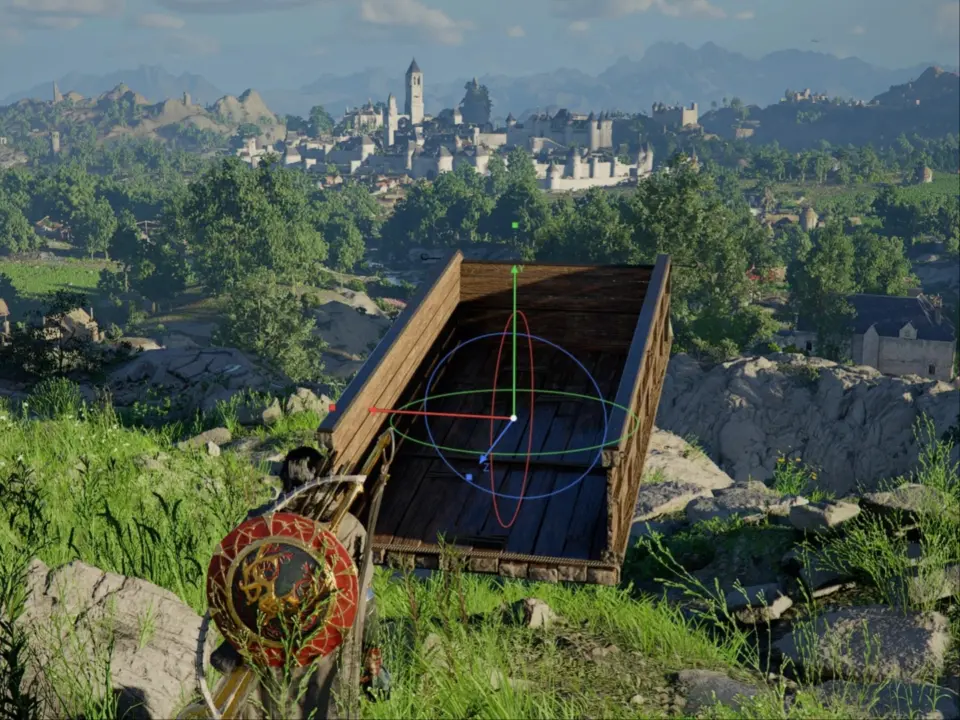
Pearl Abyss released Crimson Desert in March, and a new community modification now fundamentally changes how players interact with the game world. This update matters because it transforms a linear action role-playing game into a persistent sandbox where users can build and share structures without altering the original codebase. Players who enjoy creative construction or map design can now place thousands of objects and save their work for future sessions.
New tool lets players place thousands of objects in persistent worlds
The new tool, named World Builder, comes from a creator known as Daebak and is available on Nexus Mods. It integrates directly into Crimson Desert, allowing users to manipulate in-game assets with precision. The mod supports Blender-style positioning and snapping, giving builders fine control over where walls, ruins, furniture, and props appear. These built projects save locally and load automatically when players re-enter the world.
World Builder enables the persistent placement of more than 48,000 distinct objects within the game environment. The system handles a wide variety of assets, including structural walls, ancient ruins, household furniture, and decorative props. Users can arrange these items using familiar 3D modeling techniques like snapping and direct manipulation. The modification operates as a layer on top of the game, meaning it does not rewrite game files or interfere with existing save data.
Despite the expanded creative freedom, the mod currently restricts player interaction with placed objects. Built structures cannot be broken, collected, or triggered by gameplay mechanics. This limitation means creations serve as static scenery rather than interactive elements. We looked at Crimson Desert Enhanced Version 2.0 Update earlier while tracking the game's development.
Pearl Abyss continues to update Crimson Desert following its March launch. The World Builder mod offers a significant step toward sandbox gameplay by allowing persistent, large-scale construction. Players can now build detailed environments that persist across sessions, even if those structures remain non-interactive.
Source: NotebookCheck


Discussion
0 comments