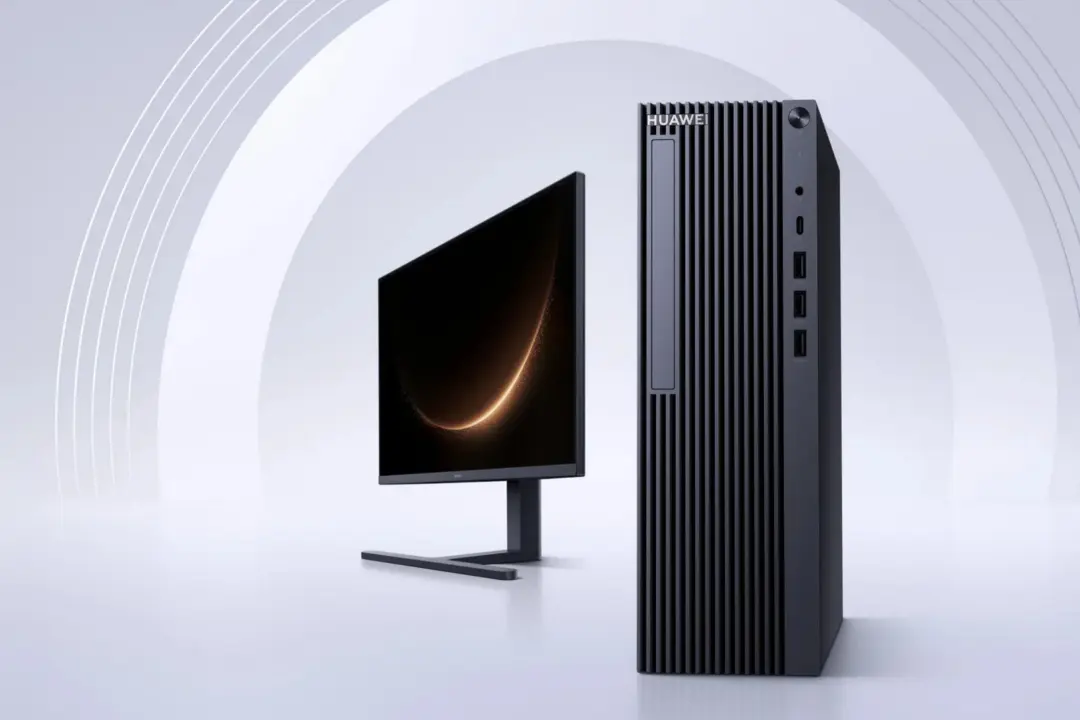
Huawei launched the Qingyun HM650, the first desktop PC using 100% domestic components. This is a significant milestone as it shows the possibility of domestically produced desktop PCs that don't rely on any foreign hardware for their build. This is great news for the hardware market if you're looking for supply chain independence or domestic manufacturing capabilities.
Huawei Qingyun HM650 desktop ships with HarmonyOS and 40W Kirin X90 chip
The Huawei Qingyun HM650 is a desktop PC using the Huawei Kirin X90 processor. It's a ten-core CPU that has 20 threads with a 40 W TDP. It uses Maleoon for the GPU, so it's not discrete.
Specifications
- Processor: Kirin X90 (10-core, 40 W TDP)
- Graphics: Integrated Maleoon
- Memory: 16 GB RAM
- Storage: 512 GB SSD
- Operating System: Corporate HarmonyOS
The PC has a corporate version of HarmonyOS. It also has the Xiaoyi AI assistant.
The base model has 16 GB of RAM and a 512 GB SSD. The device has the Star Shield 2.0 architecture for enterprise-level security. The device offers hardware encryption for the on-board storage for data security. You can use two separate workspaces for extra security.
Huawei says that this device is 100% produced using Chinese components. They've had it certified by Zhejiang Kezheng Electronic Information Product Inspection. It was verified that it was a domestic product, however, that doesn't necessarily mean that Huawei created all the components themselves. This is an important distinction when it comes to domestic manufacturing.
It costs 7,199 CNY (~$1,076). The device will be available for purchase on Huawei's official online store on December 1 in China. This comes after previous reports that Huawei HarmonyOS Desktop PCs would launch in September with various models. The Huawei Qingyun HM650 is geared for government agencies and businesses that need enterprise-level security.
Source: NotebookCheck

The 40W Kirin X90 TDP is fine for office tasks but don’t expect it to run modern games. The Maleoon iGPU lacks the driver maturity needed for any serious gaming workload.
Is the corporate HarmonyOS version locked down enough to prevent installing standard Linux binaries or will it just be a closed garden for local apps?