
G.SKILL introduced the Trident Z5 Royal NeoX DDR5 memory series, bringing a new latency optimization technology to AMD-based gaming PCs. This update matters because it targets a specific performance bottleneck that affects frame rates in modern games. Buyers looking to maximize gaming performance on non-X3D processors now have a hardware option designed to reduce system latency.
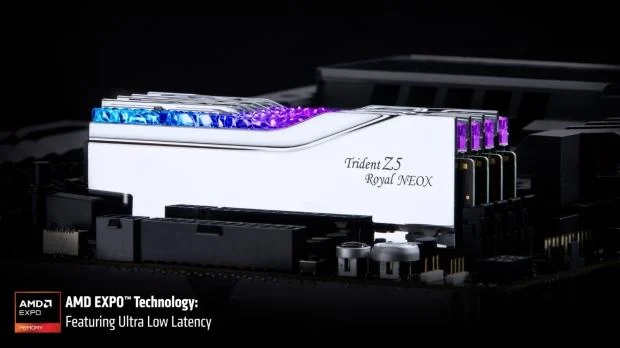
New memory kits target lower latency for AMD gaming builds
The Trident Z5 Royal NeoX is a DDR5 memory kit designed for high-performance desktop builds. It supports speeds up to DDR5-6000 and utilizes AMD's new EXPO Ultra Low Latency (EXPO ULL) technology. This technology allows the memory to maintain lower latency at the same clock speeds compared to standard EXPO profiles. G.SKILL also announced the Flare X5X Series DDR5 memory, which shares this same EXPO ULL support.
Specifications
- Series: Trident Z5 Royal NeoX Series DDR5 Memory
- Speed: DDR5-6000
- Sub-timings: CL 26-36-36-32, 28-36-36-32, 30-38-38-32, and 36-36-36-76
- Capacity: 32GB (16GB x 2)
- Technology: AMD EXPO Ultra Low Latency (EXPO ULL)
The 32GB kit configuration consists of two 16GB modules. G.SKILL offers several sub-timing profiles for these kits to accommodate different overclocking capabilities. The available timings include CL 26-36-36-32, CL 28-36-36-32, CL 30-38-38-32, and CL 36-36-36-76. These tighter timings are the primary mechanism for achieving the reduced latency promised by the EXPO ULL standard.
AMD has stated that the EXPO ULL technology can improve FPS performance by up to 4 percent on non-X3D CPUs. This performance gain comes from the reduced latency inherent in the new memory profile. G.SKILL expects the Trident Z5 Royal NeoX to become available in various markets in phases. The company has not provided specific retail dates for these releases.
The Trident Z5 Royal NeoX and Flare X5X Series represent G.SKILL's entry into the EXPO ULL market. These kits offer lower latency at standard DDR5-6000 speeds for AMD platform users. Availability will be phased across different regions without fixed launch dates.
Source: TweakTown

Discussion
0 comments