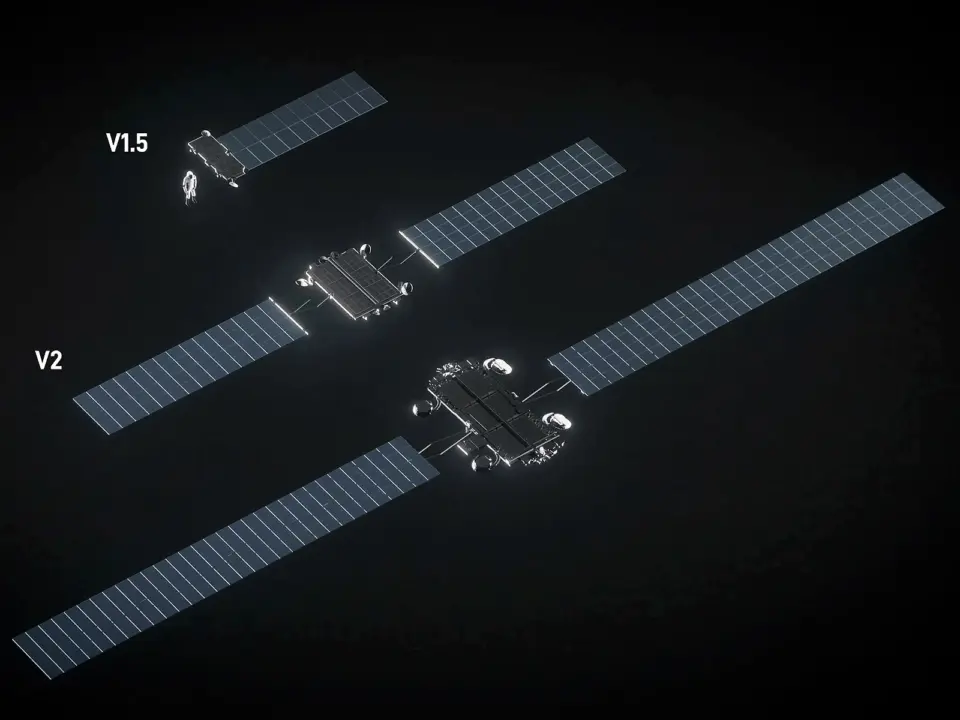
SpaceX is asking the Federal Communications Commission for permission to launch a massive new satellite constellation that could reshape global internet infrastructure. The company filed for a Starlink Gen3 network capable of supporting up to 100,000 satellites, a fleet size nearly ten times larger than the current active count. This expansion targets a download speed of 1 Tbps per satellite and aims to secure US competitiveness in the artificial intelligence era. Buyers and enterprises relying on high-bandwidth connectivity will see the potential for significantly increased network capacity in the coming years.
FCC filing outlines massive constellation for AI data centers
The proposed Gen3 satellites represent a substantial increase in hardware scale compared to previous iterations. Each unit is expected to weigh up to two tons and operate in very-low-Earth orbit across two closely stacked shells. These shells sit at altitudes between 323 and 327.5 km, as well as 473 and 477.5 km. SpaceX filed the application under the model identifier Starlink-V3, indicating a clear generational shift in the hardware design.
Starlink Gen3 Specifications
- Constellation Size: 100,000 satellites
- Orbital Altitude: 323–327.5 km and 473–477.5 km
- Satellite Mass: up to 2 tons
- Download Throughput: 1 Tbps
- Uplink Capacity: 22x jump
Technical specifications in the filing highlight a dramatic leap in data throughput and backhaul capabilities. SpaceX promises a tenfold increase in download throughput, reaching approximately 1 Tbps per satellite. The company also claims a 22x jump in uplink capacity to handle the increased traffic. Combined radio frequency and laser backhaul systems are projected to reach around 4 Tbps per satellite, creating a high-capacity mesh network in orbit.
The sheer scale of the proposed constellation suggests a strategic move to dominate the satellite internet market. The filing notes that this 100,000-satellite plan is not even the first batch of the up to one million AI data center satellites SpaceX filed for previously. This aggressive expansion targets the growing demand for low-latency, high-bandwidth connections required by modern data centers. The move positions SpaceX to potentially crowd out competitors with significantly higher infrastructure capacity.
SpaceX is currently seeking regulatory approval for this specific 100,000-unit constellation. The FCC application outlines the orbital mechanics and technical specifications required for these heavy satellites. No pricing or availability details have been released for the Gen3 service or hardware. The company argues that this massive capacity is essential for maintaining US leadership in the AI era.
Source: NotebookCheck