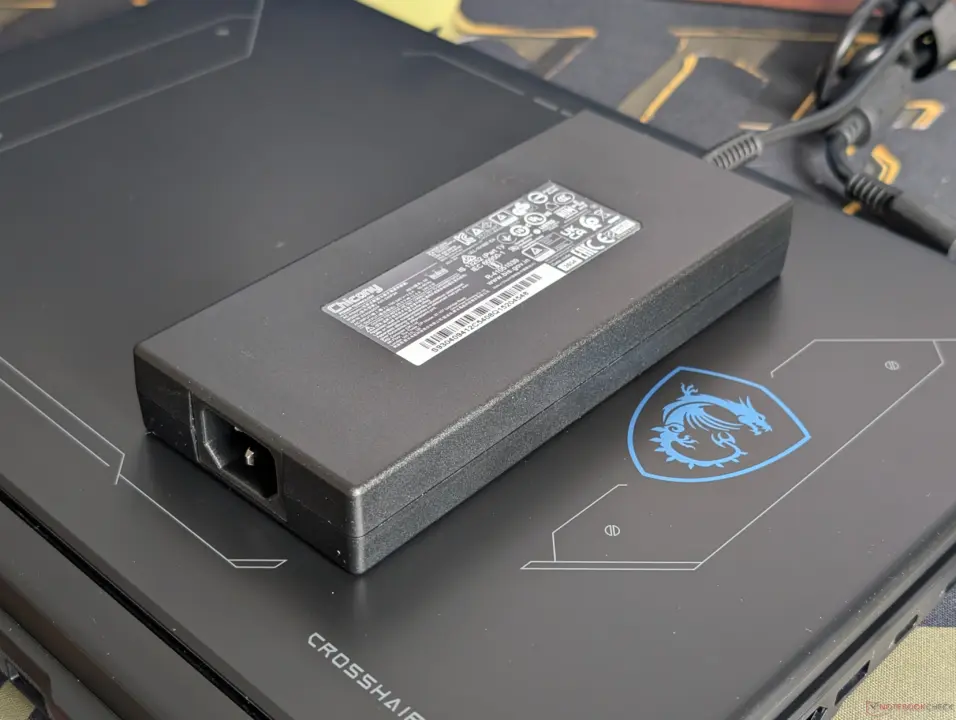
The MSI Crosshair A16 HX laptop demands more power from its wall brick than the included 240 W adapter can safely provide during heavy gaming. Buyers who plan to game while plugged in will notice the charging speed drop significantly because the system draws more current than the charger is rated for. This power mismatch creates a practical bottleneck for users who need fast battery replenishment alongside high-performance tasks.
Charging slows and adapter heats up when gaming power exceeds brick capacity
The machine pairs an AMD Ryzen 9 8940HX processor with an NVIDIA RTX 5070 graphics card to deliver high-end mobile performance. This combination pushes the laptop's average power consumption to nearly 250 W when running demanding titles. The hardware configuration is designed for serious gaming, which explains why the standard power supply struggles to keep up with the system's peak energy needs.
Specifications
- AC Adapter Power: 240 W
- Gaming Power Consumption: almost 250 W
- AC Adapter Surface Temperature: almost 60 C
- CPU: Ryzen 9 8940HX
- GPU: RTX 5070
Testing reveals that the AC adapter reaches surface temperatures of almost 60 C when running Cyberpunk 2077. This heat output is notably higher than the typical 45 to 50 C range seen on other gaming laptop chargers. The thermal stress on the power brick is a direct result of the adapter operating near or slightly beyond its continuous power limits to support the laptop's intensive workload.
The core issue stems from the 240 W adapter being underpowered for the Crosshair A16 HX's gaming load. When the laptop attempts to charge while gaming, the charging rate slows to a crawl because the system prioritizes immediate power delivery over battery input. A 280 W adapter could likely resolve these thermal and charging issues, though that option would reduce the portability of the power solution.
Source: NotebookCheck