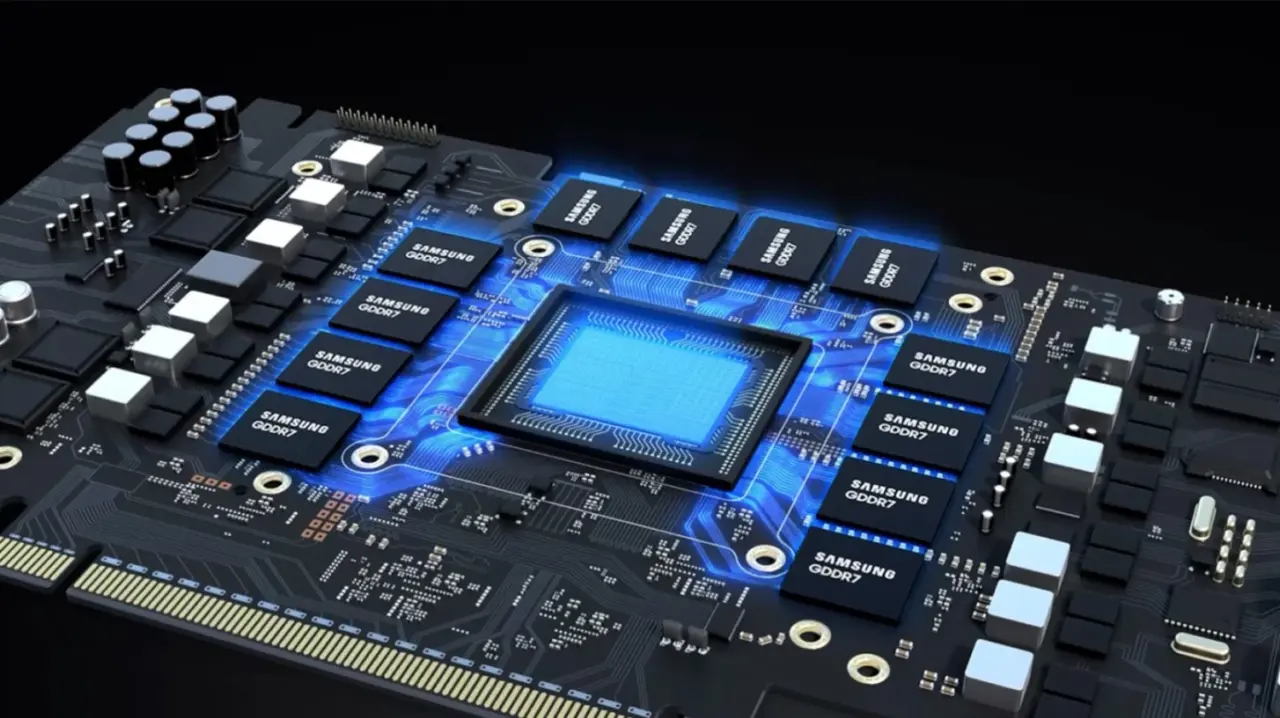
Hardware leakers predict that denser GDDR7 memory modules will arrive by 2027 or 2028, which could significantly expand video memory capacity for both gaming and workstation graphics cards. This shift matters because larger VRAM buffers allow systems to handle more complex local AI models and higher-resolution textures without hitting memory limits. Buyers who rely on heavy creative applications or local inference tools will see the most immediate benefit from these capacity jumps.
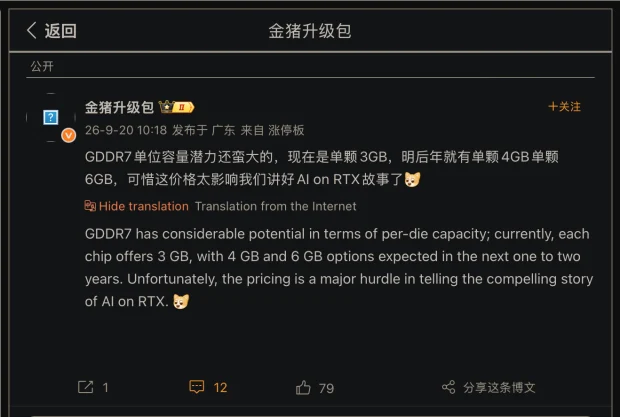
Denser modules could double or triple VRAM capacity for gaming and workstation cards
Samsung and SK hynix currently dominate the high-speed GDDR7 market with chips running at 28 to 32 Gbps. Samsung has demonstrated its 24Gb chips reaching speeds up to 42.5 Gbps, while SK hynix has shown operation up to 40 Gbps. These speeds form the baseline for current NVIDIA RTX 50 series graphics cards, which typically use 2GB or 3GB chips per module.
- Current GDDR7 Speed: 28-32 Gbps
- Samsung GDDR7 Max Speed: 42.5 Gbps
- SK hynix GDDR7 Max Speed: 40 Gbps
- RTX 5060 VRAM Config: 8GB (4x 2GB chips)
- RTX PRO 6000 Blackwell VRAM: 96GB (32x 3GB chips)
The industry is now looking toward 4GB and 6GB GDDR7 modules, a move that would double or triple the memory per chip. Hardware sleuth Golden Pig Upgrade Pack suggests these denser modules could become available in the next two years. If manufacturers adopt 6GB chips, a standard 128-bit interface like the one in the RTX 5060 could jump from 8GB to 24GB of total VRAM.
Workstation cards stand to gain even more from this density increase. The RTX PRO 6000 Blackwell currently uses 32 3GB chips to deliver 96GB of VRAM across a 512-bit interface. Switching to 6GB chips could push that total to 192GB, which is critical for running large language models locally. However, higher capacity comes with costs, as 3GB chips are currently more expensive than 2GB versions.
We looked at the last GDDR7 Memory update, several of the same balance and stability themes came up. The transition to denser memory will require careful pricing strategies to remain viable for mainstream consumers. Until vendors confirm these modules, these capacity figures remain speculative predictions based on current chip architectures.
Source: TweakTown


Discussion
0 comments