Running Arch Linux on modern Apple Silicon Macs has always been a complex task due to locked bootloaders. A new project called Omarchy Linux changes that by offering a virtualized environment that bypasses these restrictions. Users who need a Linux workspace on their M-series MacBook can now access one without repartitioning their drive or modifying system firmware. This approach makes the operating system accessible to developers who want Linux tools without losing their primary macOS setup.
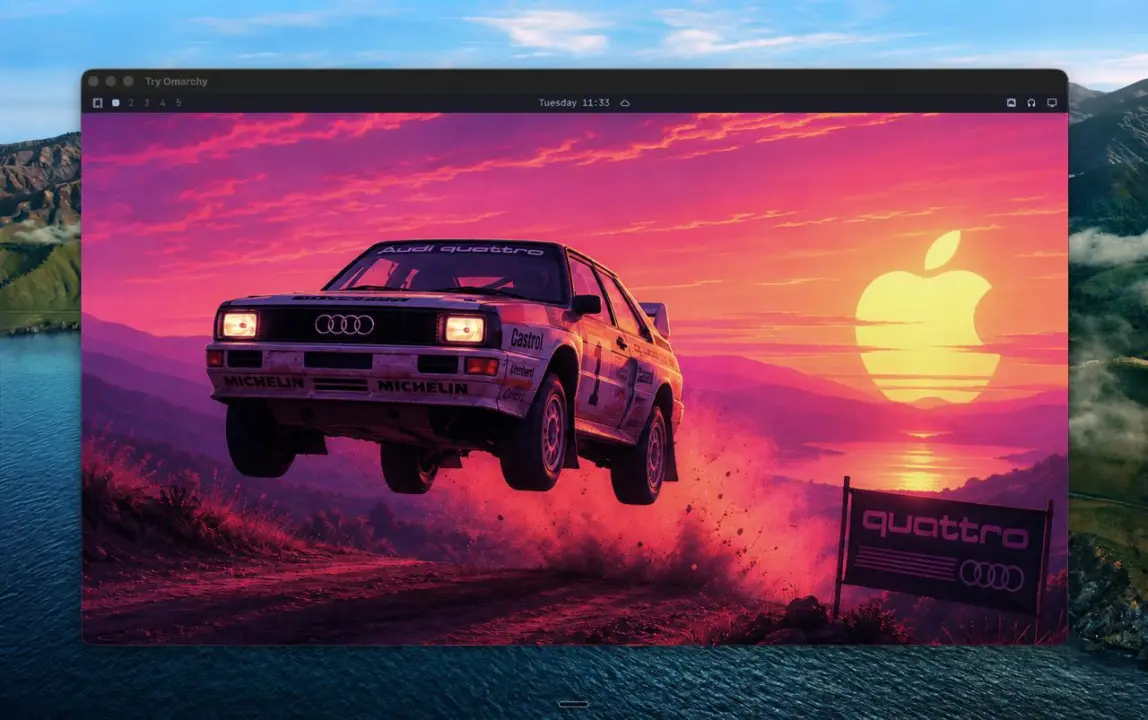
Virtualized Arch Linux runs in a macOS window with Retina scaling
The project is released by a developer known as themartiano and targets Apple Silicon hardware directly. It functions as a macOS application wrapper rather than a native dual-boot installation. Inside this wrapper, the system runs the Hyprland tiling Wayland compositor. This setup allows the Linux desktop to render directly into a native macOS window. The application acts as a bridge between the locked-down Apple hardware and a full Linux environment.
- Base OS: ARM-optimized Arch Linux
- Desktop Environment: Hyprland tiling Wayland compositor
- Virtualization Framework: Apple Hypervisor Framework with patched QEMU hooks
- Target Hardware: Apple Silicon (M-series)
- Boot Time: Under three seconds
Omarchy Linux is built on an ARM-optimized Arch Linux image. The virtualization layer utilizes the Apple Hypervisor Framework alongside patched QEMU hooks. This combination allows the system to provide direct, hardware-accelerated CPU and display performance. The project sidesteps the usual uphill battle of installing Linux on Apple hardware by using a virtualization approach familiar to KVM users. This technical foundation ensures that the Linux instance operates with significant performance benefits.
The virtualized environment includes full Retina scaling, shared clipboard buffers, and intact Superkey shortcuts. These features integrate the Linux window smoothly with the macOS desktop experience. The developer reports that the system boots in under three seconds. Because Omarchy runs as an application, certain features and access to device hardware will be limited compared to a native installation. However, the current setup provides a functional workspace for those who need it.
A link to the DMG file is available for users who want to try the software. The project represents a practical solution for running Linux on locked-down Apple Silicon. It delivers hardware-accelerated performance without requiring drive repartitioning. The tool is available globally for anyone interested in testing this virtualized Arch Linux environment.
Source: NotebookCheck