Modders have successfully doubled the video memory on NVIDIA's six-year-old entry-level graphics card, transforming the GTX 1650 into a significantly more capable device. This hardware modification allows users to upgrade the standard 4GB of GDDR6 memory to 8GB, effectively bridging the gap between budget and mid-range performance tiers. The achievement demonstrates that older silicon can still yield substantial gains when enthusiasts apply precise physical modifications to the hardware.
Enthusiasts double benchmark scores by swapping memory chips on specific GPU variants
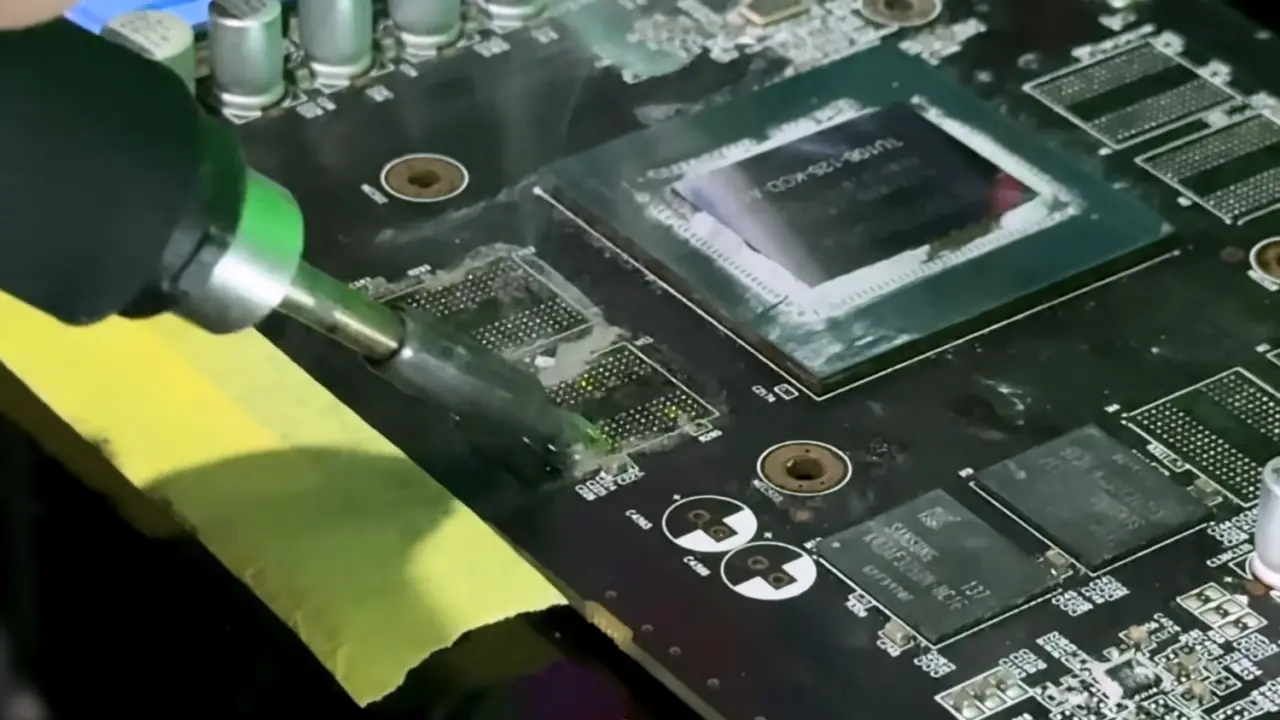
The modification targets a specific variant of the GTX 1650 equipped with the TU106 graphics processing unit die. Technicians must physically remove the existing 1GB memory modules from the printed circuit board and solder new 2GB Samsung HC16 GDDR6 chips in their place. This process requires specialized equipment and technical skill, as it involves delicate surface-mount technology work that most average consumers cannot perform without risking damage to the card.
- Memory Upgrade: 4GB to 8GB GDDR6
- Benchmark Score (Unigine Superposition): Doubled from 624 to 1245 points
- God of War Performance (Ultra Settings): 10 FPS to 20 FPS
- Modding Method: Desoldering 1GB modules and soldering 2GB Samsung HC16 GDDR6 modules
- Compatibility Requirement: TU106 die variant only
Performance testing reveals dramatic improvements across both synthetic benchmarks and modern gaming titles. In the Unigine Superposition benchmark, the card's score jumped from 624 points to 1245 points, representing a complete doubling of the synthetic workload throughput. This numerical increase confirms that the additional memory bandwidth and capacity directly alleviate the bottlenecks that typically plague the base model during intensive graphical tasks.
Real-world gaming performance also sees a marked improvement, particularly in demanding titles like God of War. When running at Ultra settings, the frame rate increased from 10 FPS to 20 FPS, effectively doubling the visual fluidity for players. The extra 4GB of VRAM allows the GPU to store higher-resolution textures and larger data buffers without stalling, resulting in a smoother experience that was previously unattainable on the stock hardware.
Despite the success of the upgrade, the process introduces minor stability quirks that users should anticipate. Modders reported occasional stuttering when the GPU enters an idle state, suggesting that the memory timing or power management may not be perfectly optimized for the new configuration. This issue does not significantly impact active gaming sessions but highlights the trade-offs inherent in manual hardware modifications.
This upgrade path is strictly limited to the TU106 variant of the GTX 1650, meaning owners of other die revisions cannot replicate these results. The modification does not involve any firmware changes or software tweaks, relying entirely on the physical expansion of the memory subsystem. Enthusiasts with compatible hardware now have a viable option to extend the lifespan of their entry-level GPUs without purchasing new components.
Source: TweakTown