NBA 2K27 introduces the first real-world benchmarks for NVIDIA DLSS 5, revealing a significant performance trade-off for visual upgrades. PC gamers relying on ray tracing at high resolutions will notice a steep drop in frame rates when this feature is active. This shift matters because it challenges the assumption that upscaling technologies always deliver free performance gains in modern titles.
First benchmarks reveal steep frame rate penalties for visual upgrades
The testing environment centers on a high-end gaming rig featuring an AMD Ryzen 9 7950X3D processor and 32GB of DDR5 memory. The system runs Windows 10 64-bit and utilizes the latest NVIDIA GeForce 616.64 graphics driver. NVIDIA has lifted the embargo on DLSS 5, making NBA 2K27 the inaugural title to support this new version of the technology.
- Test GPU: NVIDIA GeForce RTX 5090
- Test CPU: AMD Ryzen 9 7950X3D
- Test OS: Windows 10 64-bit
- Test Driver: GeForce 616.64
- Native 1080p FPS (RT On): 180 FPS
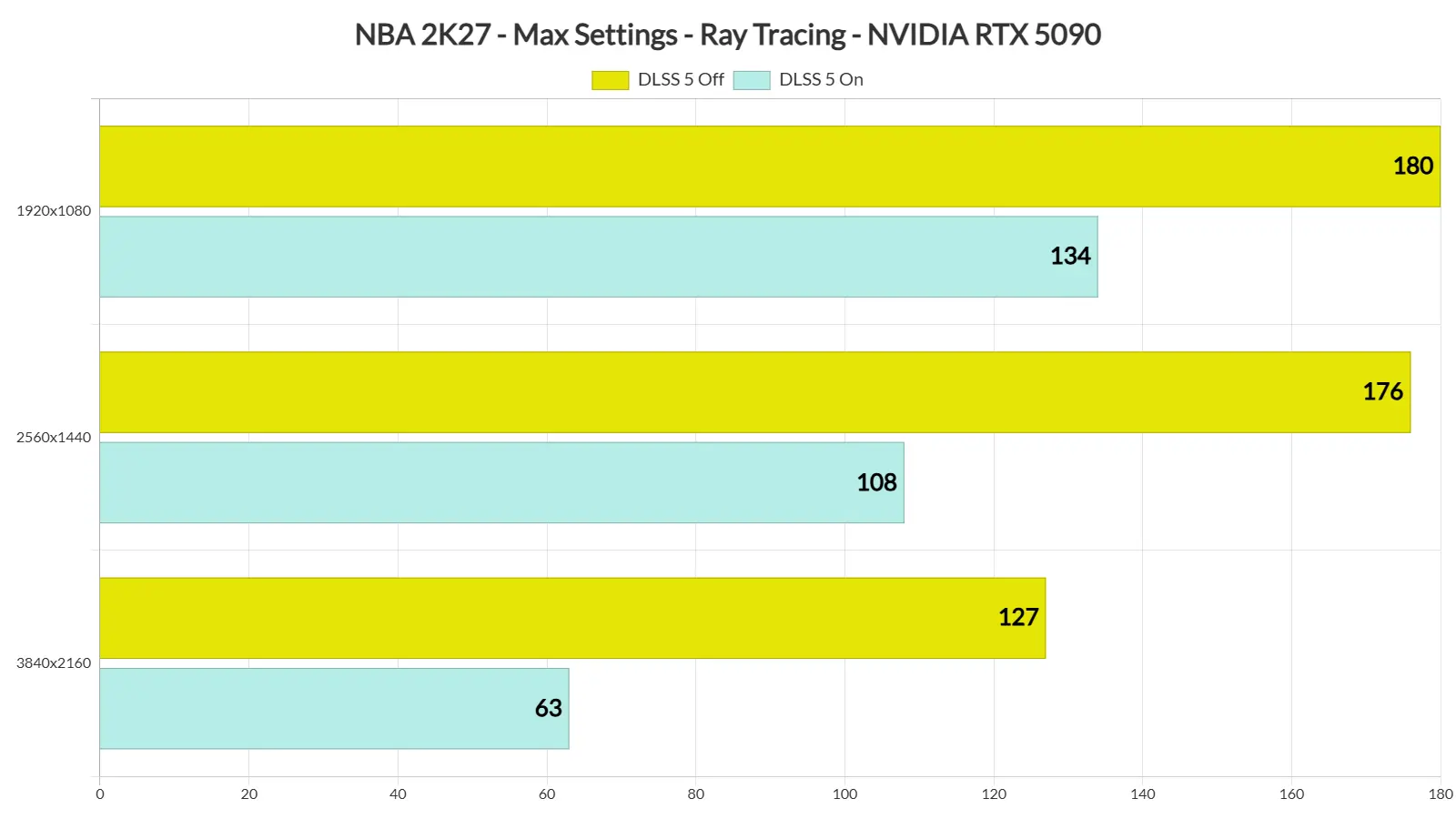
Performance metrics show that native rendering at 1080p with ray tracing hits 180 FPS on an NVIDIA GeForce RTX 5090. At 1440p, the same settings yield 176 FPS without DLSS 5 enabled. However, enabling DLSS 5 at 4K with ray tracing drops the frame rate to just 63 FPS, indicating a heavy computational cost for the upscaling process.
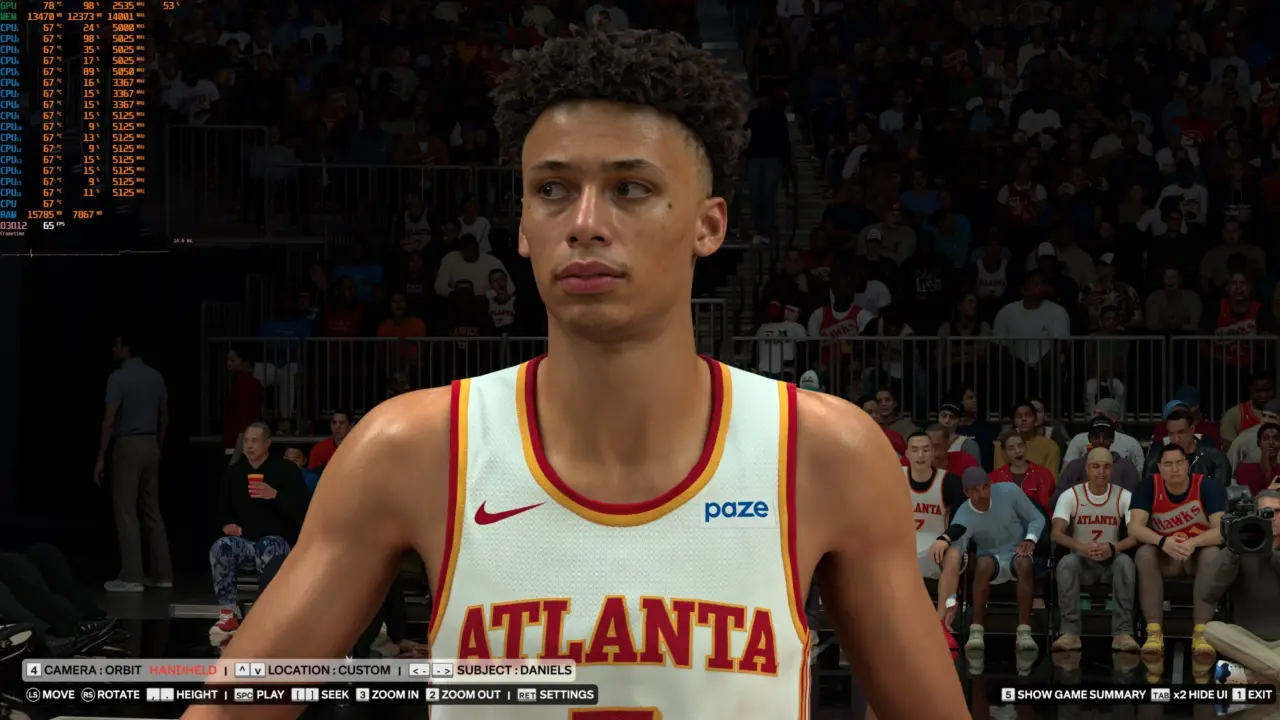
The benchmark tester reports that DLSS 5 causes a 50 to 60 percent drop in performance compared to native rendering. Despite the frame rate penalty, the technology significantly improves visual fidelity, particularly for crowd rendering and player realism. The tester notes that without DLSS 5, players look plastic and fake, while crowds appear flat and old-gen-ish.
We looked at the last NBA 2K27 update earlier while tracking game stability and balance changes. The current implementation of DLSS 5 offers visual improvements that are less pronounced than those seen in unofficial community mods. This suggests that while the official feature is a step forward, it may not fully replace the aesthetic tweaks found in the modding scene.