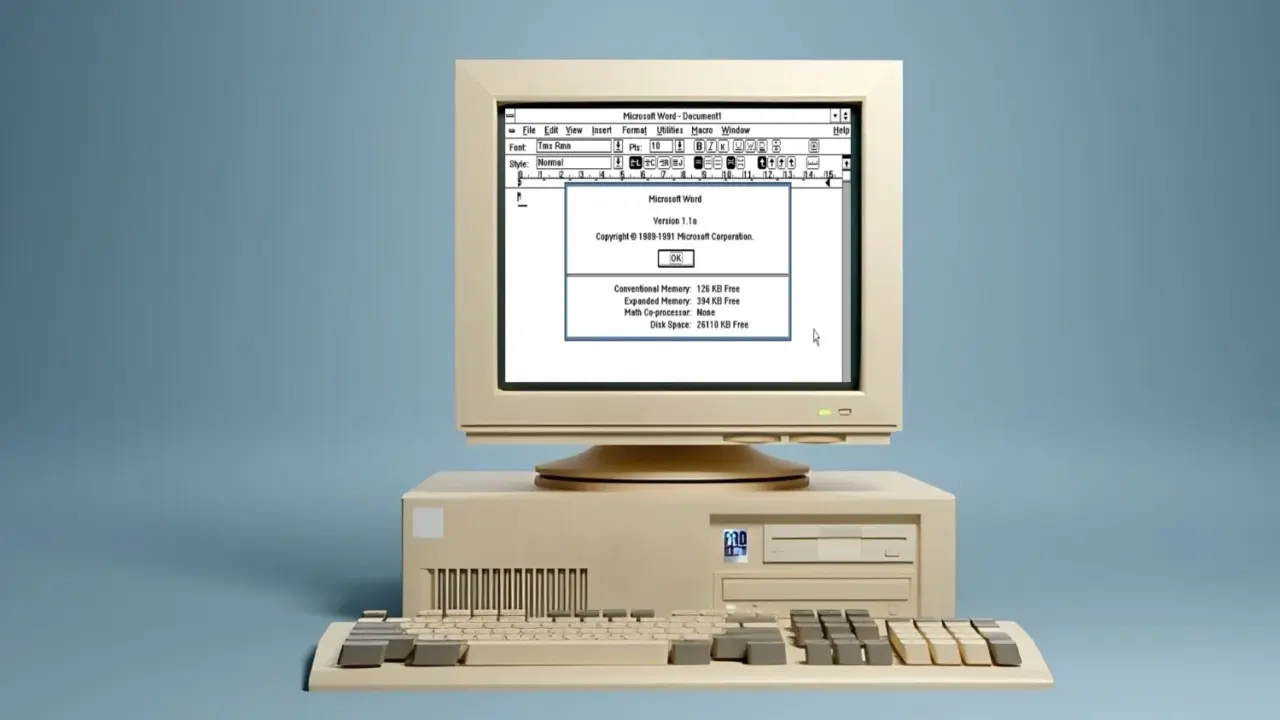
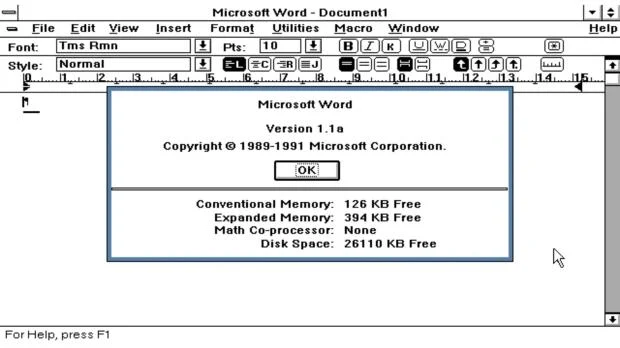
A community developer has successfully ported Microsoft Word 1.1a to run as a native 64-bit application on modern Windows 11 systems. This project allows users to experience the original 1990 word processor without relying on legacy emulation layers or virtual machines. The project demonstrates the durability of early software design and the effectiveness of modern development techniques. It offers a working example of early personal computing productivity software.
Community project replaces 16-bit assembly for modern 64-bit systems
The application, known by the historical codename Opus, was released in 1990 for Windows 1.0. The new build is a fully working native Windows x64 port created by the developer jmarshall23. It replaces the original 16-bit assembly code, segmented memory structures, and Win16 platform boundaries with modern equivalents. This technical overhaul ensures the software runs directly on current 64-bit processors without translation overhead.
Building this version requires specific development tools that most average users do not have installed. You need Visual Studio 2022, the Windows 10 or Windows 11 SDK, CMake version 3.25 or newer, and PowerShell to compile the source. The source code for Word for Windows 1.1a became publicly available in 2014, enabling this long-term preservation effort. The project shows how legacy code can be adapted to run on modern operating systems.
Prebuilt binaries are not available for download, so users must compile the software themselves to run it. The GitHub repository hosts the project files but does not provide a simple one-click installer. This requirement restricts usage to developers and enthusiasts who have the necessary technical expertise. While previous coverage addressed the Microsoft Windows 11 June 9 Update, this port serves as a distinct historical software project.
This port confirms that legacy Microsoft Word 1.1a can function natively on Windows 11 hardware. It functions as a technical example of preserving early software history through modern compilation. Users interested in software history can attempt the build if they have the required development environment.
Source: TweakTown