Windows 11 users are waking up to a surprisingly heavy weather app that consumes more than 1GB of RAM just by sitting open. This memory hogging behavior matters because it eats into the limited resources available on budget laptops, especially as RAM prices have surged up to 89% in Q2 2026 due to AI demand. The app's inefficient design directly impacts system performance for users who rely on multitasking on constrained hardware.
WebView2 wrapper drives memory usage to 1.2GB idle and 1.6GB active
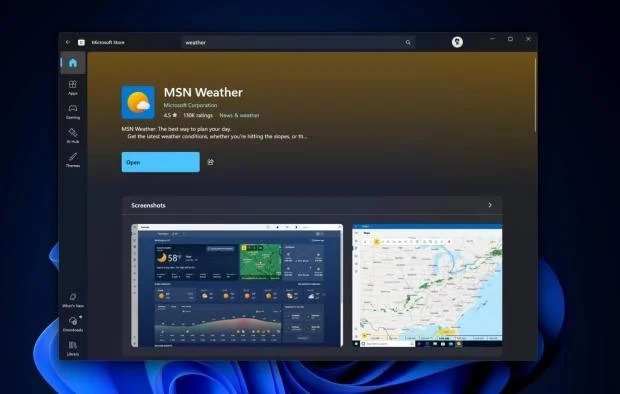
The culprit is the new architecture behind the Microsoft Weather app, which runs as a WebView2 web wrapper instead of a native application. This design choice forces the app to spawn nine separate Chromium-based sub-processes in the background, creating a bloated process tree that standard desktop apps do not require. The shift to a web-based wrapper explains why the app feels heavier than the native tools found on competing platforms.
Testing data from Windows Latest shows that simply opening the app pushes RAM usage past 1.2GB, with spikes reaching 1.6GB once users start interacting with the interface. This consumption is roughly five times higher than Apple's native Weather app on macOS, which uses only about 246MB for similar basic functionality. On an 8GB system, a single weather widget can consume close to 15% of total memory, a figure that undercuts Microsoft's pitch for efficient system resource management.
Microsoft has acknowledged that the Weather app has not been touched yet in recent updates, but the company promises memory efficiency improvements for 2026. These improvements are expected to come from a planned shift to WinUI 3, which should eventually reduce the reliance on the heavy Chromium sub-processes. We looked at similar Windows 11 app efficiency issues earlier while tracking Microsoft's broader platform updates.
The current state of the app leaves users with a choice between accepting the memory overhead or disabling the widget entirely. Microsoft has not provided a specific timeline for when the WinUI 3 transition will be completed for the Weather app. Until then, the app remains a significant consumer of system resources on Windows 11 machines.
Source: TweakTown