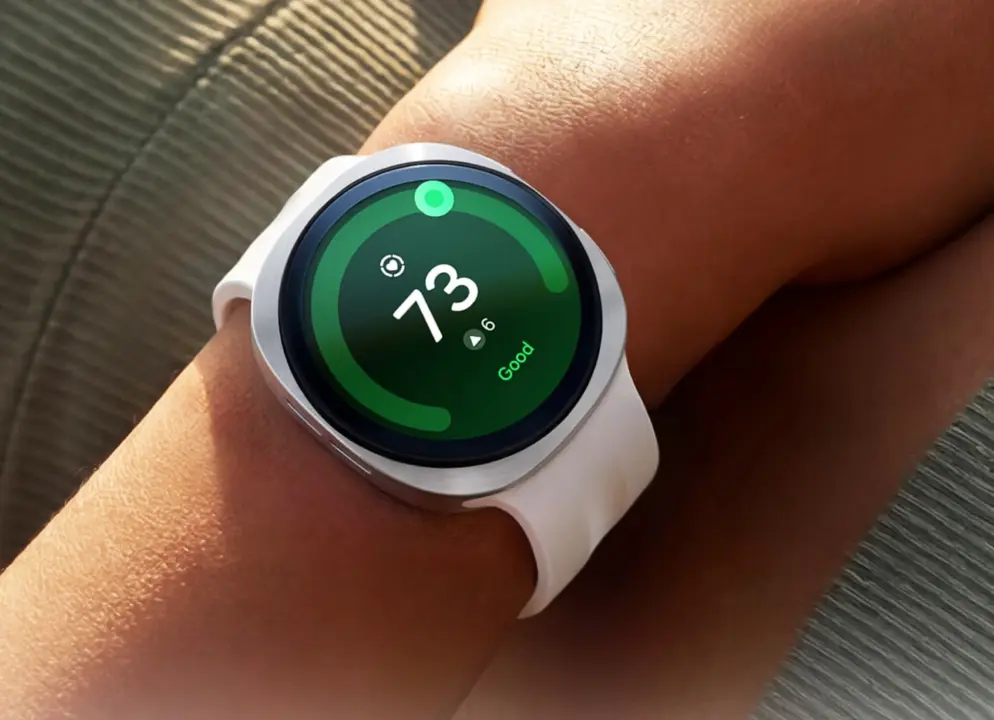
Samsung Galaxy Watch 9 buyers face charging delays that stretch from two and a half to four hours. This thermal bottleneck forces users to wait significantly longer than the expected one hour to reach a full charge. The issue stems from the device heating up to 44 degrees Celsius during the charging process. Users who depend on fast charging may experience inconvenience due to the extended charging duration.
Users report charging delays up to 4 hours as device reaches 44C
The slowdown affects both the standard Galaxy Watch 9 and the Galaxy Watch Ultra 2 models. Users report that the smartwatch maintains a high charging power of 5.5 watts until the battery hits 71 percent. The device then tapers power output, which aligns with standard thermal protection mechanisms. This behavior occurs regardless of the ambient temperature, though reports spike during heat waves.
Charging Performance
- Charging Power: 5.5 watts
- Max Temperature: 44 °C
- Reported Charging Time: 2.5 to 4 hours
- Cooled Charging Time: 1 hour and 6 minutes
- Fan-Assisted Charging Time: 01:08 hours
One user experiment confirms that active cooling solves the problem by cutting the charging time in half. Placing a fan behind the watch allows the device to charge from 12 to 100 percent in just one hour and eight minutes. An ice bath setup similarly reduced the charging duration to one hour and six minutes. These results prove that heat management, not charger capability, is the primary constraint.
The Galaxy Watch 9 lists for $409 USD (around $409) on Amazon. We touched on Samsung Galaxy Z Fold9 Ultra may in our earlier Samsung coverage. The extended charging times occur regardless of the initial battery level or ambient conditions. The reduction in charging speed appears to be a thermal management response rather than a defect.
Samsung has not released a software update to modify the current charging behavior. The device continues to charge slowly until it reaches the 71 percent threshold. Owners can manually mitigate the delay by using external cooling methods. The hardware design prioritizes thermal safety over charging speed.
Source: NotebookCheck


Discussion
0 comments