Desktop GPU shipments hit a four-year high in the second quarter of 2026, signaling a sharp rebound for the PC hardware market. This surge matters because it suggests strong consumer demand despite rising component costs that have plagued the industry. Buyers appear to be purchasing early to lock in prices before further increases driven by supply pressures and global tensions take effect.
Jon Peddie Research data shows 12.5 million units shipped despite rising component costs
Jon Peddie Research reported that total desktop add-in board shipments reached 12.5 million units during the quarter. NVIDIA maintained its dominant position by shipping approximately 11.25 million of those units, securing roughly 90 percent of the market share. This level of dominance mirrors the company's performance in the first quarter of 2026, showing no signs of significant market erosion.
- Q2 2026 Desktop AIB Shipments: 12.5 million units
- Q2 2026 Quarter-over-Quarter Growth: 10%
- Q2 2026 Year-over-Year Growth: 6.6%
- NVIDIA Q2 2026 Desktop Share: Approximately 90%
- H1 2026 Total Desktop AIB Shipments: 24.3 million units
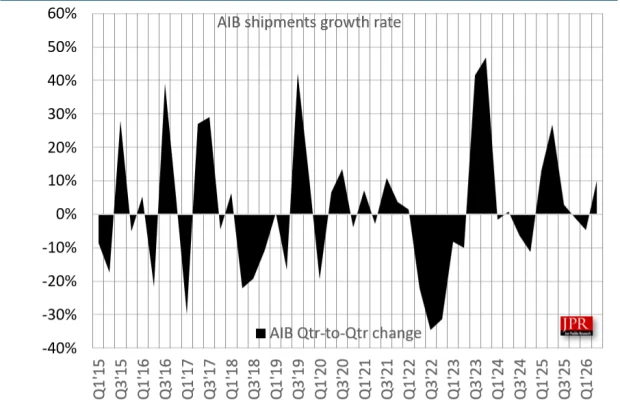
The growth figures show a 10 percent increase quarter over quarter and a 6.6 percent rise compared to the same period last year. These numbers push the total desktop AIB shipments for the first half of 2026 to 24.3 million units. The expansion occurred even as memory prices and other component costs continued to climb, indicating that demand is outpacing inflationary pressures.
We have been tracking Desktop GPU closely — see our earlier coverage on NVIDIA Desktop GPU Market Share Holds. The data indicates that the current buying behavior is a strategic move by consumers to avoid future price hikes. While the second quarter shows robust activity, it remains uncertain whether this pace will continue into the third quarter or if the market will return to its typical seasonal dip.
The confirmed facts for the first half of 2026 show a total of 24.3 million desktop GPU units shipped globally. NVIDIA holds the vast majority of this volume with its 90 percent share. The market is currently driven by proactive purchasing rather than just organic demand growth.
Source: TweakTown

Discussion
0 comments