Asus and Lenovo have released updated gaming laptops that prioritize high refresh rates and accessible pricing for the 2026 market. These devices target buyers who need fast displays and efficient cooling without spending over $1,800. The competition between the new ROG Strix G16 and Legion 5 series offers clear choices for users who value speed or screen quality.
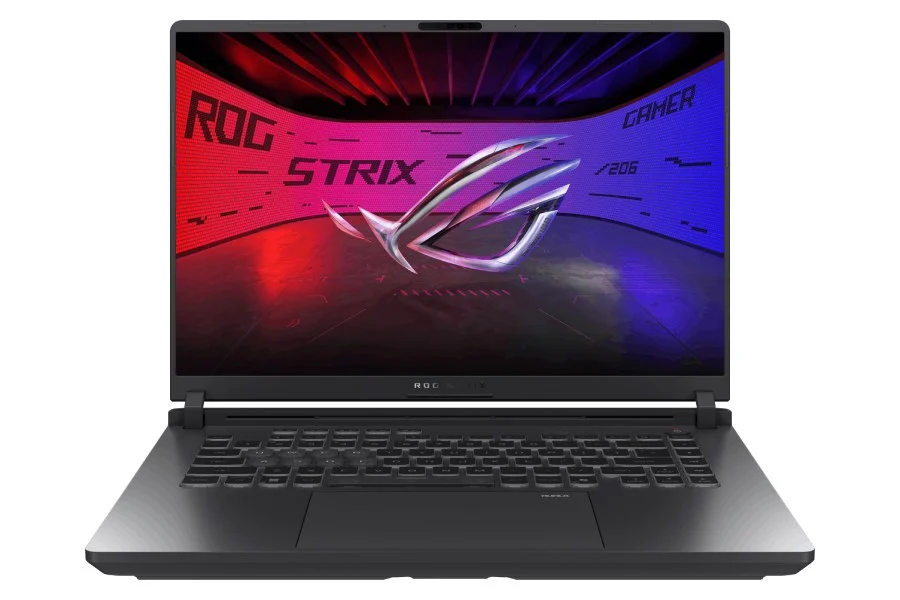
Comparing the 300Hz Nebula Display against the 15.3-inch PureSight OLED panel
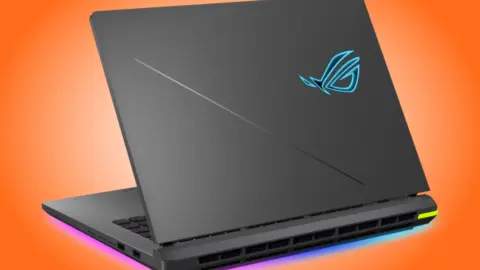
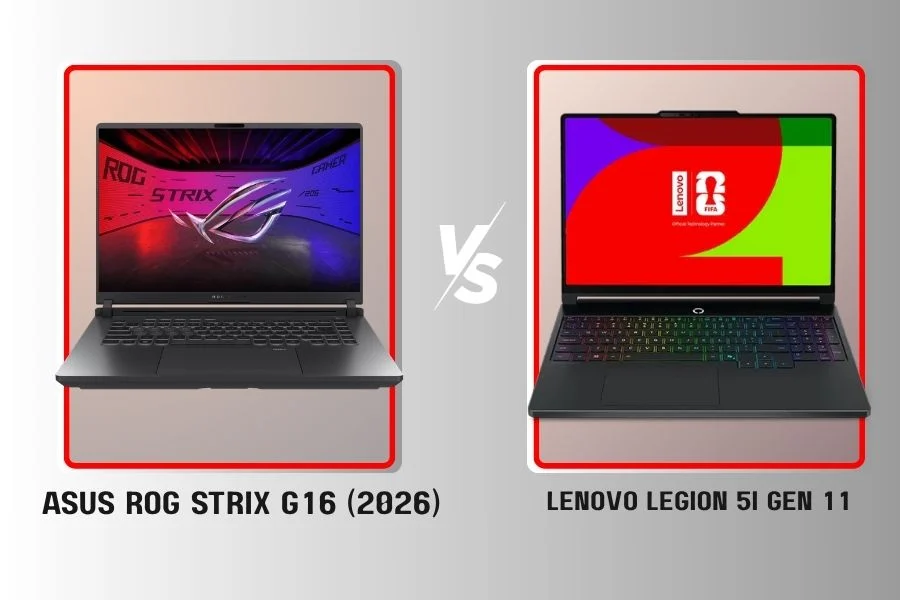
The Asus ROG Strix G16 (2026) uses an Intel Core Ultra 9 290HX Plus processor paired with NVIDIA GeForce RTX 5060 or RTX 5070 graphics. Lenovo offers two distinct options in its Legion 5 lineup for this generation. The Legion 5i Gen 11 relies on Intel Panther Lake silicon, while the Legion 5a Gen 11 utilizes AMD Ryzen AI 400 series chips. Both Lenovo models cap their graphics at the NVIDIA RTX 5060.
Spec comparison
| Spec | Asus ROG Strix G16 (2026) | Lenovo Legion 5i Gen 11 | Lenovo Legion 5a Gen 11 |
|---|---|---|---|
| CPU | Intel Core Ultra 9 290HX Plus | Intel Panther Lake | AMD Ryzen AI 400 series |
| GPU | NVIDIA GeForce RTX 5060 or RTX 5070 | NVIDIA RTX 5060 | NVIDIA RTX 5060 |
| Display | 16-inch 2.5K 300Hz Nebula Display | 15.3-inch 165Hz PureSight OLED | 15.3-inch 165Hz PureSight OLED |
| Starting Price | $1,599 | $1,549 | $1,299 |
Display specifications differ significantly between the two brands. Asus equips the Strix G16 with a 16-inch 2.5K Nebula Display that runs at a 300Hz refresh rate. Lenovo sticks to a 15.3-inch PureSight OLED panel with a 165Hz refresh rate and 2560×1600 resolution. Asus applies Conductonaut Extreme liquid metal to both the CPU and GPU for thermal management. Lenovo claims its Legion 5-series chassis is approximately 10% lighter than the previous generation.
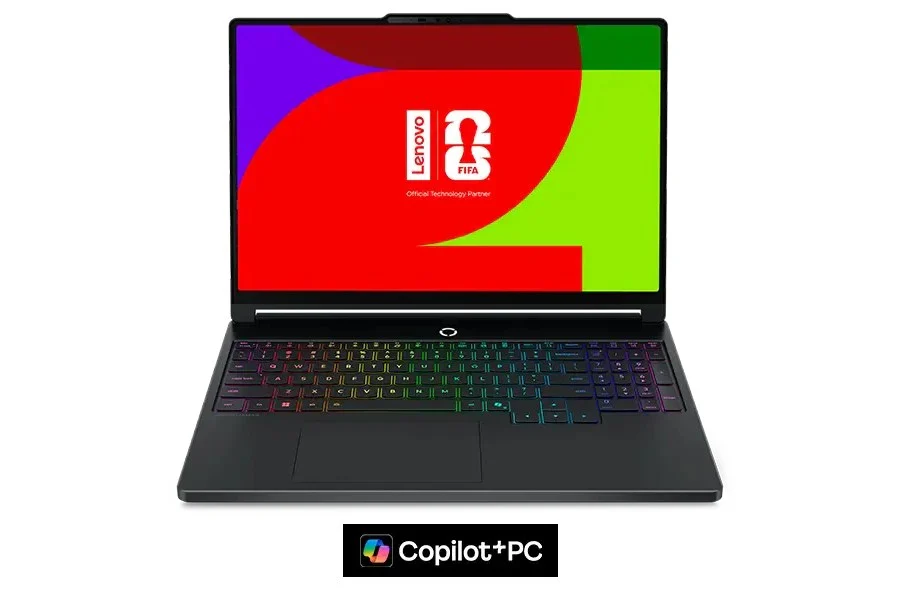
Pricing and configuration details help define the value proposition for each machine. The Asus ROG Strix G16 with the RTX 5060 starts at around $1,599. The Lenovo Legion 5i Gen 11 begins at $1,549, and the AMD-based Legion 5a Gen 11 starts at $1,499. A lower-tier Ryzen 200 variant of the Legion 5a drops to $1,299. Some retailers may offer the base RTX 5060 model with a 1080p IPS panel instead of the OLED display.
Both laptops support tool-less upgrades for RAM and SSDs and utilize vapor chamber cooling systems. They started shipping in April 2026 following their announcement at CES 2026. The Lenovo Legion 5i Gen 11 holds a slight edge in CPU-heavy workloads due to its newer Panther Lake silicon. Buyers seeking the highest refresh rate should look at the Asus model, while those preferring OLED contrast may prefer the Lenovo options.
Source: GIZMOCHINA