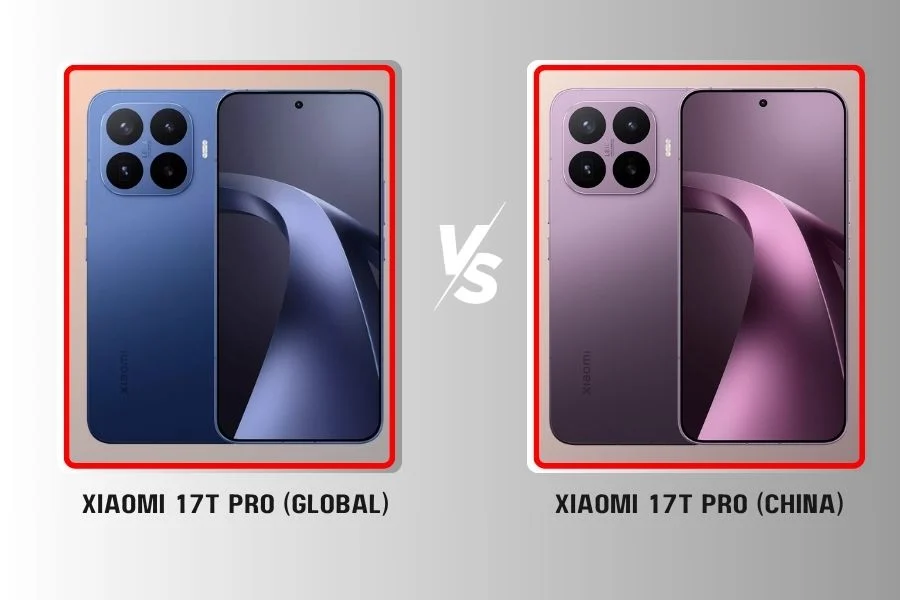
The global and Chinese versions of the Xiaomi 17T Pro smartphone diverge in storage capacity, RAM configuration, and software ecosystem. Both models share a large battery and identical processor hardware. These variations reflect distinct priorities for users in different regions.
Global and domestic variants split on storage, RAM, and software ecosystems
Xiaomi released two distinct builds for the device. One targets international markets with Google services enabled by default. The other caters to domestic buyers with a localized operating system that omits Google apps entirely.
Both phones pack a 7,000mAh battery and run on the MediaTek Dimensity 9500 chipset. They also feature a triple camera system branded under Leica. These core components remain consistent across regions.
The international variant offers up to 1TB of storage paired with 12GB of RAM. The domestic version caps at 512GB but includes 16GB of RAM instead. Chinese models ship with a HyperOS build that lacks Google services and may encounter network compatibility issues outside China.
Global pricing begins at €999 in Europe. Domestic prices start around 2,999 yuan, which translates to approximately $415 USD based on current exchange rates. Pricing differences stem from local market conditions and regulatory requirements.
Xiaomi has historically maintained separate hardware configurations for different regions. Such strategies enable tailored pricing and software adjustments for various regions.
The Xiaomi 17T Pro demonstrates a clear split between global and domestic specifications. Buyers outside China must accept lower storage options in favor of Google services, while Chinese users gain more RAM but face software limitations abroad.
Source: GIZMOCHINA