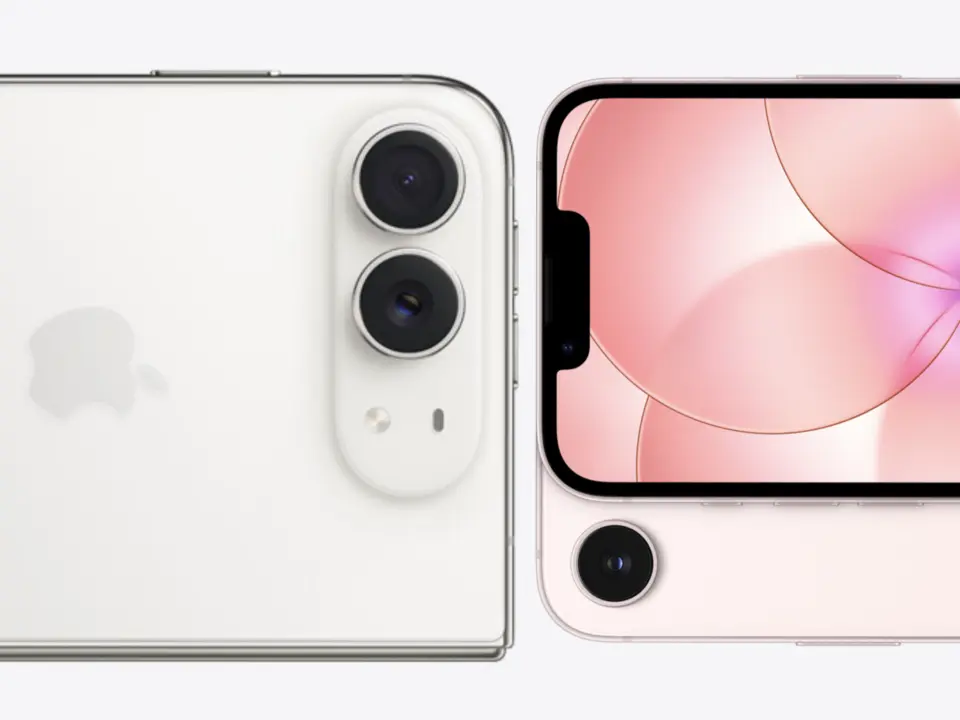
Apple's iPhone Duo camera module physically differs from the iPhone 17e, even though Apple's official specifications list identical terminology for both devices. This discrepancy matters because buyers relying on spec sheets might assume the Duo uses the smaller, cost-effective sensor found in the 17e. Visual teardowns reveal a larger module footprint that aligns more closely with the standard iPhone 17 and iPhone 17 Pro. This hardware difference is expected to affect image quality and low-light performance in real-world conditions.
Teardowns show larger module footprint than official data suggests
The iPhone Duo features a dual-lens rear camera system that includes a 48MP Main camera and a 48MP Ultra Wide camera. Apple lists the Main camera with a 26 mm focal length and an f/1.6 aperture. The Ultra Wide lens operates at a 13 mm focal length with an f/2.2 aperture. Both lenses utilize Hybrid Focus Pixels for autofocus technology.
Comparisons of camera module sizes from early teardowns suggest the iPhone Duo's main camera sensor is larger than the iPhone 17e's. Apple's spec sheet uses the phrase 'Hybrid Focus Pixels' for the Duo, which is the same terminology used for the smaller iPhone 17e sensor. This wording creates ambiguity because it describes the autofocus readout architecture rather than the physical sensor size. The visual evidence indicates the Duo's camera module is significantly larger than the 17e's.
The confusion stems from Apple's decision to use identical spec language for cameras with different physical dimensions. The iPhone Duo likely provides better light-gathering hardware than the iPhone 17e due to its larger sensor size. The visual footprint of the Duo's camera system appears closer to the iPhone 17 and iPhone 17 Pro modules. This physical difference confirms that the Duo does not share the smaller sensor found in the iPhone 16e or 17e.
Source: NotebookCheck

Discussion
0 comments