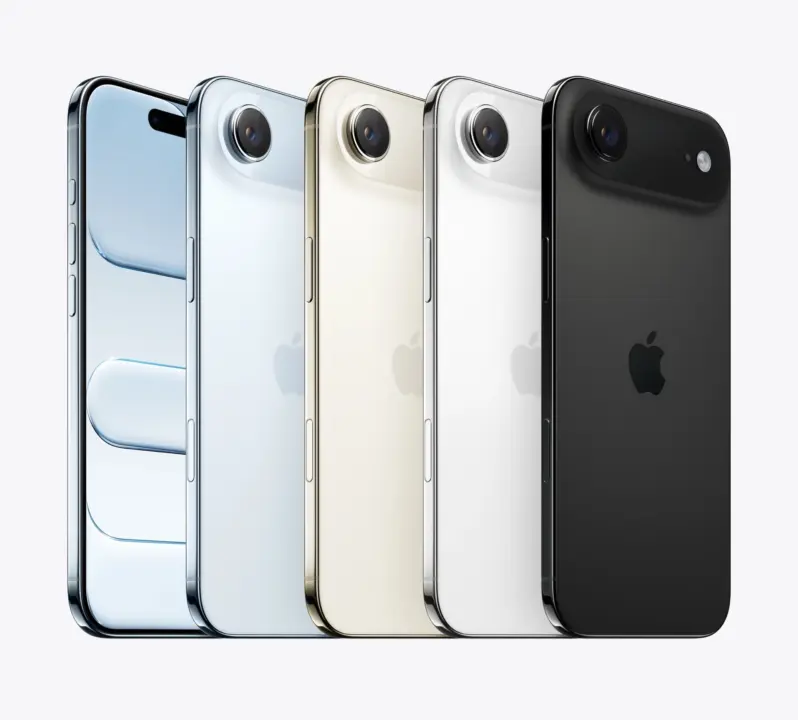
Apple raised prices across its current iPhone lineup, adding $100 to the base models and $300 to the top-tier storage tier. This shift means buyers now pay more for the same hardware configurations as previous generations. The price hikes affect the standard iPhone 17, the budget-friendly iPhone 17e, and the ultra-thin iPhone Air. Consumers looking to upgrade these specific models will face steeper entry costs starting today.
Apple raises prices across iPhone 17, 17e, and Air models
The affected devices include the iPhone 17, iPhone 17e, and iPhone Air. Apple positioned these models as a year old in its current catalog after launching the iPhone 18 Pro and iPhone Duo. Despite being superseded by newer releases, Apple continues to sell these older designs at increased prices. The iPhone Air continues to serve users who value its specific design over having the newest processor.
Specifications
- iPhone 17 256 GB Price: $899
- iPhone 17 512 GB Price: $1,099
- iPhone 17e 256 GB Price: $699
- iPhone 17e 512 GB Price: $899
- iPhone Air 256 GB Price: $1,099
The standard iPhone 17 starts at $899 for 256 GB of storage. The 512 GB version costs $1,099. Apple introduced the iPhone 17e as a budget alternative, starting at $699 for 256 GB. The 512 GB iPhone 17e retails for $899. These base prices reflect a uniform $100 increase across the entry-level and mid-tier options.
The premium iPhone Air line saw larger increases for its highest capacity model. The 256 GB iPhone Air costs $1,099, while the 512 GB version is $1,299. The 1 TB iPhone Air jumps to $1,699, marking a $300 hike. All three models are currently available for purchase in the US market. Buyers can secure these devices at the new price points immediately.
Rumors suggest that new iPhone models will not arrive until spring 2027. This schedule suggests a longer interval between significant hardware updates compared to earlier years. We have been tracking iPhone 17 closely and covered the Apple iPhone Air 2 Set for Spring 2027 launch with the A20 Pro chip earlier. Apple maintains its current lineup pricing while the next generation remains distant.
Source: NotebookCheck


Discussion
0 comments