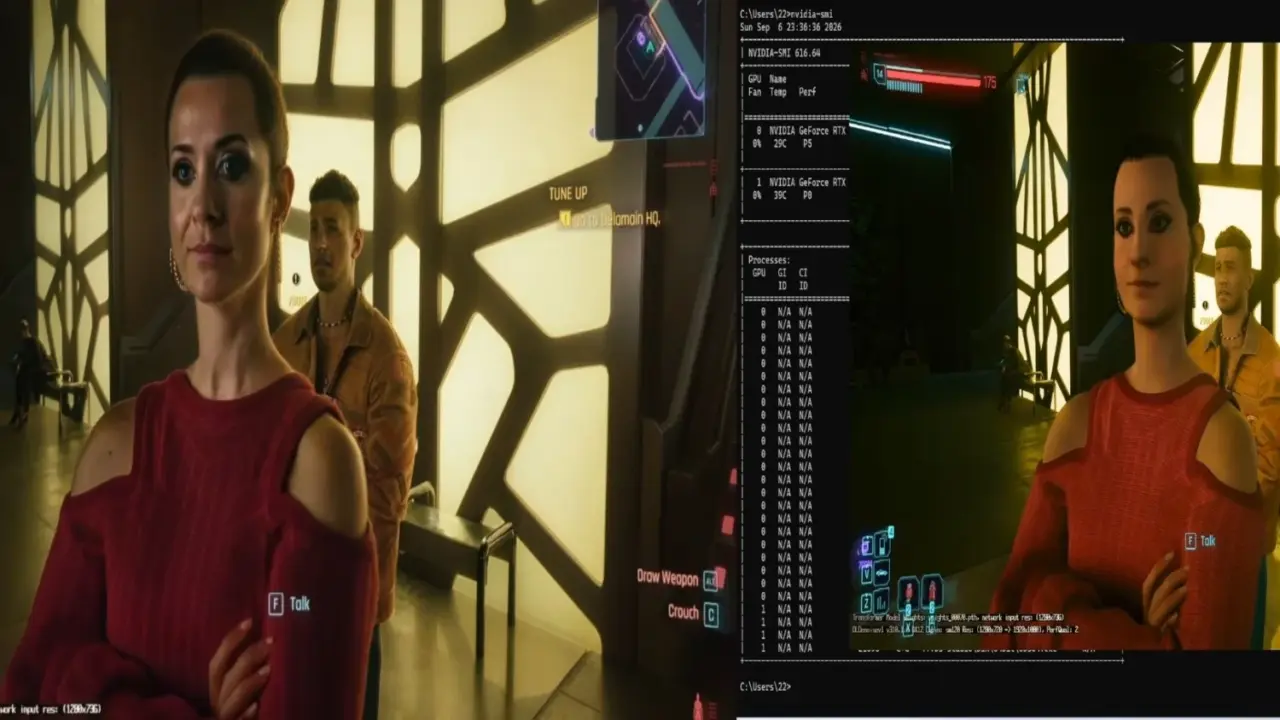
DLSS 5 Neural Rendering introduces a heavy performance penalty that can cut frame rates by roughly 60 percent, even on flagship hardware like the GeForce RTX 5090. This significant drop in speed matters to PC gamers who want to use the latest upscaling technology without sacrificing smooth gameplay. A new mod named Neural Coprocessor offers a way to bypass this bottleneck by shifting the rendering load to a second graphics card. This approach lets users keep the visual benefits of DLSS 5 while maintaining playable frame rates on their primary display.
Community tool decouples neural rendering from main display output
The Neural Coprocessor mod was created by developer Marcelo Guibout and is available as a ReShade add-on on GitHub. It requires a dual-GPU setup where both graphics cards connect to the same motherboard via PCIe 5.0 x8 lanes. The configuration typically uses two GeForce RTX 5060 Ti 16GB cards, though the mod relies on the specific hardware capabilities of the GPUs involved. One GPU handles the standard game rendering while the second GPU takes over the heavy lifting of the DLSS 5 Neural Rendering pass. This setup effectively decouples the performance cost of DLSS 5 from the output resolution of the main display.
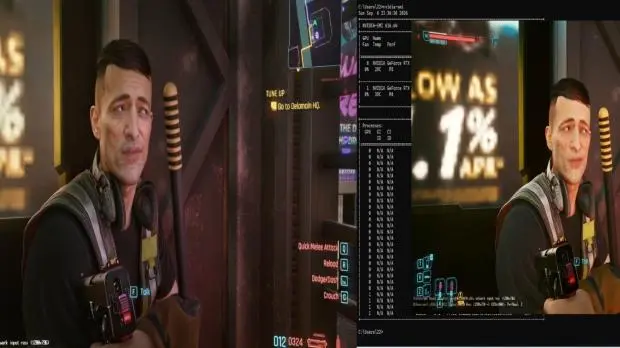
The technical core of the mod involves offloading the DLSS 5 processing to an independent graphics processor. By separating the rendering tasks, the mod avoids the single-GPU performance hit that currently plagues DLSS 5 implementations. The mod mimics the legacy SLI era by using two cards, but it assigns distinct tasks to each rather than splitting frame rendering. Users must install the ReShade add-on to enable this workflow. The mod does not require special proprietary hardware beyond standard dual-GPU motherboards and compatible PCIe slots.
While the mod improves frame rates, it introduces some additional input latency due to the data transfer between the two GPUs. The source text notes this latency exists but does not quantify whether it is noticeable during fast-paced gameplay. The mod is currently distributed freely as a community project rather than a commercial product. Gamers interested in testing DLSS 5 without severe performance penalties may find this dual-GPU workaround useful. The solution highlights the current performance challenges associated with the new neural rendering technology.
Source: TweakTown

Discussion
0 comments