The Lenovo Yoga Slim 7 14 demonstrates that ARM-based laptops can now sustain full-day productivity sessions without seeking a wall outlet. Buyers who prioritize battery endurance over raw gaming horsepower should pay attention to these results, as the device challenges the long-standing dominance of x86 processors in the ultraportable segment. This shift matters because it offers a viable alternative for travelers and remote workers who need reliability over extended periods away from power sources.
ARM processor outpaces AMD Zen 5 variant in endurance testing
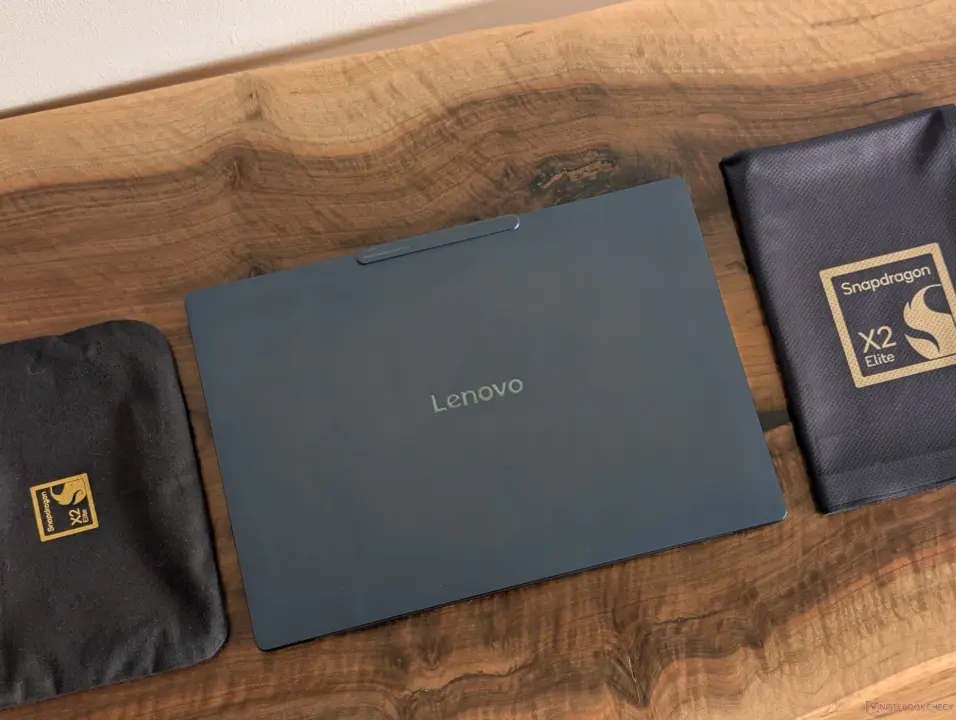
Our test configuration features the Qualcomm Snapdragon X2E processor paired with a 1200p display and a 70 Wh battery. The system runs a continuous WLAN test that loops webpages every 40 seconds to simulate real-world browsing habits. We also evaluated performance under H.264 video playback and idle reader modes to capture a complete picture of power efficiency across different workloads.
Key Specifications
- CPU: Qualcomm Snapdragon X2E
- Battery Capacity: 70 Wh
- Display Resolution: 1200p
- Battery Runtime (WLAN): 18.9 hours
- Battery Runtime (H.264): 15.9 hours
The Snapdragon X2E version achieved 18.9 hours of WLAN runtime, significantly outperforming the AMD Zen 5 variant of the same chassis which lasted just 9 hours. This substantial gap persists despite the ARM model using a lower-resolution 1200p display compared to the AMD version's 1800p panel. The data suggests that architectural efficiency drives the majority of the battery advantage rather than display resolution alone.
When compared to Intel Lunar Lake competitors like the Yoga Pro 7i Gen 10 Aura, the Lenovo Yoga Slim 7 14 still trails by approximately three hours in similar WLAN testing conditions. The Intel variant achieved roughly 15.8 hours of runtime, placing it closer to the Snapdragon model than to the AMD counterpart. We also looked at Lenovo Xiaoxin Air 13 Launches with in our earlier Lenovo coverage, noting that the brand continues to diversify its ARM and x86 offerings across different price points.
The confirmed specifications highlight a clear hierarchy in battery longevity for this specific chassis design. The Snapdragon X2E model leads with nearly 19 hours of WLAN use, followed by the Intel Lunar Lake version at around 15.8 hours, and the AMD Zen 5 version at 9 hours. These results provide a concrete benchmark for consumers deciding between different processor architectures for their next ultraportable laptop purchase.
Source: NotebookCheck