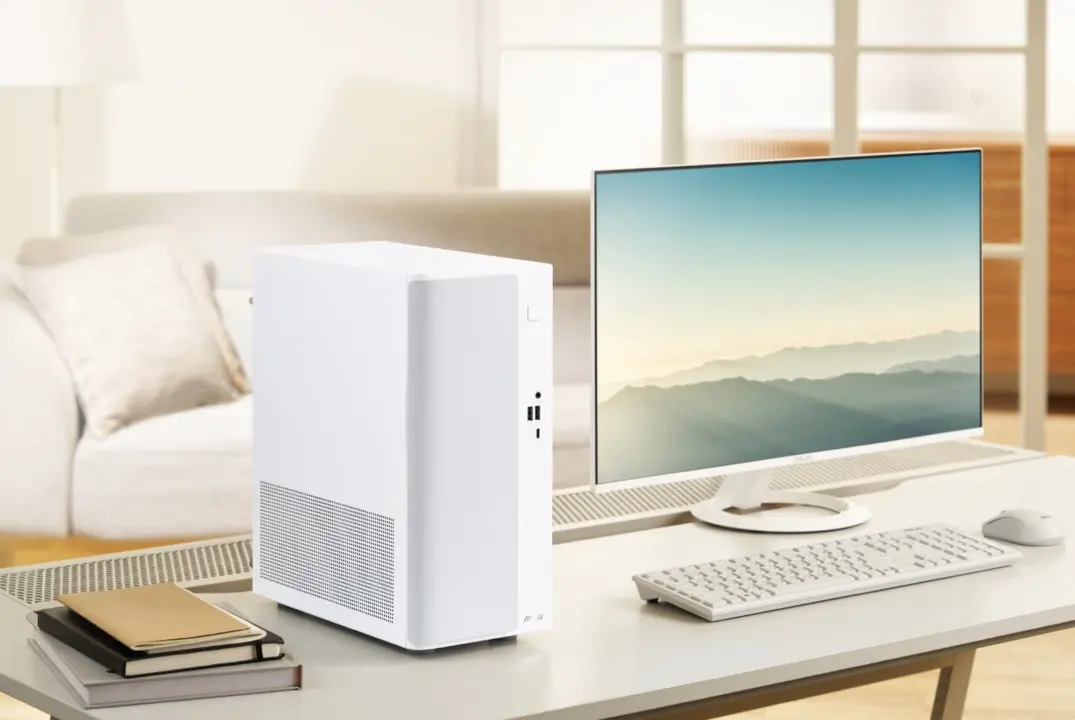
Asus has introduced the V500 Mini Tower, a compact desktop that bridges the gap between traditional PCs and portable devices. This shift matters because it allows users to build a full desktop experience using components typically found in laptops. The design prioritizes space efficiency without sacrificing the core processing power needed for modern computing tasks.
Compact desktop uses laptop RAM and mobile processors for space efficiency
The system relies on AMD Ryzen mobile processors rather than standard desktop chips. Buyers can select the Ryzen 5 220 or step up to the Ryzen 7 260, which features eight Zen 4 cores. Both options integrate the Radeon 780M graphics engine, eliminating the need for a separate video card for basic workloads.
Specifications
- Processor Options: AMD Ryzen 5 220 or AMD Ryzen 7 260 (Zen 4, up to 5.1 GHz boost)
- Integrated Graphics: AMD Radeon 780M
- Memory Type: DDR5 SO-DIMM (Laptop RAM)
- Power Supply: 180-watt
- Front I/O: 2x USB-A, 1x USB-C, 3.5 mm headphone jack
Internally, the machine uses DDR5 SO-DIMM slots, meaning it accepts laptop memory modules instead of desktop DIMMs. A 180-watt power supply powers the unit, which is smaller than typical desktop adapters. Storage flexibility remains available through a second M.2 slot that users can install after purchase.
Asus offers distinct aesthetic choices for the front panel, including a light gray fabric or a synthetic wood-grain finish. Connectivity includes two USB-A ports and one USB-C port on the front, while the rear provides three additional USB-A ports, HDMI 2.1b, DisplayPort 1.4, and Gigabit Ethernet. The Ryzen 5 model starts at 599 EUR (around $685), with the Ryzen 7 version priced at 649 EUR (around $742). US pricing is listed at 680 USD for the base model and 740 USD for the upgraded configuration, though Asus has not officially confirmed these American figures.
The V500 Mini Tower is expected to be available soon across global markets. This release expands Asus's lineup of compact form factors by integrating mobile architecture into a stationary chassis.
Source: Asus, NotebookCheck