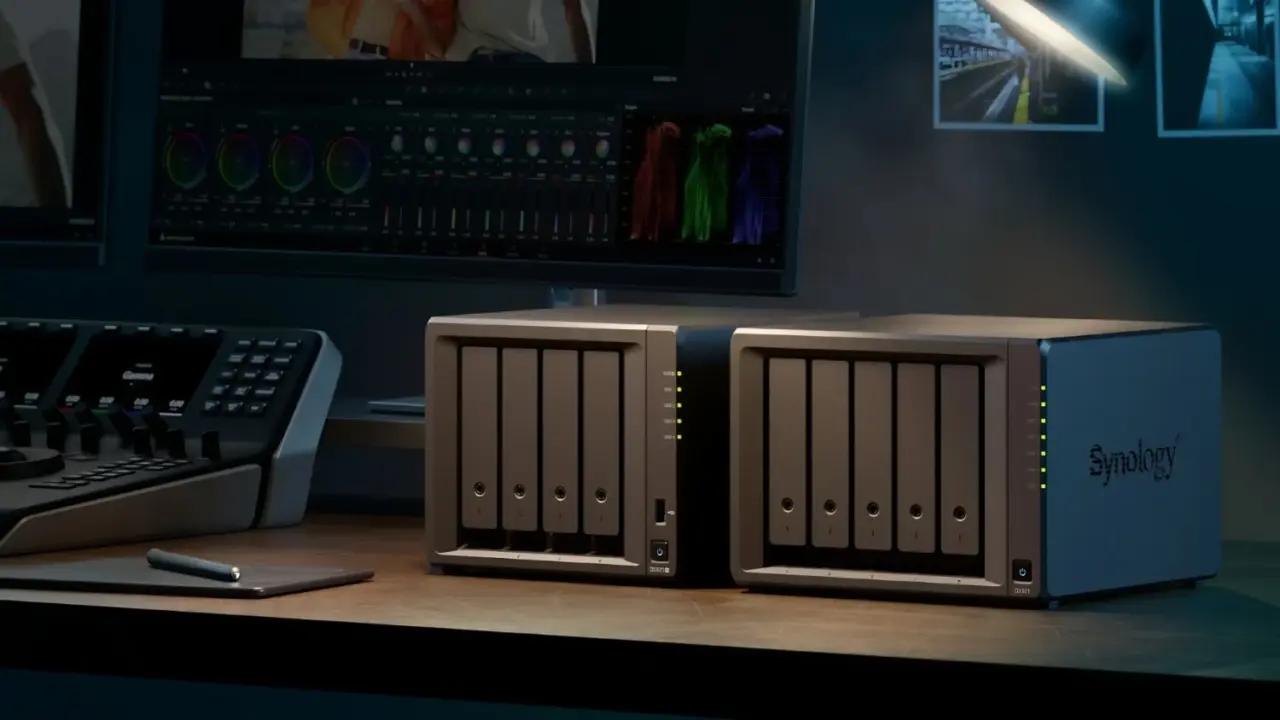
Synology is launching the DiskStation neo+ Series to provide a lower-cost entry point into its network-attached storage lineup. This move targets buyers who need reliable home or small business storage without the premium price tag of the previous DS Plus generation. The company achieves these lower costs by standardizing on 4GB of non-ECC DDR4 memory, a significant reduction from prior models. Users who prioritize budget over maximum out-of-the-box performance can now access a wider range of form factors.
Four new models offer scalable storage with reduced base memory
The new lineup expands the traditional desktop NAS category with four distinct models: the DS1825neo+ (8-bay), DS1525neo+ (5-bay), DS925neo+ (4-bay), and DS725neo+ (2-bay). Each unit retains the familiar desktop chassis design that Synology has used for years. This approach allows users to choose a size that fits their specific drive count needs. The series reinforces the company's focus on accessible hardware for growing storage requirements.
DiskStation neo+ Series Specifications
- Memory Configuration: 4GB non-ECC DDR4 SO-DIMM
- Max Memory Upgrade: 32GB
- Network Ports: 2.5GbE (10GbE/25GbE via PCIe on 8-bay and 5-bay models)
- Storage Expansion: M.2 slots for SSD caching
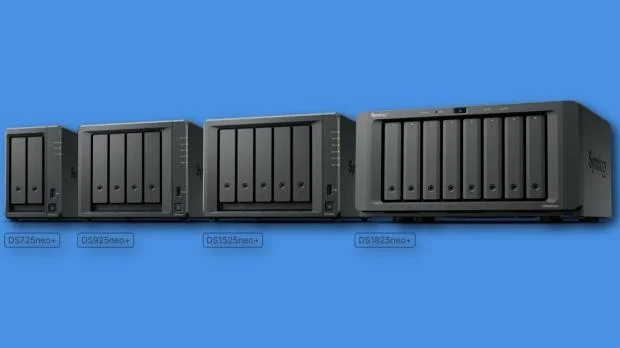
Standard memory configuration starts at 4GB non-ECC DDR4 SO-DIMM across the entire series. Buyers can upgrade this capacity to a maximum of 32GB as their data needs expand. The devices include built-in M.2 slots to support SSD caching for improved read and write speeds. Network connectivity begins with standard 2.5GbE ports on all models. The larger 8-bay and 5-bay units also feature PCIe 3.0 slots for adding 10GbE or 25GbE network adapter cards.
Synology positions this series as a direct response to shifting memory market dynamics. Bie-I Chu, Executive Vice President of the Synology NAS Group, stated that desktop models remain central to the company's ecosystem. He noted that the neo+ Series gives customers freedom to scale hardware according to their immediate budget and future growth. This strategy allows users to start small and invest in memory upgrades only when necessary.
The DiskStation neo+ Series is now available through Synology's global distribution channels. This launch provides a concrete option for users seeking affordable NAS hardware with upgradeable specs. The inclusion of M.2 caching slots and optional 10GbE connectivity ensures the devices remain relevant for modern data workflows. Buyers can select from two-bay to eight-bay configurations to match their exact storage capacity requirements.
Source: Synology, TweakTown