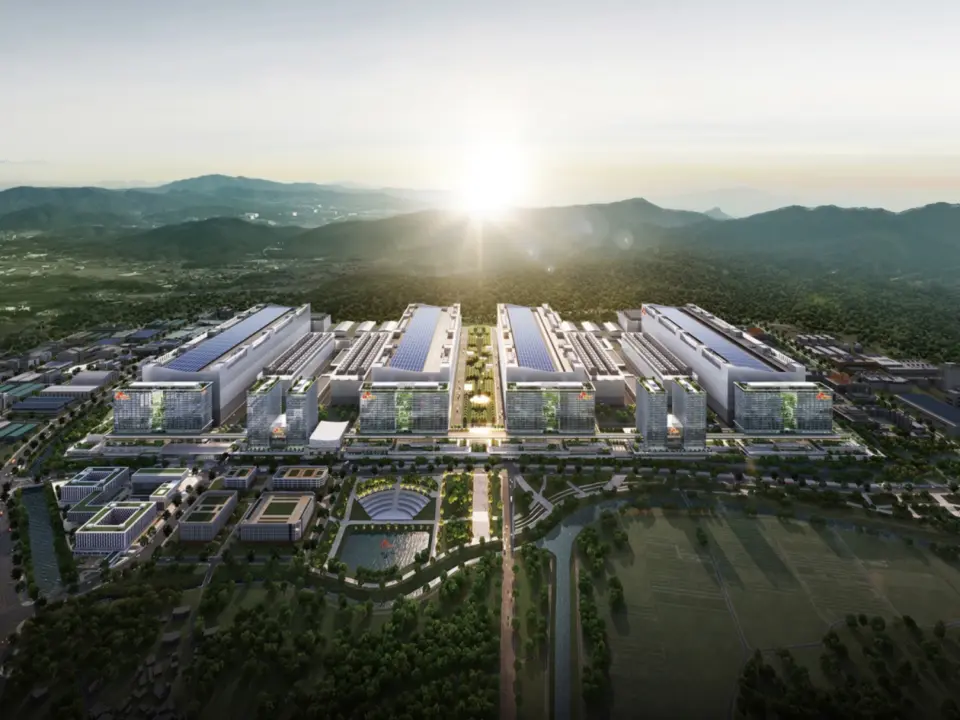
SK Hynix approved a massive 54.3 trillion won (~$38.6 billion) investment for two new fabrication plants on August 7. This capital expenditure signals a major shift in memory production strategy rather than an immediate boost to consumer RAM supply. Buyers tracking component availability should note that these facilities are years away from outputting chips. The company is prioritizing high-bandwidth memory and next-generation DRAM over standard DDR5 modules. This strategic pivot means the market will see more specialized memory for AI and data centers first.
SK Hynix approves massive capital expenditure for new fabrication plants in South Korea
The approved plan covers two distinct facilities in South Korea. The Yongin Y2 site will serve as the base for DRAM production. The Cheongju M17 site will focus on NAND flash storage. SK Hynix allocated 35.2 trillion won (~$25 billion) for the Yongin Y2 project. The company set aside 19.1 trillion won (~$13.6 billion) for the Cheongju M17 facility. These initial allocations cover only the construction and initial setup phases. The total investment could rise significantly once equipment costs are added.
- Yongin Y2 Investment: 35.2 trillion won (~$25 billion)
- Cheongju M17 Investment: 19.1 trillion won (~$13.6 billion)
- Y2 Equipment Potential: Up to 120 trillion won (~$85.2 billion)
- Y1 Completion Date: February 2027
- M17 Cleanroom Opening: December 2028
Equipment costs for the Yongin Y2 plant alone could reach 120 trillion won (~$85.2 billion). This potential addition would push the total project value past 150 trillion won. The Yongin Y1 facility, which supports these new expansions, is scheduled for completion in February 2027. Equipment installation at Y1 is expected to begin in the second quarter of that year. The Cheongju M17 cleanroom will open in December 2028. The Yongin Y2 cleanroom is set to open in June 2029. These timelines indicate a multi-year ramp-up period for new capacity.
SK Hynix aims to reach a production capacity of 360,000 DRAM wafers per month by the first half of 2030. The company plans to increase its high-bandwidth memory allocation from 30% to 40% of total DRAM wafer capacity by 2027. This shift reflects the growing demand for AI-related hardware components. We've been tracking SK Hynix closely — see our earlier coverage on Samsung, SK Hynix, Micron sued for DRAM price-fixing. The current plan focuses on securing supply for high-margin, specialized memory markets rather than competing in the commodity DDR5 segment.
SK Hynix has locked in a long-term production roadmap for advanced memory manufacturing. The Yongin and Cheongju sites will define the company's output capabilities through the end of the decade. Early capacity will prioritize high-bandwidth memory for data center and AI applications. Commodity memory buyers should expect limited immediate impact from these new facilities. The hardware supply chain will stabilize around this specialized production model by 2030.
Source: NotebookCheck