ANDROID Vivo V70 Lite 4G Adds 8,100mAh Battery, Drops 5G for Unisoc Chip STEAM Phantom Blade Zero Pre-Orders Hit 300K, Chasing Black Myth: Wukong INTEL Asus CX9406 Googlebook Leak: Panther Lake CPU, 16GB RAM, $1,383 Price GAMES GTA 6 Leaked Footage Shows Driving and Strip Club Scenes CONSOLES The Duskbloods Switch 2 Input Lag Hits 200ms in Network Test PC HARDWARE Philips Evnia 27-inch 260Hz Monitor Launches for $190 GAMES GTA 6 Leaks Hit Rockstar Morale, Netflix Unfazed by Early Footage AMD AMD Desktop CPU Share Hits 34.9% in Q2 2026 as Intel Loses Ground GAMES WWE 2K26 Patch 1.15 Adds Finn Balor Theme and Fixes Match Bugs NVIDIA Modern Warfare 4 Beta Nerfs Frangible Rounds and Footsteps GAMES Modern Warfare 4 Beta Patch Tweaks TTK and Footstep Audio SOFTWARE AND UPDATES Twitch Faces Class Action Lawsuit Over Unlicensed AI Training INTEL Lenovo ThinkPad L14 Gen 7 Launches with Wi-Fi 7 and Core Ultra 3 for $1,109 STEAM Settler’s Domain Launches on Steam With Native ARM Support

Samsung Shows 40,000-Nit RGB OLEDoS Microdisplay for XR at AWE 2026

Lena Fischer 1 min read

Samsung Display demonstrates a 1.3- inch RGB OLEDoS microdisplay reaching 40,000 nits, designed to improve XR visibility in bright ambient light.

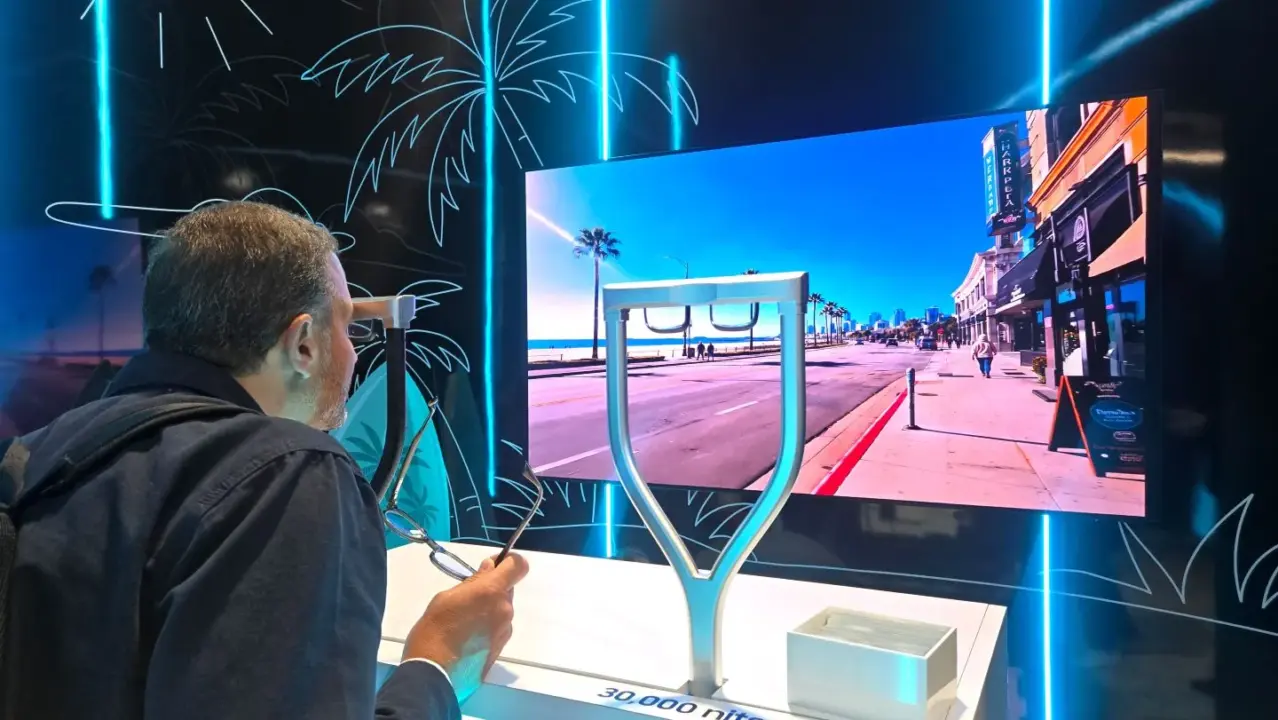
Samsung Display demonstrated a 1.3-inch RGB OLEDoS microdisplay at AWE USA 2026. The panel reaches 40,000 nits of brightness. This output level aims to keep virtual images visible in bright outdoor environments.

Samsung Display reveals direct-emission RGB OLEDoS microdisplay with 40,000 nits brightness for augmented reality

The technology skips traditional color filters by using direct-emission pixels. This design choice improves light efficiency. The company says the approach also extends panel lifespan and improves battery life for wearable devices.

Specifications

  • Brightness: 40,000 nits
  • Panel Size: 1.3-inch
  • Technology: RGB OLEDoS
  • Alternative Prototype: 0.62-inch, 30,000 nits

Samsung also showed a smaller 0.62-inch prototype during the event. That version hits 30,000 nits. Engineers designed the smaller chip specifically for augmented reality glasses.

High brightness helps XR displays fight against real-world ambient light. Users can wear headsets in sunny rooms without losing image clarity. The company positioned the technology as a solution for mixed reality visibility.

Source: GIZMOCHINA