
Linux Kernel 7.3 introduces a significant scheduler overhaul that targets gaming performance on older hardware. This update matters to users with legacy systems because it directly addresses the stuttering and low frame rates that often make older machines difficult to use for modern games. The changes aim to make lower-specced machines more playable by reducing scheduling jitter.
EEVDF patch reduces rescheduling jitter for smoother gameplay
The Linux Kernel Community merged these scheduler updates into the 7.3 release. The core change modifies the EEVDF scheduler to rely on a single runqueue in specific cgroup situations. This technical adjustment reduces the frequency of unnecessary rescheduling events that disrupt game loops on older CPUs.
Benchmarks on an Intel Core i7 2600K paired with an AMD Radeon RX 580 demonstrate the impact of these changes. Minimum frame rates rose from 4 FPS to 29 FPS, a seven-fold increase that transforms previously unplayable experiences. Average frame rates also improved from 47.5 FPS to 59.2 FPS, providing a smoother visual experience overall.
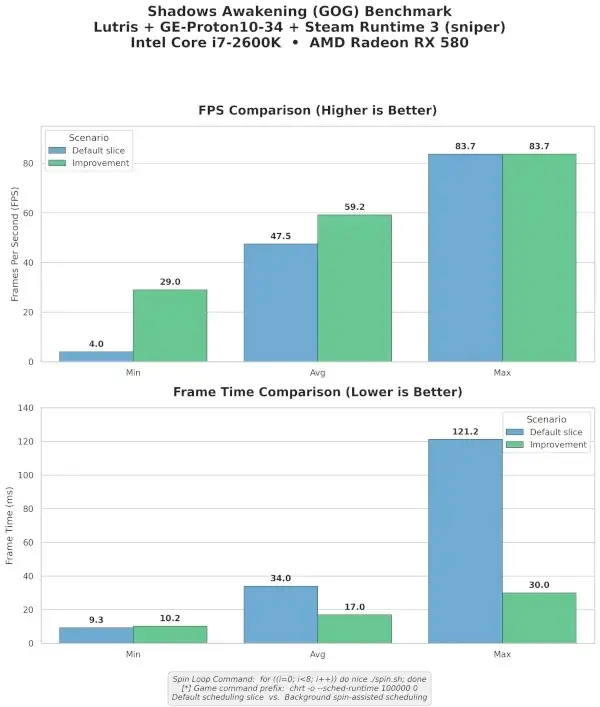
CachyOS has announced early inclusion of these scheduler changes in their distribution. This allows users of that specific distro to access the performance benefits immediately. Mainstream kernel adoption remains a slow process with no exact timeframe provided for widespread availability across all distributions.
The scheduler updates now ship with Linux 7.3, aiming specifically at boosting gaming performance on lower-specced machines. Users with older hardware should check if their distribution offers the 7.3 kernel to benefit from these improvements. The patch delivers tangible performance gains for legacy gaming setups without requiring new hardware.
Source: NotebookCheck