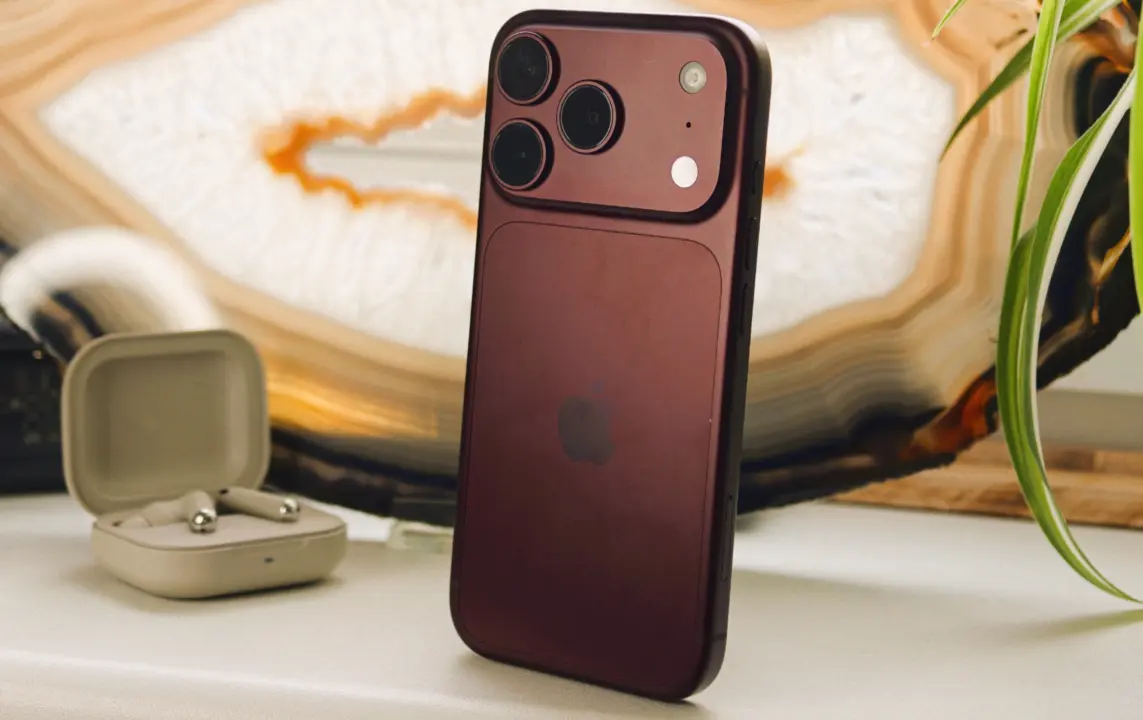
Apple's newest iPhone 18 Pro has a brighter screen but also has a new flickering problem that could be troubling to some. Apple's iPhone 18 Pro has a new OLED screen with over 3,000 cd/m2 peak brightness. This makes the display easy to read in direct sunlight.
Measurements show Apple's latest smartphone lags behind Android rivals in flicker control
But the screen also has a very low base pulse-width modulation frequency. This results in screen flickering at low brightness settings. Brightness vs eye comfort is an important consideration for users who spend many hours with their device in low light reading or watching videos.
- OLED Peak Brightness: over 3,000 cd/m²
- PWM Frequency (Base): 60 Hz
- PWM Amplitude: 12 percent
- PWM Dimming Frequency: 480 Hz
Apple's iPhone 18 Pro has an OLED screen with a base PWM frequency of only 60 Hz. That's much lower than other phones. For example, the Google Pixel 10 Pro and Samsung Galaxy S26 Ultra have 240 Hz PWM frequencies.
Apple uses a PWM dimming frequency of 480 Hz. That's still way lower than the higher frequency on many Android phones. There's also a low PWM amplitude of only 12 percent.
Lower frequency flickering is something the human eye can often see and feel. It's also something that can be physically uncomfortable. As seen in Notebookcheck measurements, this low base frequency of 60 Hz can potentially cause headaches, eye burning and fatigue for people who are sensitive.
Though the iPhone 18 Pro has a lower modulation depth than some competitors. But the base frequency is still the main problem here. Other Android competitors like Xiaomi and Honor use PWM dimming frequencies of around 4,000 Hz. Oppo has 2,160 Hz.
We've been keeping close watch on the iPhone 18 Pro. Just the other day we covered its battery capacity. Check out our previous coverage on Apple Confirms iPhone 18 Pro Battery Capacity for more on this phone's battery and power setup.
But for now our attention is on the screen technology. And how it might affect comfort. Apple's choice of a lower PWM frequency distinguishes the iPhone 18 Pro from the higher frequency of many Android flagships.
Source: NotebookCheck
Discussion
0 comments