
A developer has successfully rendered 3D game content from the mid-2000s on a Nokia N95 smartphone, proving the aging hardware can handle complex graphical tasks. This experiment matters to retro gaming enthusiasts because it demonstrates that legacy mobile devices can run modern-style 3D engines when properly optimized. The achievement shifts the narrative from the phone's original 2007 release limitations to its potential as a platform for custom software ports.
Custom converter enables classic 3D game assets on legacy Symbian hardware
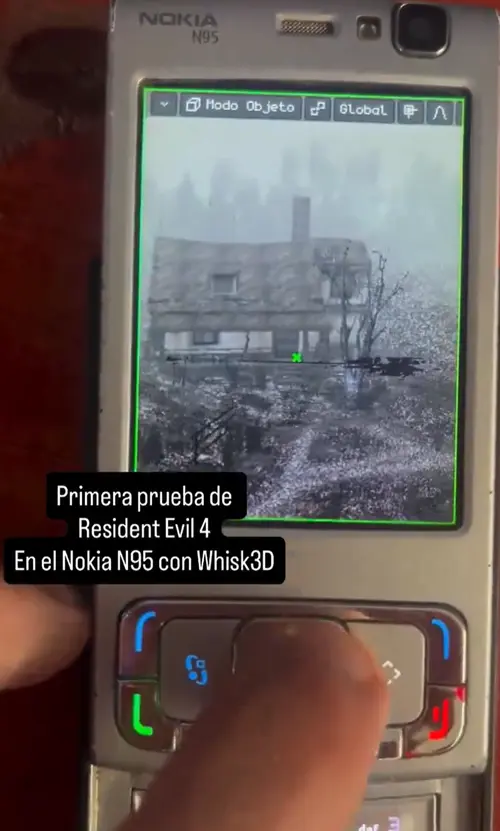
Dante D. Leoncini, the developer behind the project, focused his efforts on the Nokia N95 running the Symbian operating system. He utilized a custom tool called the 'GTA3 to Whisk3d converter' to transform assets from Grand Theft Auto III into the W3D format required by the device's Whisk3d graphics engine. This technical workaround allows classic PC game assets to function on the mobile hardware without native support.
The project includes a playable cutscene from Resident Evil 4, specifically the 2005 version of the title. Leoncini identified character animation processing as the primary performance bottleneck for the device. The phone struggles to handle thousands of vertices for facial features, hair, and clothing within tight millisecond windows. Despite this constraint, the system manages to render the geometry in real-time.
We previously covered the last Nokia N95 update, where several of the same balance and stability themes came up during testing. This new experiment builds on that foundation by pushing the graphics pipeline further with different game engines. The successful run of both Resident Evil 4 and Grand Theft Auto III assets confirms the viability of the Whisk3d toolset for diverse 3D content.
The project stands as a technical proof-of-concept rather than a commercial release. It highlights the specific capabilities of the Nokia N95's graphics processor when bypassing standard mobile game constraints. The experiment provides a clear view of the hardware's limits and potential for future homebrew development.
Source: IXBT


Discussion
0 comments