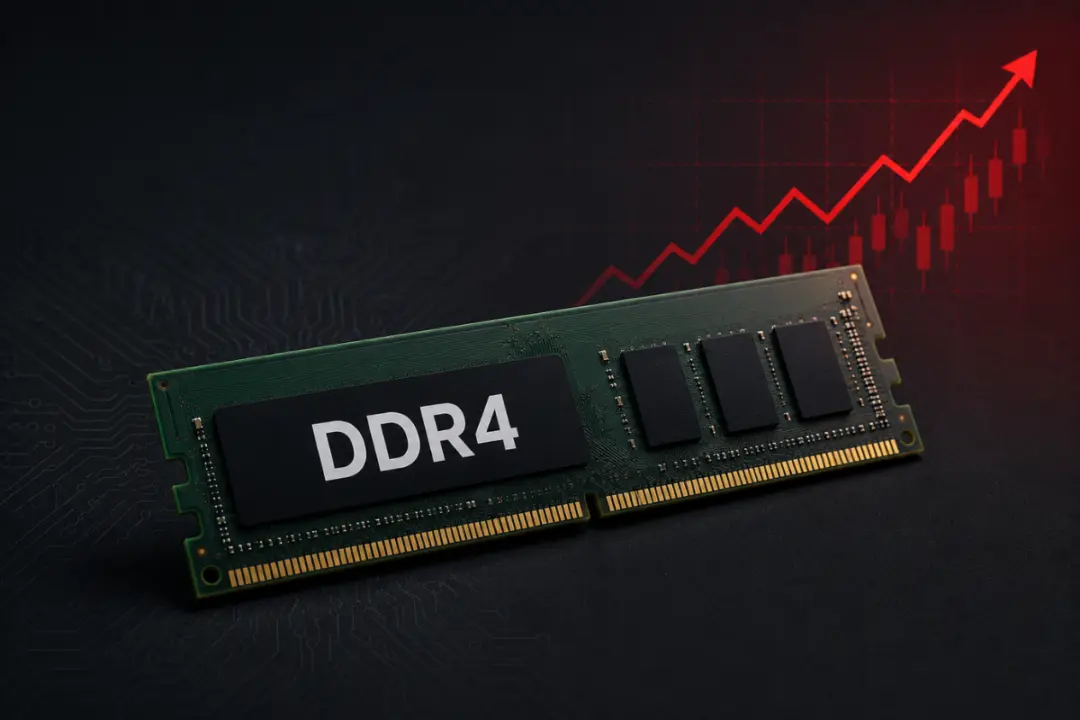
PC builders and enterprise buyers face a sharp rise in memory costs starting in the third quarter of 2026. DDR4 8Gb chip prices are expected to jump by more than 50% compared to the previous quarter. This increase stems from a severe shortage of available DRAM capacity as major manufacturers redirect production toward newer standards.
Manufacturers shift production to DDR5 and AI memory
The shift in manufacturing capacity explains the current market imbalance. Samsung, Micron, and SK Hynix have moved their primary production lines away from DDR4 to focus on DDR5 and AI-focused memory solutions. Taiwanese manufacturers Nanya Technology and Winbond Electronics now handle the majority of the remaining DDR4 production.
Current spot market prices highlight the unusual pricing dynamics in the memory sector. DDR4 4Gb modules are trading at an average of $12.75 USD (around $12.75). In comparison, DDR5 16Gb modules are priced at $47.07 USD (around $47.07). This means older DDR4 chips are becoming relatively more expensive per unit than newer DDR5 chips on a per-module basis.
Enterprise-grade solid-state drive demand is adding further pressure to DDR4 supply. Industry experts predict that price surges for DDR3, DDR4, and DDR5 will continue at least until 2028. These long-term forecasts suggest that cost increases will not be a temporary fluctuation but a sustained market trend driven by structural capacity shifts.
The memory market is undergoing a structural transition that favors newer technologies. Buyers relying on DDR4 components should expect higher costs and potential supply constraints in the near future. The shift in manufacturing focus by major vendors like Samsung and Micron confirms that DDR4 is no longer the primary growth area for the industry.
Source: GIZMOCHINA